GEOMAGNETIC STORM PREDICTED (G1-CLASS): NOAA forecasters say there is a 65% chance of G1-class geomagnetic storms on Oct. 11th when a stream of solar wind makes contact with Earth's magnetic field. The solar wind is flowing from a hole in the sun's atmosphere with peak speeds greater than 600 km/s. Arctic sky watchers should be alert for auroras mixed with waning Harvest moonlight. Free: Aurora Alerts


ASTEROID TO BUZZ EARTH THIS WEEK: When the sun rose over Chelyabinsk, Russia, on Feb. 15, 2013, at first it seemed like an ordinary day. Then the space rock hit. Without warning, the morning sky lit up with a second sun as shock waves shattered windows in hundreds of buildings around the wakening city.
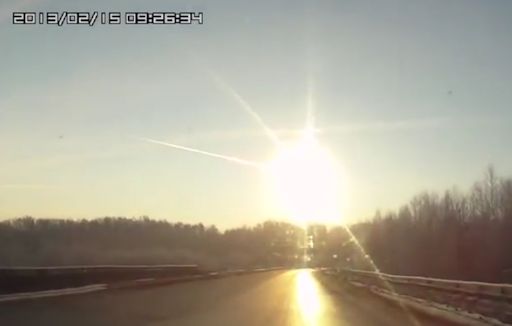
Above: That's not the sun; it's the Chelyabinsk fireball on Feb. 15, 2013. [video]
The impactor flew out of the blue, literally from the direction of the sun where no telescope could see it, and took everyone by surprise. Years later, meteorite hunters are still finding pieces of the "Chelyabinsk asteroid" that rained down after its 17m-wide body disintegrated in the atmosphere.
A similar asteroid is approaching Earth this week, but this time NASA knows its coming. 2012 TC4 measures somewhere between 10 m and 30 m wide, and on Oct. 12th it will pass 43,500 km above our planet's surface, about 1/8th the distance to the Moon. The flyby is so close, Earth's gravity will significantly alter the asteroid's trajectory before it exits the Earth-Moon system.

Above: An artist's concept of the 2012 TC4 near-Earth flyby. [animation]
"We know the orbit of 2012 TC4 well enough to be absolutely certain that it won't hit Earth," says Paul Chodas, manager of the Center for Near-Earth Object Studies (CNEOS) at JPL,"but we haven't established its exact path just yet."
To get a better handle on the asteroid's orbit (and possible future encounters), an international network of telescopes will monitor 2012 TC4 as it goes by. Pinging the asteroid with its Goldstone radar, NASA hopes to learn much about the space rock's physical properties. The space agency will even exercise some aspects of its planetary defense systems.
This asteroid is too small to see with the naked eye. However, skilled amateur astronomers using 8+ inch telescopes will be able to observe it. At peak brightness, 2012 TC4 will shine like a 13th magnitude star as it zips through the constellations Capricornus and Sagittarius, according to AstroBob, who has detailed observing tips.

Above: 2012 TC4 approaching Earth on Oct. 10th. Photo credit: Mike Olason of Denver CO
Got a picture of 2012 TC4? Submit it here!
WHAT'S WRONG WITH THIS RAINBOW? Last Friday morning, Jon Larsen was driving home east of Spearfish, South Dakota, when he saw a rainbow. "There was something wrong with it," he says. "I grabbed my camera and zoomed in for a closer look." This is what he saw:

"The rainbow's primary red band had separated from the rest!" says Larsen.
What happened? Atmospheric optics expert Les Cowley says there are at least two ways that rainbows can be distorted in this way:
First, by hot air: "This rainbow over Adelaide, Australia, was bent by columns of rising hot city air, but no cities appear to be near Jon Larsen's rainbow," says Cowley.
Second, by mixed-up raindrops: "Rainbows can appear distorted when there are differences in the size of the raindrops along lines of sight to different parts of the bow. Small drops give broader bows."
The second explanation is probably correct. Larsen notes that "strong surface winds were blowing rain shafts around." These strong winds may have segregated raindrops into layers of different size--small drops being blown about more easily than large ones--giving the 'bow a strange appearance, indeed.
Realtime Space Weather Photo Gallery
SOLAR ECLIPSE IN THE STRATOSPHERE: On Aug. 21st during the Great American Solar Eclipse, the students of Earth to Sky Calculus launched 11 space weather balloons from the path of totality. They aimed to photograph the Moon's shadow from the stratosphere--and they succeeded. Looking down from a point more than 100,000 feet above Earth's surface, this GoPro video shows the inky-black shadow of the Moon darkening a 70-mile-wide patch of Wyoming and Nebraska:
This video was assembled and edited by filmmaker Ginger Perez, a founding student member of Earth to Sky Calculus. The payload was sponsored by the Southern Maine Community College with Maine students joining the launch team as space weather balloon "trainees."
Our next solar eclipse mission is already set: We plan to launch space weather balloons from Chile into a total eclipse on July 2, 2019. That one will be a sunset eclipse with the sun low on the horizon during the flight. The teams are looking forward to photographing the Moon's stretched-out shadow fringed by lovely sunset colors. Stay tuned for that!
Far Out Gifts: Earth to Sky Store
All proceeds support hands-on STEM education