GEOMAGNETIC STORM PREDICTED (G2-CLASS): A high-speed stream of solar wind is approaching Earth, and NOAA forecasters say there is a 75% chance of polar geomagnetic storms when it arrives on Dec. 4th and 5th. Periods of moderately-strong G2-class storming could send Northern Lights spilling across the Canadian border into upper-tier US states; interfere with HF radio propagation at high latitudes; and confuse wildlife that use magnetic cues for navigation. Free: Aurora Alerts.

HERE COMES THE SUPERMOON: The biggest and brightest full Moon of 2017 is coming tonight. It's a perigee "supermoon," almost 8% wider and 16% brighter than an average full Moon. Miguel Claro photographed the waxing orb (98% full) rising over lake Monsaraz in Portugal's Dark Sky Alqueva Reserve on Dec. 2nd:

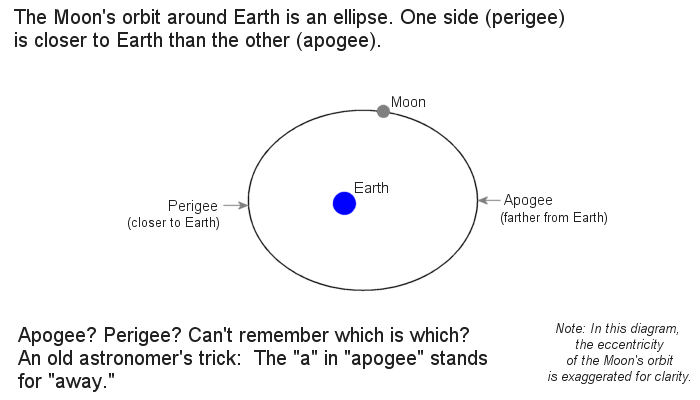
Full moons vary in size because the Moon's orbit is not a circle, it's an ellipse: diagram. One side of the Moon's orbit, called "perigee," is 50,000 km closer to Earth than the other side, "apogee." This Sunday's Moon becomes full only 16 hours away from perigee, closer than any other full Moon of 2017.
Some people say you can't tell the difference between a supermoon and a regular Moon. A 16% difference in brightness can easily be masked by clouds or the glare of urban lights. Also, there are no rulers floating in the sky to measure lunar diameters. Hanging high overhead with no reference points to provide a sense of scale, one full Moon looks much like any other. There is no doubt, however, that supermoons are genuinely bigger than their ordinary cousins.
To get the most out of Sunday's apparition, try to catch the Moon just as it is rising or setting. This will activate the Moon Illusion and make the perigee Moon of Dec. 3rd look super, indeed.
Realtime Space Weather Photo Gallery
RARE WINTER SPRITES: Red sprites tend to be a summertime phenomenon. They shoot up from the tops of intense thunderstorms, reaching toward the edge of space, while their cousins, normal lightning bolts, lance down to the ground below. Summer is the season for sprites. So it came as a surprise, on the night of Dec. 2nd, when Martin Popek photographed a phalanx of winter sprites leaping above the snowy landscape of the Czech republic:

"This is a very rare thing," says Popek. "I've been monitoring sprites from my private observatory since 2011. This is only the second storm with red sprites I have ever seen in December."
Sprites are a true space weather phenomenon. Some researchers believe they are linked to cosmic rays: subatomic particles from deep space striking the top of Earth's atmosphere produce secondary electrons that, in turn, provide the spark that triggers sprites. If this is true, then sprites could multiply in the years ahead as cosmic rays intensify due to the decline of the solar cycle. Indeed, increasing levels of cosmic rays might explain by the strange red forms are spilling over into the "off-season."
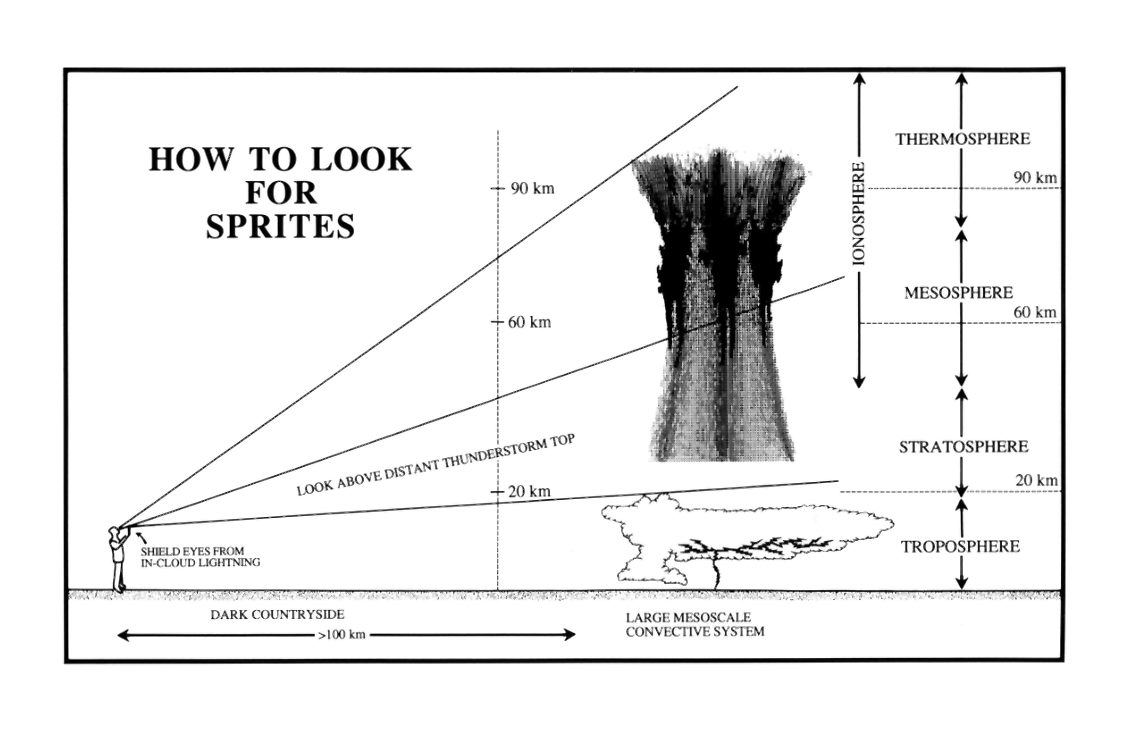
Although sprites have been seen for at least a century, most scientists did not believe they existed until after 1989 when sprites were photographed by cameras onboard the space shuttle. Now "sprite chasers" routinely photograph sprites from their own homes. "I used up a Watec 910HX security camera with UFOCapture software to catch my sprites," says Popek. Give it a try! Diagram: How to Look for Sprites
CHRISTMAS ORNAMENTS FROM SPACE: On Nov. 2, 2017, the students of Earth to Sky Calculus launched a space weather balloon to the stratosphere. These kids do science, and the payload of their balloon carried an array of cosmic ray sensors to measure radiation coming from deep space. A basket of Christmas ornaments went along for the ride. Watch the video to see what happened:
The ornaments were created by student artist Dana Wilcher, a longtime member of Earth to Sky Calculus. Each year she creates a limited batch of "space ornaments" to raise money for our balloon program.
You can have one for $99.95. Each ornament comes with a unique gift card showing the work of art floating at the top of Earth's atmosphere. The interior of the card tells the story of the flight and confirms that the ornament has been to the edge of space and back again. It *also* comes with a hanging mini-photo of the ornament in the stratosphere. Hang it on your tree to impress holiday visitors!
Far Out Gifts: Earth to Sky Store
All proceeds support hands-on STEM education