VENUS AND MERCURY: When the sun goes down tonight, step outside and look west. If you have a clear view of the horizon, you'll see Venus and Mercury beaming through the sunset. It's a beautiful view--and it's about to get even better. On March 18th the slender crescent Moon will join the bright planets for a must-see conjunction. Mark your calendar. [sky map]

A GASH IN THE SUN'S ATMOSPHERE: A canyon-like hole has opened in the sun's atmosphere, and it is spewing a broad stream of solar wind toward Earth. NASA's Solar Dynamics Observatory is monitoring the structure:

This is a "coronal hole"--a region where the sun's magnetic field opens up and allows solar wind to escape. Coronal holes appear, in various shapes and forms, several times each month. This one is unusually wide, stretching more than 800,000 km across the face of the sun.
NOAA forecasters say there is a 55% chance of G1-class geomagnetic storms when the solar wind stream arrives on March 14th or 15th. G1-class storms are relatively minor and have little effect on satellites and global power grids. However, they can disorient animals that migrate using magnetic cues at high latitudes and usually spark bright auroras around the Arctic Circle. Free: Aurora Alerts

Realtime Space Weather Photo Gallery
WILD RIDE OF THE EASTERNAUTS: Easter is coming early this year: April 1, 2018--hence the flight of the Easternauts. To support their cosmic ray ballooning program, the students of Earth to Sky Calculus have launched a payload full of bunnies to the edge of space:
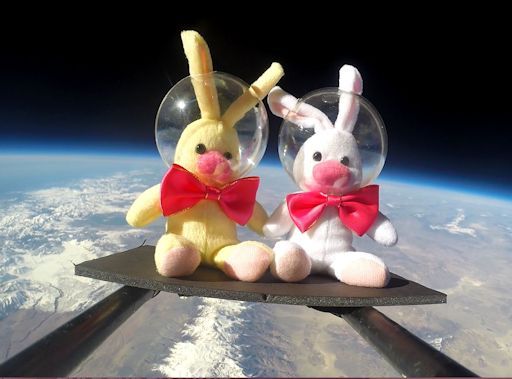
You can have one for $49.95. (Space helmet included!) They make great Easter gifts for young scientists, and all proceeds support STEM education. Each bunny comes with a greeting card showing the Easternaut in flight and telling the story of its journey to the stratosphere and back again.
Far Out Gifts: Earth to Sky Store
All proceeds support hands-on STEM education
AURORAS IN THE USA: On March 9th, an "equinox crack" opened in Earth's magnetic field. Solar wind poured in, igniting bright auroras around the Arctic Circle. Thomas J. Spence saw the distant glow from Tofte, Minnesota:
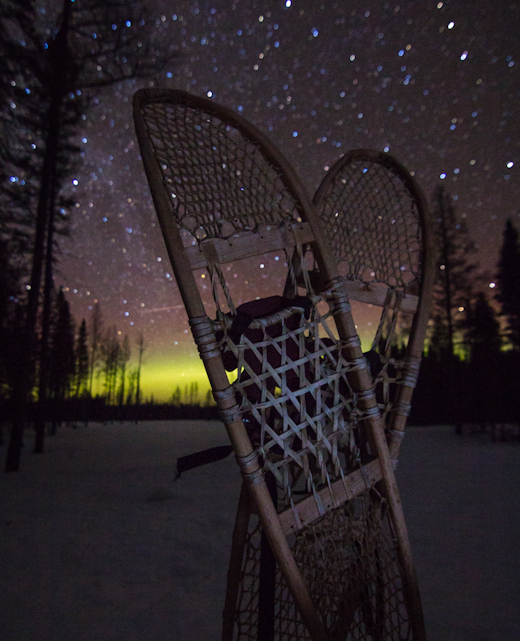
"After hearing that northern lights could be active, I went for a jaunt into the woods after sunset," says Spence. "The aurora were putting off a nice glow and I did a little snowshoeing, waiting to see if they would pick up. It was a subtle, quiet aurora here in Minnesota, but the snowshoes made for some nice photos and memories."
With the northern vernal equinox less than 8 days away, Earth's magnetic field will be "cracking" even more in the nights ahead. High-latitude sky watchers should be alert for Spring Green. Free: Aurora Alerts