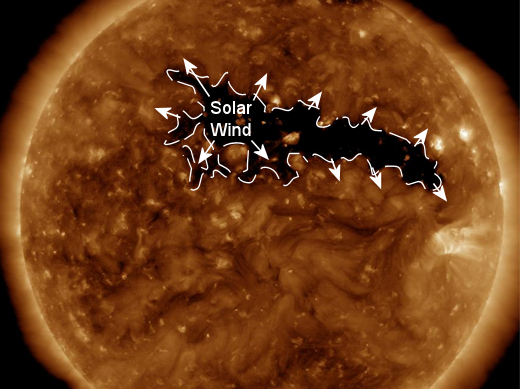
THE SOLAR WIND HAS ARRIVED: Earth is entering a stream of high-speed solar wind flowing from a wide gash in the sun's atmosphere. Around the Arctic Circle, this is causing auroras so bright that some observers are seeing them even before nightfall. NOAA forecasters say there is a 55% chance of G1-class geomagnetic storms developing as Earth moves deeper into the stream. Free: Aurora Alerts
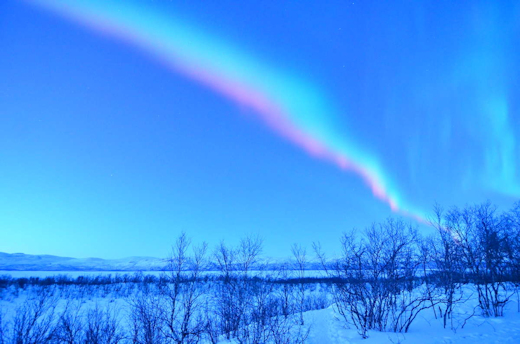

AURORAS IN MOTION: On March 14th, deep inside the Arctic Circle, photographer Oliver Wright stood outside in the cold waiting for the solar wind to arrive. It didn't. Nevertheless, the sky erupted in a swirling cauldron of color--"possibly the best I've ever seen," says Wright, who has been leading aurora tours for years in Abisko, Sweden. Turn up the volume and listen to the cries of delight in Wright's 3 minute video:
"My fingers got so cold taking this video," he says, "but it was worth it."
Watch the video again and pay special attention to the moments after 1:30. Those dynamic swirls of pink are caused by energetic particles reaching unusually deep into Earth's atmosphere, interacting with nitrogen molecules to produce a pink glow so intense that it sometimes appeared white.
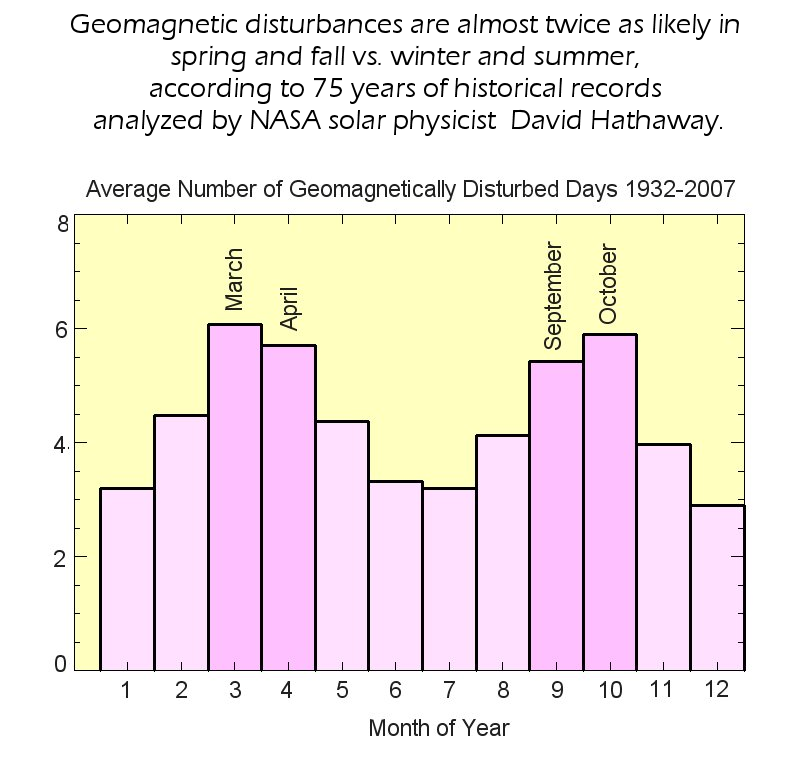
This outburst was caused by a crack forming in Earth's magnetic field. Ambient solar wind (not the high-speed stream Wright expected) poured in to fuel the display. Magnetic cracks occur more frequently than usual during weeks around equinoxes, which make this a great time of year for Arctic lights. Free: Aurora Alerts
VENUS AND MERCURY: When the sun goes down tonight, step outside and look west. If you have a clear view of the horizon, you'll see Venus and Mercury beaming through the twilight. Mark Marquette sends this picture from Merritt Island, Florida:
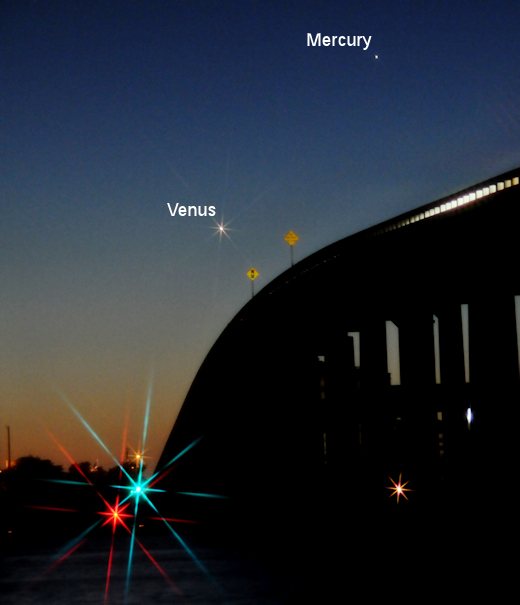
"The two planets were easy to see over the Hubert Humphrey Bridge on March 14th," says Marquette. "I plan to watch them closely for the next 7 days as Mercury sinks toward the horizon and brilliant Venus keeps rising higher to dominate the Spring twilight."
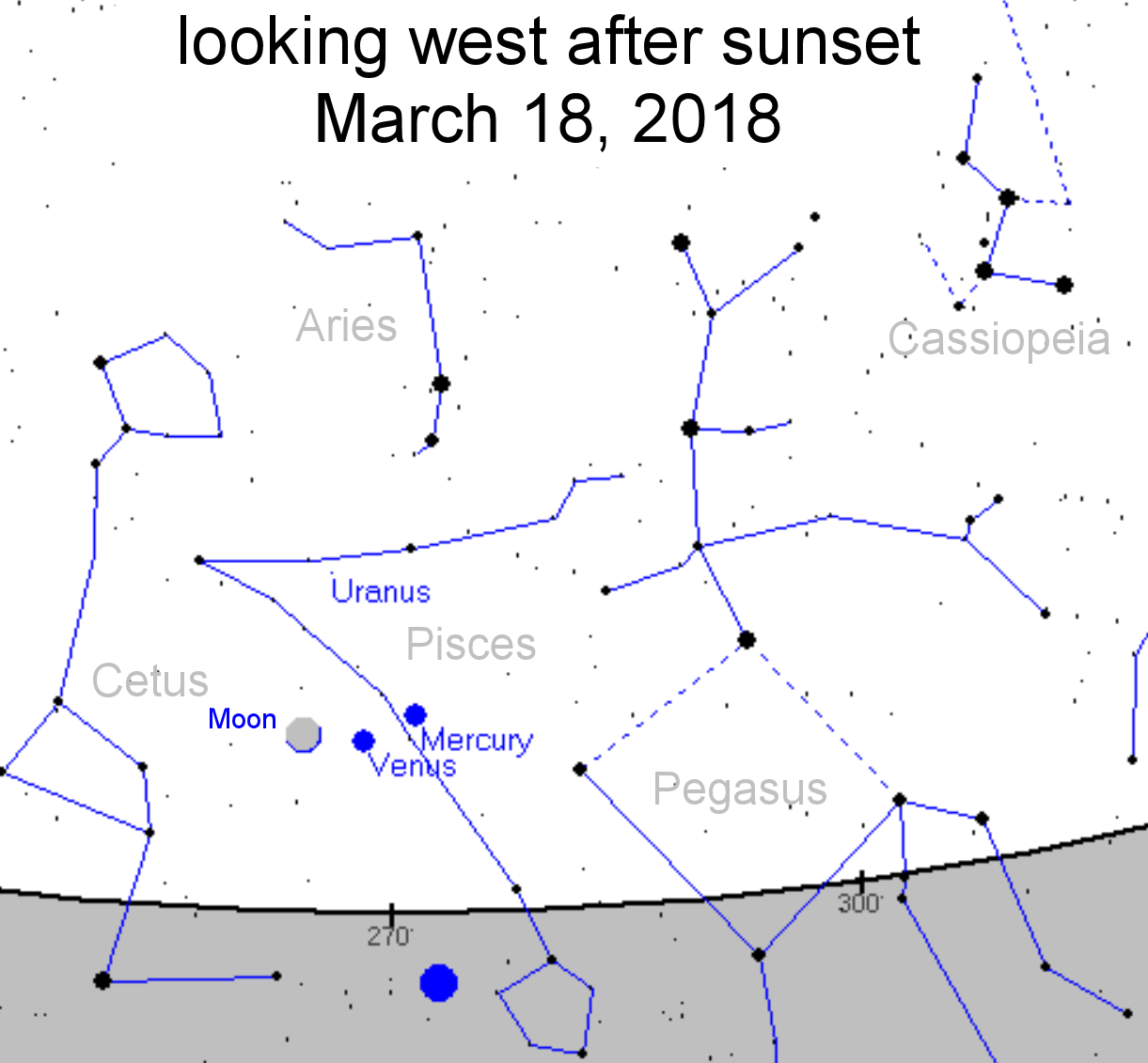
A date of special interest is March 18th, when the slender crescent Moon joins Venus and Mercury for a loose but beautiful conjunction in the evening sky. The three will form a slightly bent line less than 8 degrees long--about the size of the bowl of the Big Dipper. Mark your calendar! [sky map]
Realtime Space Weather Photo Gallery
THESE PENDANTS HAVE TOUCHED SPACE: On Feb. 15, 2018, the students of Earth to Sky Calculus flew a payload full of heart-shaped Venus pendants to the stratosphere onboard a high-altitude cosmic ray balloon. Here's one, 111,550 feet above the Sierras of central California:
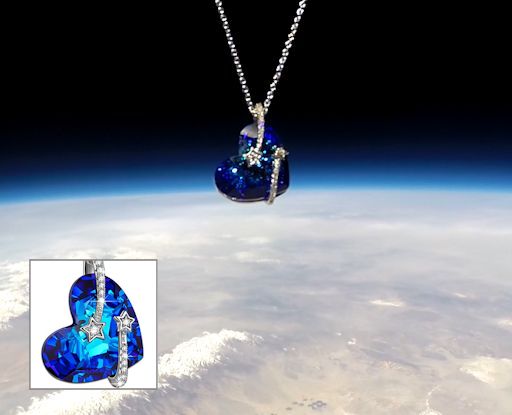
You have have one for $199.95. These blue jewels make great birthday and anniversary gifts. Each glittering pendant comes with a greeting card showing the jewelry in flight and telling the story of its journey to the stratosphere and back again. All proceeds support hands-on STEM research and atmospheric radiation monitoring.