CHANCE OF STORMS--DELAYED: NOAA forecasters have cancelled a geomagnetic storm watch for March 22nd. The solar wind stream expected to spark the G1-class storm is late, and may not arrive until March 23rd or 24th. It is definitely coming, though; the gaseous material is flowing from a sprawling hole in the sun's atmosphere. Free: Aurora Alerts


AURORAS IN ANTARCTICA: Aurora season is beginning in Antarctica. On the frozen continent, autumn has just begun and south polar skies are darkening, providing a velvety backdrop for displays like this:

B. Sudarsan Patro took the picture on March 22, 2018, from the Bharati Indian Research Base Station in the Larsemann Hills of East Antarctica. "The auroras were so bright, they turned the ground green," he says. "It was amazing. We enjoyed the show so much, we almost forgot the negative temperatures, around -20 deg C."
Patro and his colleagues at the research station will probably see more auroras in the nights ahead as an approaching solar wind stream engulfs Earth. At this time of year, with nearly equal amounts of darkness around both poles, Arctic and Antarctic auroras may be observed simultaneously. Stay tuned for both. Free: Aurora Alerts
SOLAR ECLIPSE IN THE STRATOSPHERE (KANSAS EDITION): On Aug. 21, 2017, Spaceweather.com and the students of Earth to Sky Calculus launched 11 cosmic ray balloons from the path of totality of the Great American Solar Eclipse. Our cameras recorded the eclipse from the edge of space above 6 US states. This just-released footage shows how the team in Kansas had to deal with stormy weather to get their balloon off the ground:
No one at the launch site witnessed the eclipse, which was itself eclipsed by rainclouds. Nevertheless, they managed to record a unique video of the Moon's inky-black shadow racing across the cloudtops. Congratuations to the students and educators for their work on this project!
Realtime Space Weather Photo Gallery
WILD RIDE OF THE EASTERNAUTS: : Easter is coming early this year: April 1, 2018--hence the flight of the Easternauts. To support their cosmic ray ballooning program, the students of Earth to Sky Calculus have launched a payload full of bunnies to the edge of space:
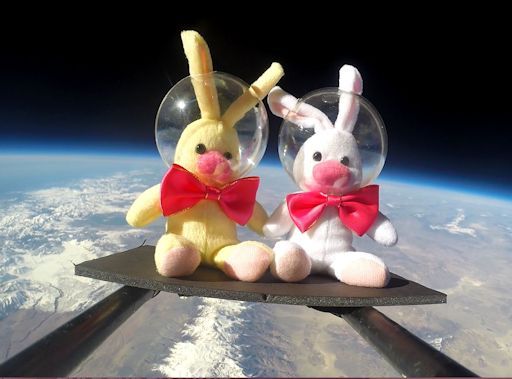
You can have one for $49.95. (Space helmet included!) They make great Easter gifts for young scientists, and all proceeds support STEM education. Each bunny comes with a greeting card showing the Easternaut in flight and telling the story of its journey to the stratosphere and back again.