CO-ROTATING INTERACTION REGION: NOAA forecasters estimate a 55% chance of G1-class geomagnetic storms today, March 24th, when a co-rotating interaction region (CIR) is expected to hit Earth's magnetic field. CIRs are transition zones between slow- and fast-moving solar wind. Solar wind plasma piles up in these regions, producing density gradients and shock waves that do a good job of sparking auroras. Free: Aurora Alerts

AURORAS CAUSE BURNT PIZZA: Did you know that auroras can burn your pizza? It happened last night in Abisko, Sweden. Photographer Oliver Wright was cooking his dinner when the skies above his cabin erupted in colorful lights. He rushed outside with a video camera to record the display:
"The auroras were insane," he says. "Massive coronas (auroras 'raining' down from directly overhead) were dancing across the sky. I couldn't tear my eyes away and, as a result, I managed to burn the pizza in my oven."
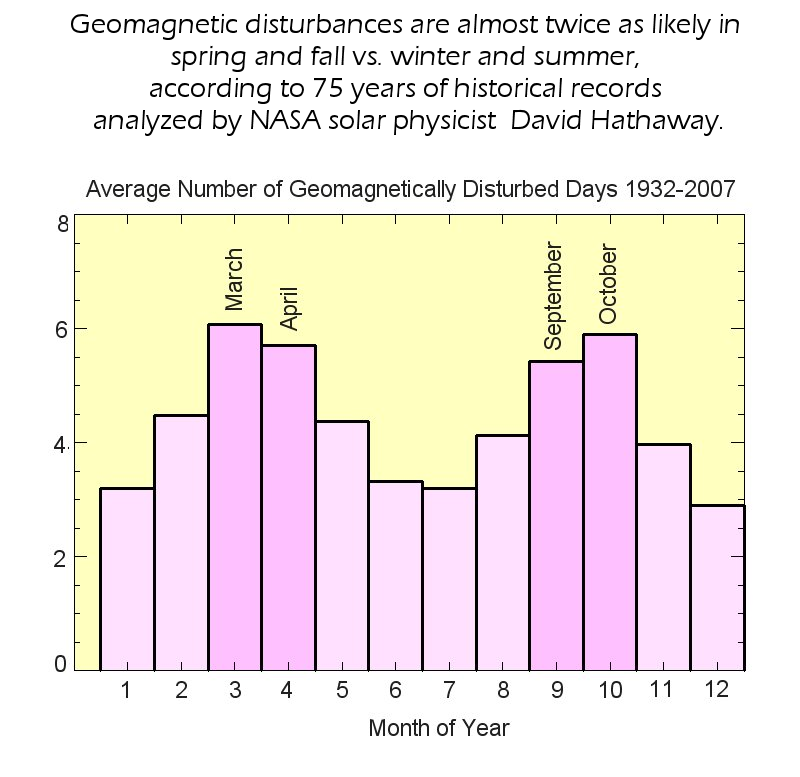
As a longtime guide for Lights over Lapland, Wright is a veteran observer of auroras. "After you have been guiding for a few years, you begin to notice a few patterns," he says. "One of those patterns is the intensification of auroras in March. Every year within days of the March equinox, the auroras seem to go crazy. All it takes is a little bit of solar wind."
This pattern of March auroras is caused by cracks that open in Earth's magnetic field around the time of the vernal equinox--a phenomenon known as the "Russell-McPherron effect." Solar wind pours in through the openings to spark bright Northern Lights. The same thing happens in Sept.-Oct. during the autumnal equinox. Strange but true: Arctic pizzas suffer at both times of year. Free: Aurora Alerts
HALF MOON HALO: This weekend, the Moon is only half full. Nevertheless, it's a good time to watch for lunar halos. "I saw one last night," reports Noel Keating, who sends this picture from Ballintra, Co Donegal , Ireland:
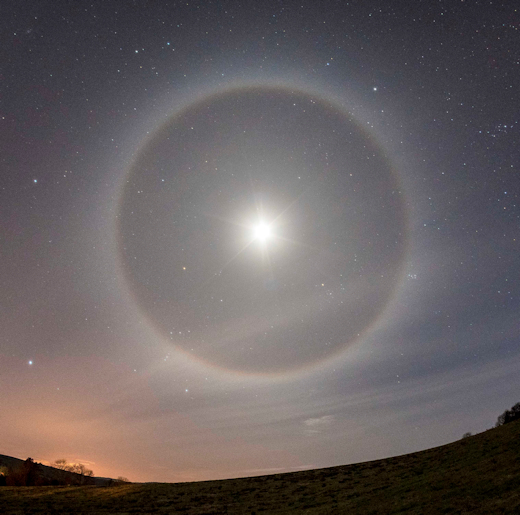
"What a vivid halo!" says Keating. "With only a half Moon, I was able to see stars shining brightly inside the ring. They were not washed out by lunar glare. I was really surprised that the halo itself was so intense, as this is the type of halo you normally get only with a full Moon."
Moon halos are created by ice crystals in high clouds, which catch rays of moonlight and bend them into a 22o ring. Bright full Moons are great at making these halos, but as Keating has shown, a full Moon is not required. Half is plenty.
Realtime Space Weather Photo Gallery
OUT OF THIS WORLD GIFT: It's sterling silver and it comes from space. On March 5, 2018, the students of Earth to Sky Calculus flew a cosmic ray balloon to the stratosphere, more than 94,000 feet above Earth's surface. This "Loving Hands" pendant went along for the ride:
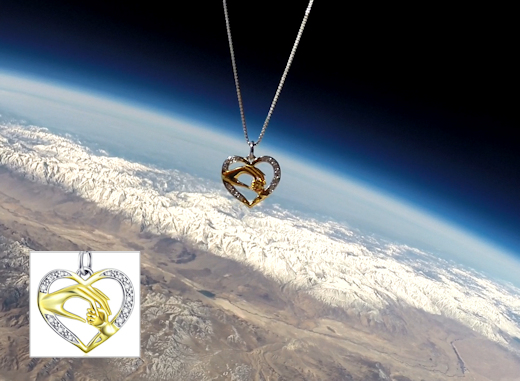
You can have one for $119.95. The students are selling these pendants as a fund-raiser for their cosmic ray monitoring program. All proceeds support atmospheric radiation measurements and hands-on STEM education.
Each pendant comes with a greeting card showing the jewelry in flight and telling the story of its journey to the stratosphere and back again. They make great Mother's Day gifts.