WAITING FOR THE NEXT CARRINGTON EVENT: In Sept. 1859, the sun unleashed a series of solar flares so powerful that telegraph offices caught fire and auroras were seen as far south as Cuba. Known as the Carrington Event, this iconic solar storm is a touchstone for discussions of extreme space weather. Could it happen again? In a paper published May 10th, researchers from the University of Birmingham use Extreme Value Theory to estimate the average time between "Carrington-like flares." Their best answer: ~100 years. In other words, we may be overdue for a really big storm. Read the original research here.
RED AIRGLOW OVER THE ATACAMA DESERT: When the sun goes down, Chile's Atacama desert can be one of the darkest places on Earth. Last night, it was not. "I couldn't believe what I saw on the screen of my camera when I took the first image," reports photographer Yuri Beletsky, who recorded luminous bands of red rippling across the sky:
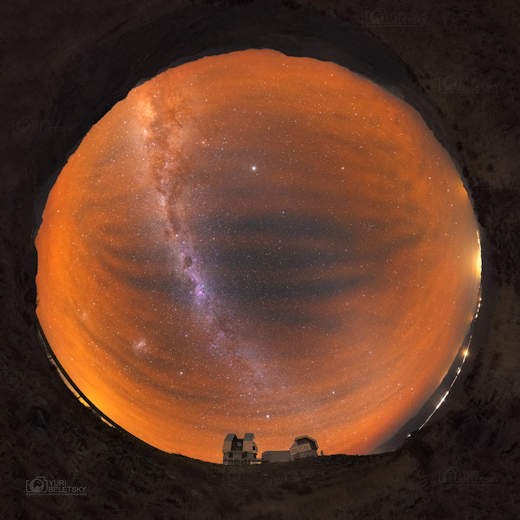
"The airglow was absolutely insane!" he says. "Parts of the Milky Way were barely visible because of the intense red glow."
Airglow is caused by a complex assortment of chemical reactions in the upper atmosphere. These reactions get started during daylight hours when the atmosphere is bathed in strong ultraviolet radiation from the sun. After sunset, the afterglow appears--usually green, but sometimes red. Beletsky is a veteran photographer of airglow, having captured it dozens of times from sites in Chile and the South Pacific. "The intensity of airglow varies, and sometimes it can be more prominent," he notes.
Last night, it was very prominent indeed. The red light came from OH radicals (chemical by-products of the daytime reactions) floating in a narrow layer 86 to 87 km above Earth's surface. Gravity waves propagating upward from the lower atmosphere impressed the thin red glow with a dramatic rippling structure.
"It seems the atmosphere is pretty active now," says Beletsky. "This is a good time to be alert for airglow."
Realtime Space Weather Photo Gallery
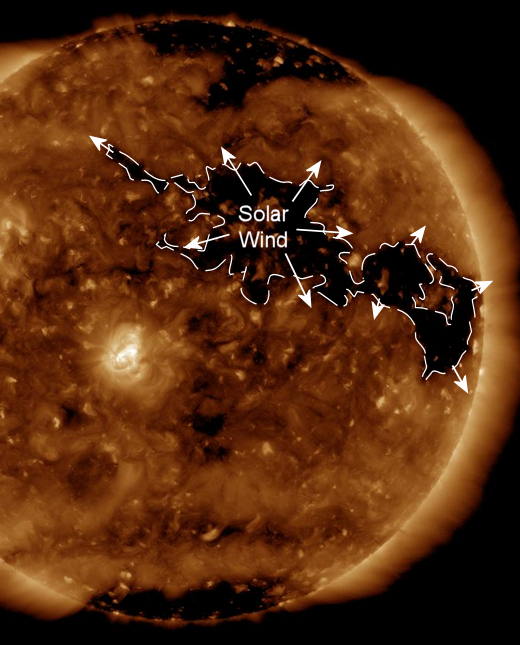
MAGNETIC UNREST: Late on May 5th, Earth entered a stream of solar wind flowing from a wide hole in the sun's atmosphere. More than 5 days later, Earth's magnetic field is still reverberating. "My magnetometer refuses to settle down," reports Stuart Green who sends these data from Preston, Lancashire, UK:
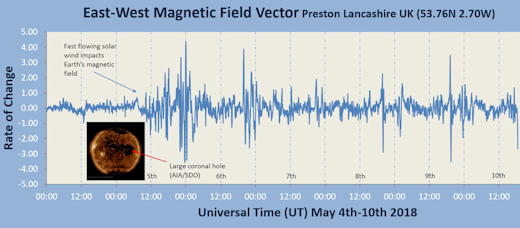
The squiggles in Green's chart represent changes in his local magnetic field caused by the buffeting of solar wind high overhead. "The sensor is buried in my garden about 0.5 meters below the surface in an East/West orientation," he explains. "This allows very sensitive measurements of magnetic declination during solar wind storms."
Sustained periods of unrest on May 5th and 6th coincided with G1- and G2-class geomagnetic storm. On those dates, the strange aurora named STEVE was sighted in multiple US states. Periods of quiet returned on May 7th through 10th, but even on those days Green's instrument picked up brief but intense magnetic disturbances. Activity should subside as Earth exits the solar wind stream on May 11th and 12th.


His chart recorder will probably do this again in early June. The solar-wind-spewing coronal hole is now rotating around the sun, lighthouse style, and it will be back in full force a little less than a month from now. Stay tuned. Free: Aurora Alerts
SPACE BASEBALLS: Move over, Mickey Mantle. The students of Earth to Sky Calculus have set a new home run record. According to the Guinness Book of World Records, Mantle hit a 565 foot blast on April 17, 1953. Eclipsing that mark, a Dodgers ball recently launched by the students sailed 700 times farther. The baseball traveled to the stratosphere on board a cosmic ray balloon:
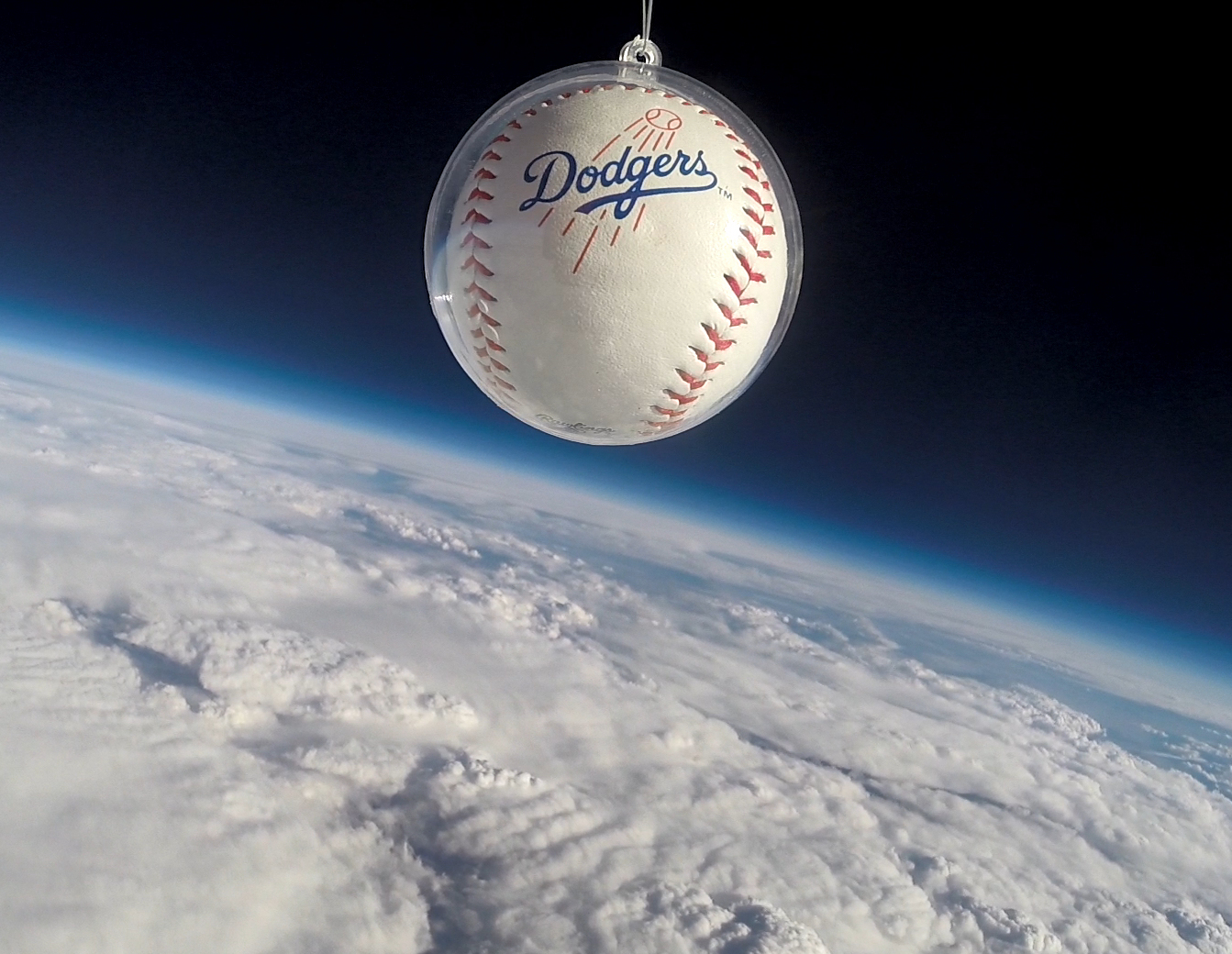
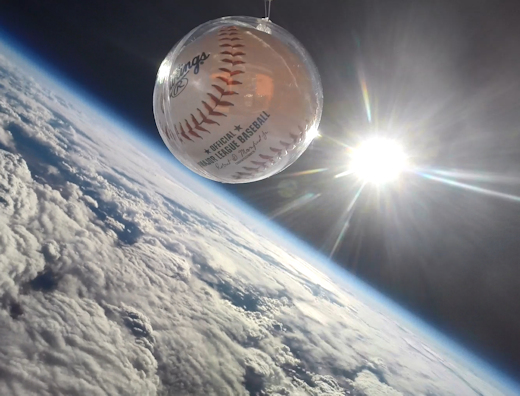
The payload carried commemorative baseballs for the following teams: Dodgers, Angels, Diamondbacks, Red Sox, Yankees, and Giants. You can have one for $139.95. During checkout, enter your preferred team in the COMMENTS section. We will send you the corresponding baseball. If your home team is not on the list, let us know and we will fly it for you on an upcoming flight.
Each baseball comes with a greeting card showing the ball in flight and telling the story of its journey to the stratosphere. They make great gifts for baseball fans, and all proceeds support STEM education.
Far Out Gifts: Earth to Sky Store
All proceeds support hands-on STEM education