MARS VISIBLE IN BROAD DAYLIGHT: Astronomers have long known that the brightest planets can be seen with the naked eye in daylight. Usually this means Venus and Jupiter. Now Mars has joined the club. On July 6th in Trieste, Italy, Giorgio Rizzarelli saw the Red Planet with his unaided eye--a pinprick of dusty orange piercing the morning blue even after sunrise. He took these pictures, which simulate the view without optics. Browse: Mars Photo Gallery.
WHITE SUNSPOT: This weekend, observers of the sun have been waiting for something to emerge over the sun's eastern limb. We knew it was there because of a farside solar flare on July 6th. Today it arrived, and it appears to be a white sunspot:

The correct name of this phenomenon is "faculae." It is a cousin of sunspots.
Regular dark sunspots are magnetic islands on the surface of the sun. Magnetic fields in these areas are thousands of times stronger than Earth's magnetic field. Sunspot magnetic fields are so strong, they block the flow of heat from the nuclear furnace below. They appear dark because they are relatively cool compared to their surroundings.
Faculae are also made of magnetic fields. However, the magnetism of faculae is concentrated in much smaller bundles than in sunspots. Instead of blocking heat from below, they essentially form corridors that allow us to see into sun's hot interior, creating an apparent bright spot on the surface of the sun.
It is still possible that a dark core will follow these faculae over the limb in the hours ahead, establishing the region as a normal sunspot group. Stay tuned. Free: Solar Flare Alerts
Realtime Space Weather Photo Gallery
ONE RING ABOVE HOBBITON: Two weeks ago, the students of Earth to Sky Calculus traveled to New Zealand for an unprecedented launch of space weather balloons over Earth's 8th continent. To help fund their trip, they sent this ring of power to the stratosphere:
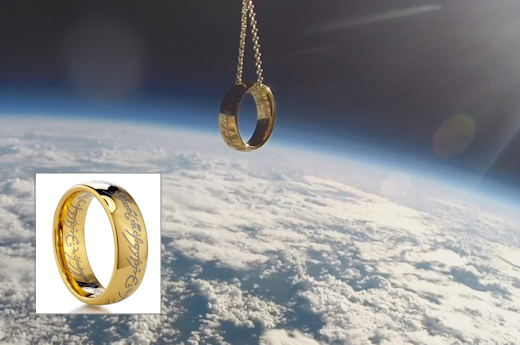
You can have it for $129.95. On the southern winter solstice, June 21st, the ring flew 109,580 feet above New Zealand's north island, passing almost directly above Hobbiton, the movie set for the Lord of the Rings. The band is made of golden-colored tungsten and inscribed with the authentic Mordor script of the One Ring. Along with the ring, you'll receive a greeting card showing the item in flight and telling the story of its journey to the edge of space.
Far Out Gifts: Earth to Sky Store
All proceeds support hands-on STEM education
WHY ARE NOCTILUCENT CLOUDS BLUE? Observers of noctilucent clouds (NLCs) often describe their color as "electric blue." This high-voltage photo taken July 7th by Pentti Arpalahti of Helsinki, Finland, is a great example:
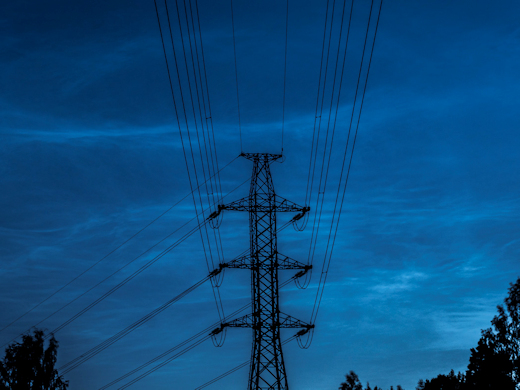
But why? What makes these clouds of frosted meteor smoke the color of an electric discharge? It turns out, electricity has nothing to do with it.
NLCs are blue for two reasons: (1) The clouds consist of tiny ice crystals about the size of particles in cigarette smoke. Cigarette smoke looks blue, too, and for the same reason. Tiny particles scatter blue light better than other colors. (2) Ozone! Research in the 1970s revealed that some of the sunlight hitting noctilucent clouds first passes through Earth's ozone layer. Ozone tends to scatter red light, while allowing blue to pass. Sunbeams hitting noctilucent clouds have thus been pre-conditioned for blue.