GEOMAGNETIC STORM PREDICTED: NOAA forecasters say there is a 65% chance of minor G1-class geomagnetic storms on July 24th when a high-speed stream of solar wind is expected to hit Earth's magnetic field. The gaseous material is flowing from a large hole in the sun's atmosphere, shown here in an extreme ultraviolet image from NASA's Solar Dynamics Observatory:


This is a "coronal hole," a vast region in the sun's atmosphere where magnetic fields open up and allow solar wind to escape. They look dark in ultraviolet images because the hot glowing plasma normally contained there is missing. In this case, the plasma is making a beeline for Earth.
Some readers have asked, how can we have a geomagnetic storm during solar minimum? It happens all the time. Sunspots, whose counts define the solar cycle, are not the only source of storms. When sunspots vanish, coronal holes replace them as a primary source of solar activity. Studies show that coronal holes not only open more frequently, but also last longer when sunspots are absent. During the last solar minimum in 2007-2009, one coronal hole stayed open for 27 consecutive solar rotations. As the sun slowly turned on its axis, that hole fire-hosed Earth with a stream of solar wind almost once a month for nearly two years. Explosive sunspots make stronger storms than the relatively gentle breezes that emerge from coronal holes, but geomagnetic storms never go away, not even during solar minimum.
High-latitude sky watchers should be alert for auroras on July 24th when the solar wind arrives. G1-class storms can produce Northern Lights as far south as US states ranging from Maine to Washington. Free: Aurora Alerts.
UNPREDICTABLE GREEN COMET: On July 1st, Comet PANSTARRS (C/2017 S3) exploded. Its green atmosphere ballooned in size, large enough to swallow Jupiter twice, and its brightness increased 16-fold. Barely a week later, the comet fizzled, dimming almost as much as it had brightened. Then it exploded again! On July 15th Comet PanSTARRS regained all it had lost and more. Michael Jaeger of Jauerling, Austria, captured the comet's newly-formed tail on July 20th:
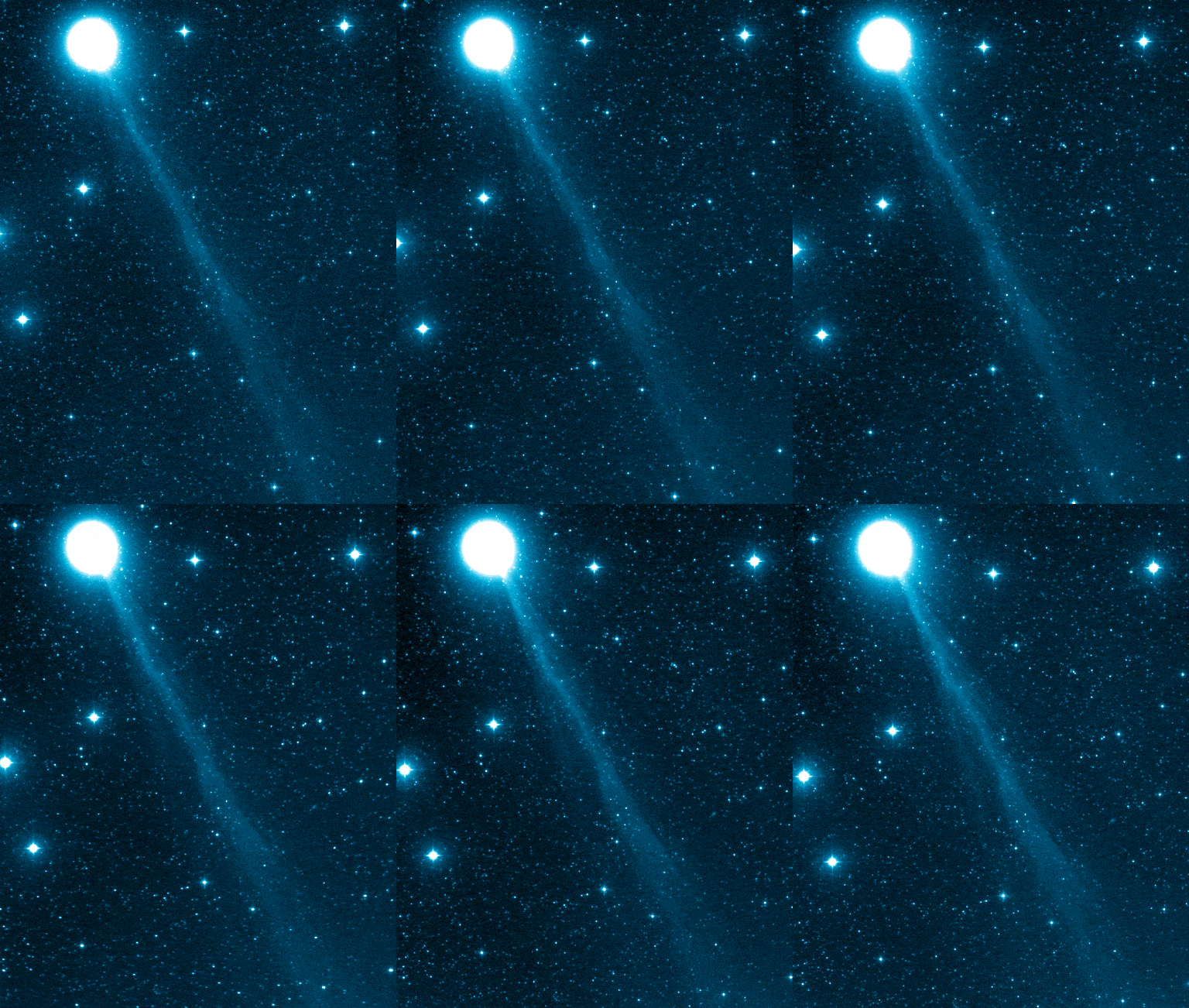
"The comet is already fading again, and it seems to have lost its tail on July 21st," Jaeger says.
Why is Comet PanSTARRS so unpredictable? Probably because it has never felt the heat of the sun before. The comet is arriving from the Oort cloud, a vast reservoir of fresh comets in the outermost solar system. This is its first time among the inner planets. Unfamiliar warmth is making veins of fresh ice pop and fizz as the comet approaches--an entirely unpredictable process.
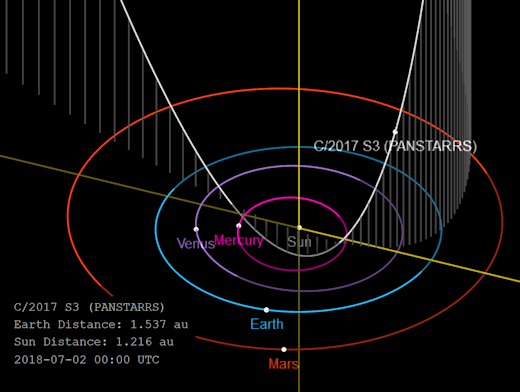
Click to launch an interactive 3D visualization of the comet's orbit from JPL
At the moment, Comet PanSTARRS shines like a 7th or 8th magnitude star--just below the limit of naked-eye visibility. It is expected to brighten many-fold as it approaches the sun inside the orbit of Mercury in August. Experts suggest it will max out at magnitude +3, which will make it dimly visible to the unaided eye and a very nice target for backyard telescopes. However, stay tuned for the unexpected.
A MAGIC RING IN THE STRATOSPHERE: There are only a few left. Last month, the students of Earth to Sky Calculus launched a space weather balloon to the stratosphere over New Zealand. In the payload, alongside cosmic ray sensors, were rings of power. Here's one flying 108,345 feet above Hobbiton, the movie set for the Lord of the Rings:
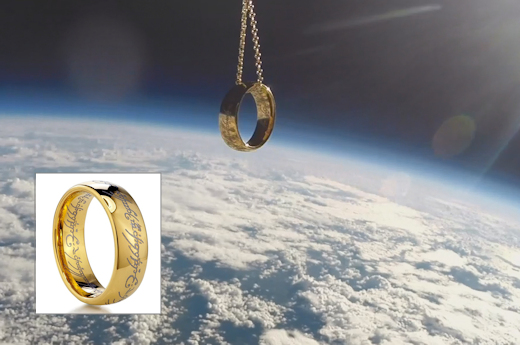
You can have one for $149.95. The ring is made of golden-colored tungsten and inscribed with the authentic Mordor script of the One Ring. This far out gift comes with a greeting card showing the ring in flight and telling the story of its journey to the edge of space. Sales support the Earth to Sky Calculus cosmic ray ballooning program and hands-on STEM research.
Far Out Gifts: Earth to Sky Store
All sales support hands-on STEM education
Realtime Space Weather Photo Gallery