159 YEARS AGO, A GEOMAGNETIC MEGA-STORM: On Sept. 2, 1859, a powerful CME rocked Earth's magnetic field, causing a geomagnetic storm that set fire to Victorian telegraph offices and sparked auroras as far south as Mexico and Cuba. Now known as the "Carrington Event," that megastorm 159 years ago is a touchstone of modern extreme space weather research. What are the odds it could happen again? Find out here.
CORONAL HOLE FACES EARTH: A hole in the sun's atmosphere is directly facing Earth and spewing a stream of solar wind toward our planet. NASA's Solar Dynamics Observatory photographed the structure using an extreme UV camera on Sept. 3rd:

This is a "coronal hole"--a region where the sun's magnetic field opens up and allows solar wind to escape. It looks dark in extreme UV images of the sun because the hot glowing plasma normally contained there is missing. In this case, the gaseous material is en route to Earth.
Minor geomagnetic storms are possible on Sept. 7th when the solar wind arrives. Arctic sky watchers have started seeing auroras with regularity in recent weeks as summer sunlight fades and autumn approaches. Adding a stream of solar wind to the mix will improve the light show even more. Free: Aurora Alerts.
Realtime Space Weather Photo Gallery
FLY ME TO THE MOONSTONE: Are you looking for a far-out gift? Nothing says "I love you" like a moonstone from the edge of space. On June 12th, the students of Earth to Sky Calculus flew this moonstone wrapped in a sterling silver Celtic love knot 34.1 km (111,877 feet) above Earth's surface:
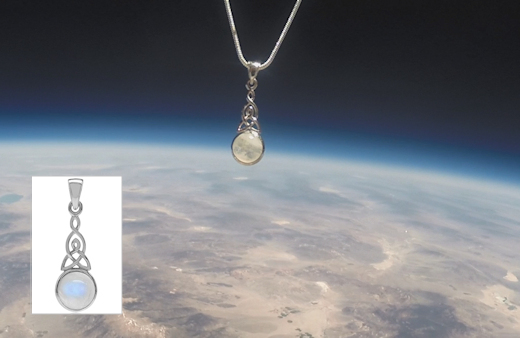
You can have it for $139.95. The students are selling these pendants to support their cosmic ray ballooning program. Each one comes with a greeting card showing the item in flight and telling the story of its journey to the edge of space. Sales support the Earth to Sky Calculus cosmic ray ballooning program and hands-on STEM research.
Far Out Gifts: Earth to Sky Store
All sales support hands-on STEM education
AUTUMN IS COMING: The northern autumnal equinox is now only 3 weeks away. Residents of Arctic Canada don't need a calendar to tell them that, however. The signs are in the sky. "Last night (Sept. 1st), auroras came out at dusk and kept dancing all night long," reports Yuichi Takasaka, who sends this picture from Yellowknife in the Northwest Territories:

Displays like these are a sign that autumn is coming.
Researchers have long known that, during weeks around equinoxes, cracks form in Earth's magnetosphere. Solar wind can pour through the gaps to fuel bright displays of Arctic lights. This is called the the "Russell-McPherron effect," named after the researchers who first explained it. A recent study covering 75 years of historical geomagnetic records shows that September-October are among the most geomagnetically active months of the year–a direct result of "equinox cracks." Free: Aurora Alerts.
