MINOR STREAMS OF SOLAR WIND: A minor stream of solar wind is brushing against Earth's magnetic field today, Nov. 19th, but so far it is doing little to cause geomagnetic activity. Another similar stream is following behind it and could arrive on Nov. 22nd. Either stream could spark Arctic auroras before Thanksgiving. Free: Aurora Alerts
A SUNSPOT FROM THE NEXT SOLAR CYCLE: Over the weekend, a small sunspot materialized in the sun's northern hemisphere, then, hours later, vanished again. Such an occurrence is hardly unusual during solar minimum when sunspots are naturally small and short-lived. However, this ephemeral spot was noteworthy because its magnetic field was reversed--marking it as a member of the next solar cycle.
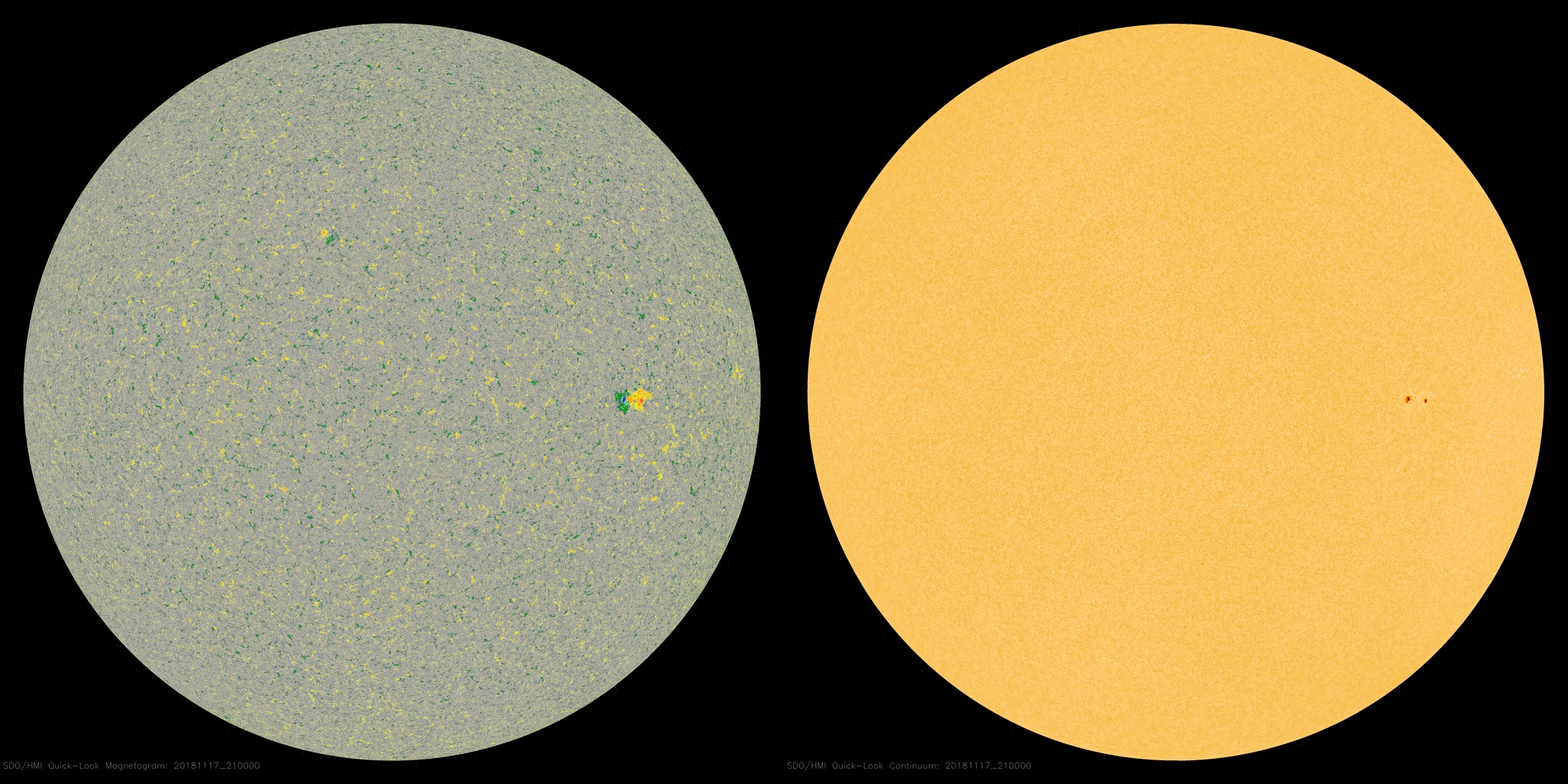
Shown above is a magnetic map of the sun from NASA's Solar Dynamics Observatory on Nov. 17th. Two sunspot groups visible at 21:00 UT are inset.
Note sunspot AR2727 just north of the sun's equator. It is a member of decaying Solar Cycle 24, the cycle that peaked back in 2012-2014. Next, compare its magnetic polarity to that of the other, unnumbered sunspot high above it. They are opposite. According to Hale's Law, this means the two sunspots belong to different solar cycles. The high latitude sunspot appears to be a harbinger of Solar Cycle 25.
Solar cycles always mix together at their boundaries. Indeed, ephemeral sunspots possibly belonging to Solar Cycle 25 have already been reported on Dec. 20, 2016, and April 8, 2018. Now we can add Nov. 17, 2018, to list. The slow transition between Solar Cycle 24 and Solar Cycle 25 appears to be underway.
What does this mean? First, it suggests that the solar cycle is still operative. This contradicts widespread internet buzz that a Grand Minimum is in the offing, with no new sunspots expected for decades as the solar cycle grinds to a halt. Second, if patterns of previous solar cycles hold, Solar Minimum is not finished. It will probably continue to deepen in the year or so ahead even as new Solar Cycle 25 sunspots occasionally pop up, promising an ultimate end to the lassitude.
Realtime Space Weather Photo Gallery
A GIFT FROM THE EDGE OF SPACE: Once a week, the students of Earth to Sky Calculus launch a cosmic ray balloon to the stratosphere--a regular part of their atmospheric radiation monitoring program. Last week, a spiral galaxy went along for the ride, flying 113,517 feet above the Sierra Nevada mountains of central California:
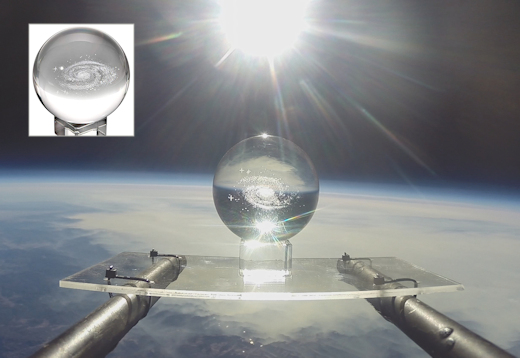
You can have it for $149.95. The students are selling Galaxy Globes to pay their helium bill. Each one comes with a greeting card showing the item in flight and telling the story of its journey to the edge of space. All sales support the Earth to Sky Calculus cosmic ray ballooning program and hands-on STEM research.
Far Out Gifts: Earth to Sky Store
All sales support hands-on STEM education
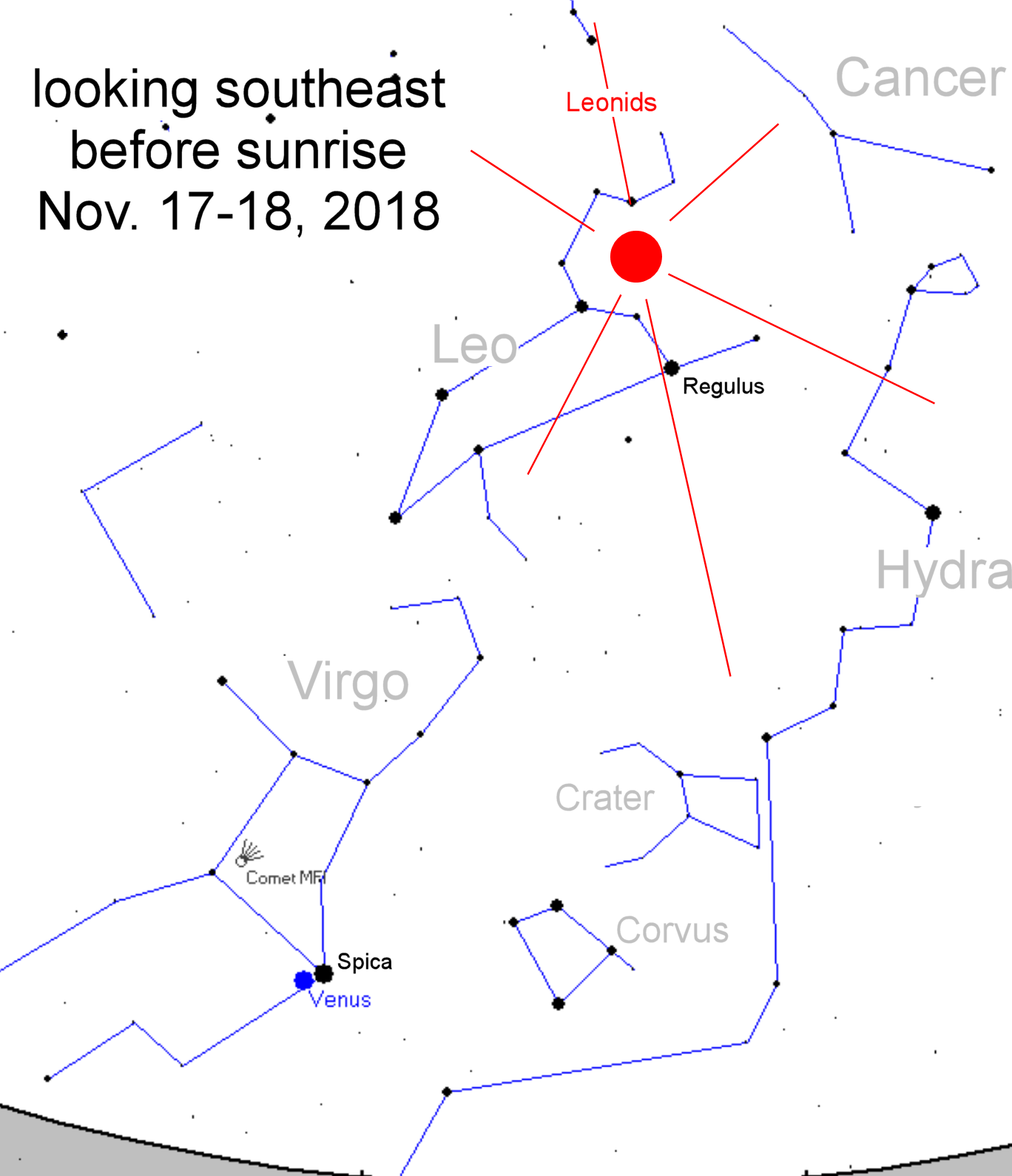
LEONID METEOR SHOWER UPDATE: The 2018 Leonid meteor shower peaked over the weekend when Earth passed through a stream of debris from Comet 55P/Tempel-Tuttle. International Observers reported seeing more than 20 meteors per hour from dark-sky sites, while NASA's network of all-sky meteor cameras recorded 69 Leonid fireballs over the USA. Some of them made observers feel like ducking! Sven Melchert caught this Leonid coming almost straight at him from the head of Leo on Nov. 18th:
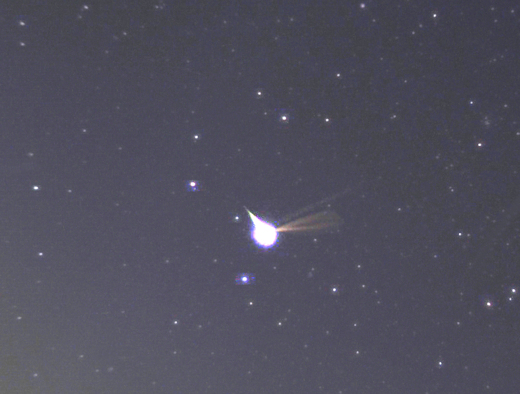
"In the early morning at 04:09:40 UT a bright meteor appeared over Stuttgart, Germany-- obviously one of the Leonid meteors," says Melchert. "This image, a 4 minute exposure, shows the fireball itself plus the debris drifting way after the meteoroid exploded."
Meteor rates are expected to drop sharply on Nov. 19th as Earth exits the comet's stream of debris. Did you miss the shower? Browse the Realtime Meteor Gallery for highlights. [sky map]