MAGNETIC MISMATCH IN THE SOLAR WIND: For the third day in a row, Earth is inside a stream of fast-moving solar wind. Inside the stream, wind speeds are topping 600 km/s--yet there have been no geomagnetic storms. Why not? There's a mismatch: Magnetic fields inside the solar wind stream are pointing North, the same direction as Earth's magnetic field. "North" versus "North" prevents the type of magnetic link-up that leads to storming. Even without a storm, however, Arctic sky watchers have seen a few beautiful auroras. Free: Aurora Alerts.

VOYAGER 2 ENTERS INTERSTELLAR SPACE: Voyager 2 has exited the sun's magnetic bubble and entered interstellar space. Mission scientists announced the breakthrough earlier today at the American Geophysical Union meeting in Washington DC. Its twin, Voyager 1, crossed the same boundary in 2012, but Voyager 2's crossing is arguably more significant because it carries a working instrument that can sense interstellar plasmas, providing the first in situ sampling of matter between the stars.
The most compelling evidence of Voyager 2's exit from the heliosphere came from its onboard Plasma Science Experiment (PLS), an instrument that stopped working on Voyager 1 in 1980. Until recently, Voyager 2 was surrounded mainly by the solar wind--a type of plasma flowing outward from the sun. On Nov. 5th, Voyager 2's plasma instrument observed a sharp decline in the solar wind, and since that date, it has observed no solar wind flow--a clear sign that the probe has left the heliosphere.
Replacing the solar wind is a blizzard of galactic cosmic rays. The sun's magnetic field substantially protects the solar system from cosmic rays, fending off the high energy debris of supernova explosions in the Milky Way and elsewhere. Now that Voyager 2 has exited that protective shell, it is baldly exposed to cosmic rays, and its cosmic ray subsystem is registering a surge.

Launched in 1977, Voyager 2 now is slightly more than 11 billion miles (18 billion kilometers) from Earth. Mission operators still can communicate with Voyager 2 as it enters this new phase of its journey, but information – moving at the speed of light – takes about 16.5 hours to travel from the spacecraft to Earth.
The Voyager probes are powered using heat from the decay of radioactive material, contained in a radioisotope thermal generator (RTG). The power output of the RTGs diminishes by about four watts per year, which means that various parts of the Voyagers, including the cameras on both spacecraft, have been turned off over time to manage power. Thanks to these precautions, the Voyagers could continue to send back at least some data for years to come.
"There is still a lot to learn about the region of interstellar space immediately beyond the heliosphere," said Ed Stone, Voyager project scientist based at Caltech in Pasadena, California. Stay tuned for updates from the stars.
Realtime Space Weather Photo Gallery
CHRISTMAS GIFTS FROM THE EDGE OF SPACE: So far in 2018, the students of Earth to Sky Calculus have launched 42 space weather balloons to the stratosphere, measuring cosmic rays over 3 continents, 2 hemispheres, and 7 different US states. You can help them pay their helium bill by purchasing a Christmas gift from the edge of space:

Every item in the Earth to Sky Store has flown to the stratosphere alongside an array of cosmic ray sensors. Carried aloft by giant balloons, these unique gifts travel above 99.7% of Earth's atmosphere, experiencing space-like blasts of cosmic rays, extreme cold, and a wild ride parachuting back to Earth after the balloon explodes. Even Amazon doesn't carry items this far out!
Don't forget to enter coupon code "SPACESANTA" at checkout for a 10% holiday discount.
Far Out Gifts: Earth to Sky Store
All sales support hands-on STEM education
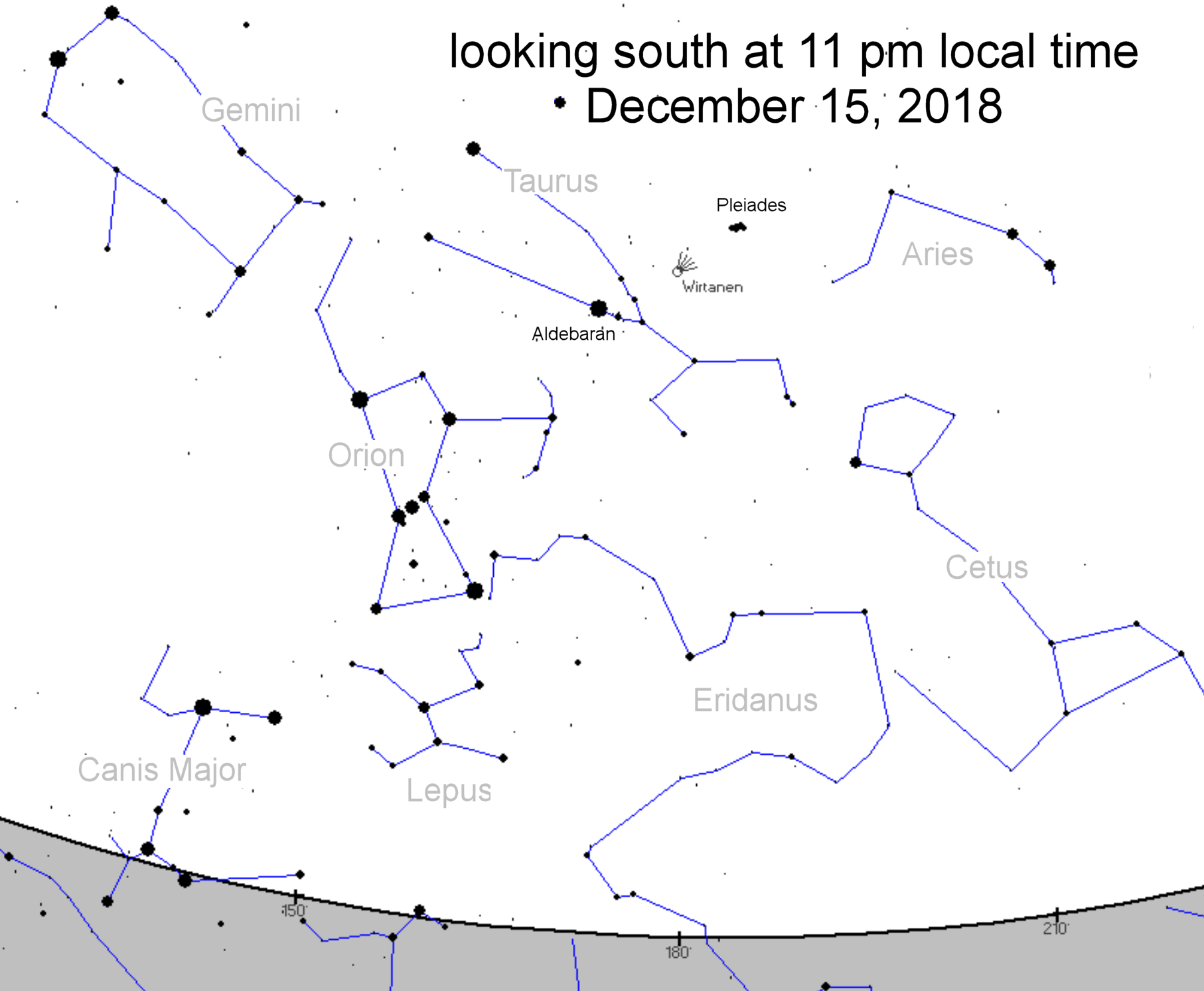
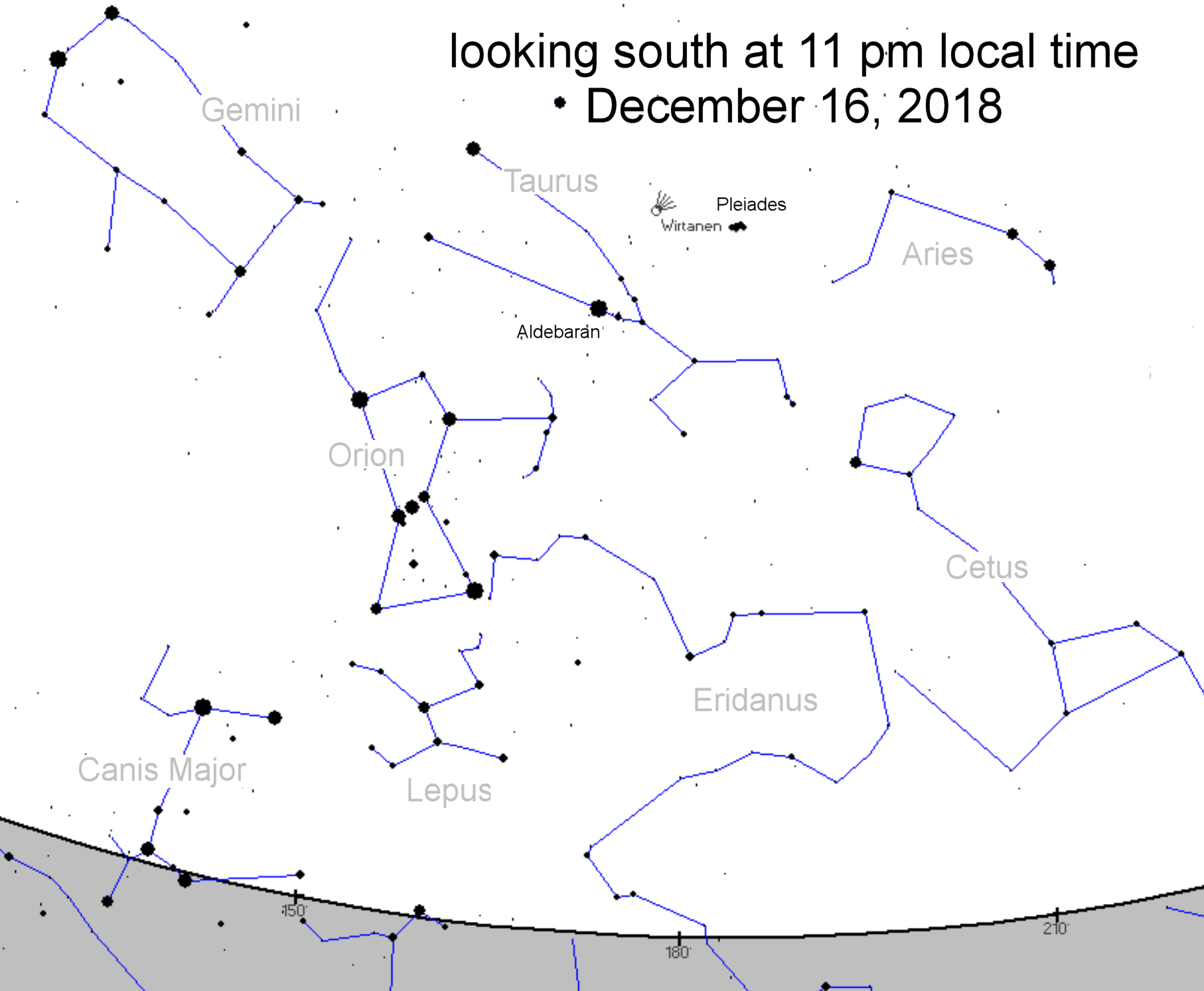
BRIGHTENING COMET WIRTANEN: Comet 46P/Wirtanen is nearing Earth for one of the 10 closest Earth-comet encounters of the Space Age. Closest approach: Dec. 16th. Observers say that the comet may now be seen with the unaided eye from dark rural areas, "appearing as a huge 1 degree misty cloud," reports Chris Schur of Payson, Arizona. "It is a photographers dream." Indeed, just last night Bernt Olsen of Troms, Norway, took this picture using only a camera--no telescope required:

"Comet Wirtanen was rising above the mountain, Isfjellet," he says. "This is a composite of five 30-second exposures using my Nikon D810a set at ISO 3200."
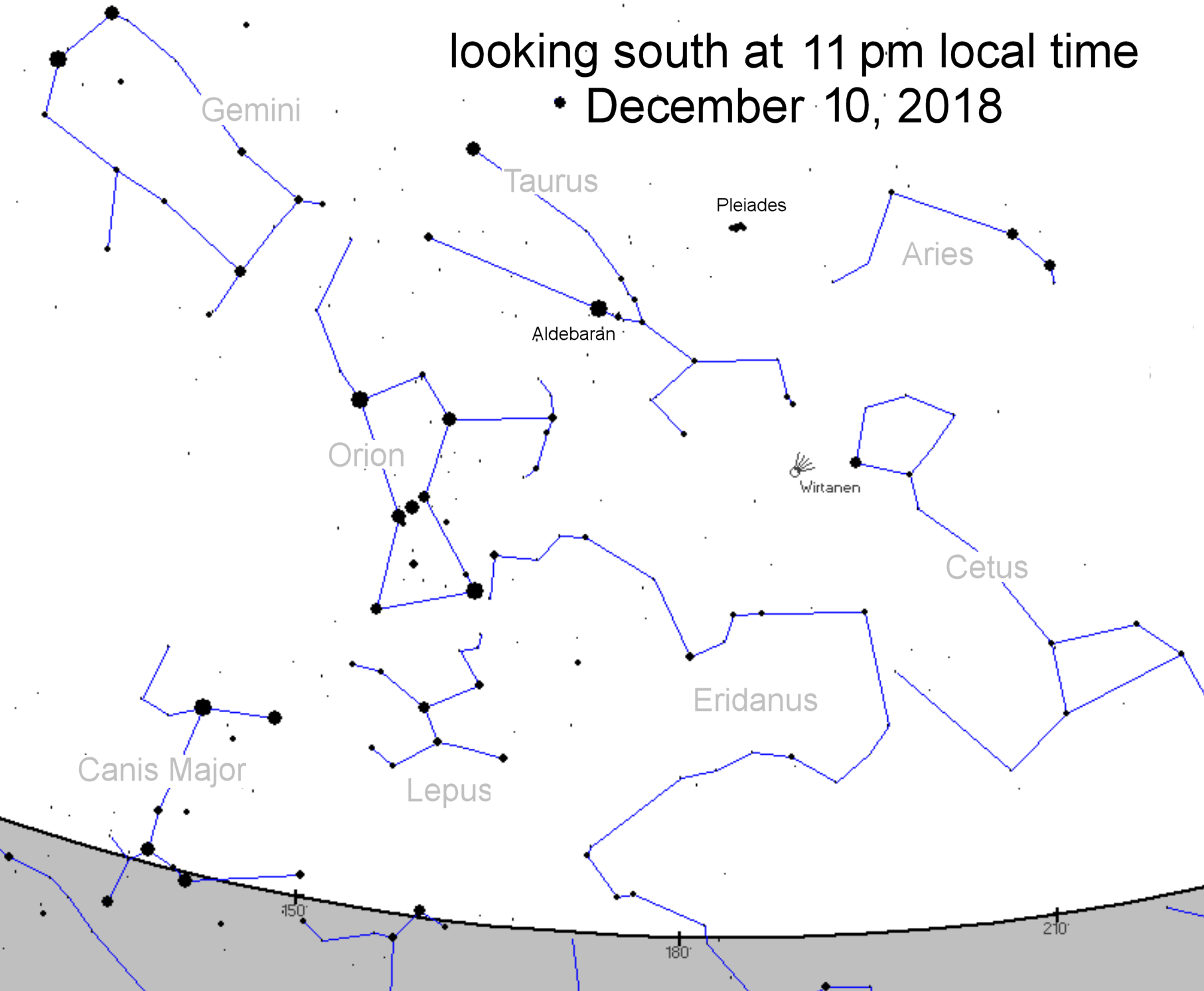
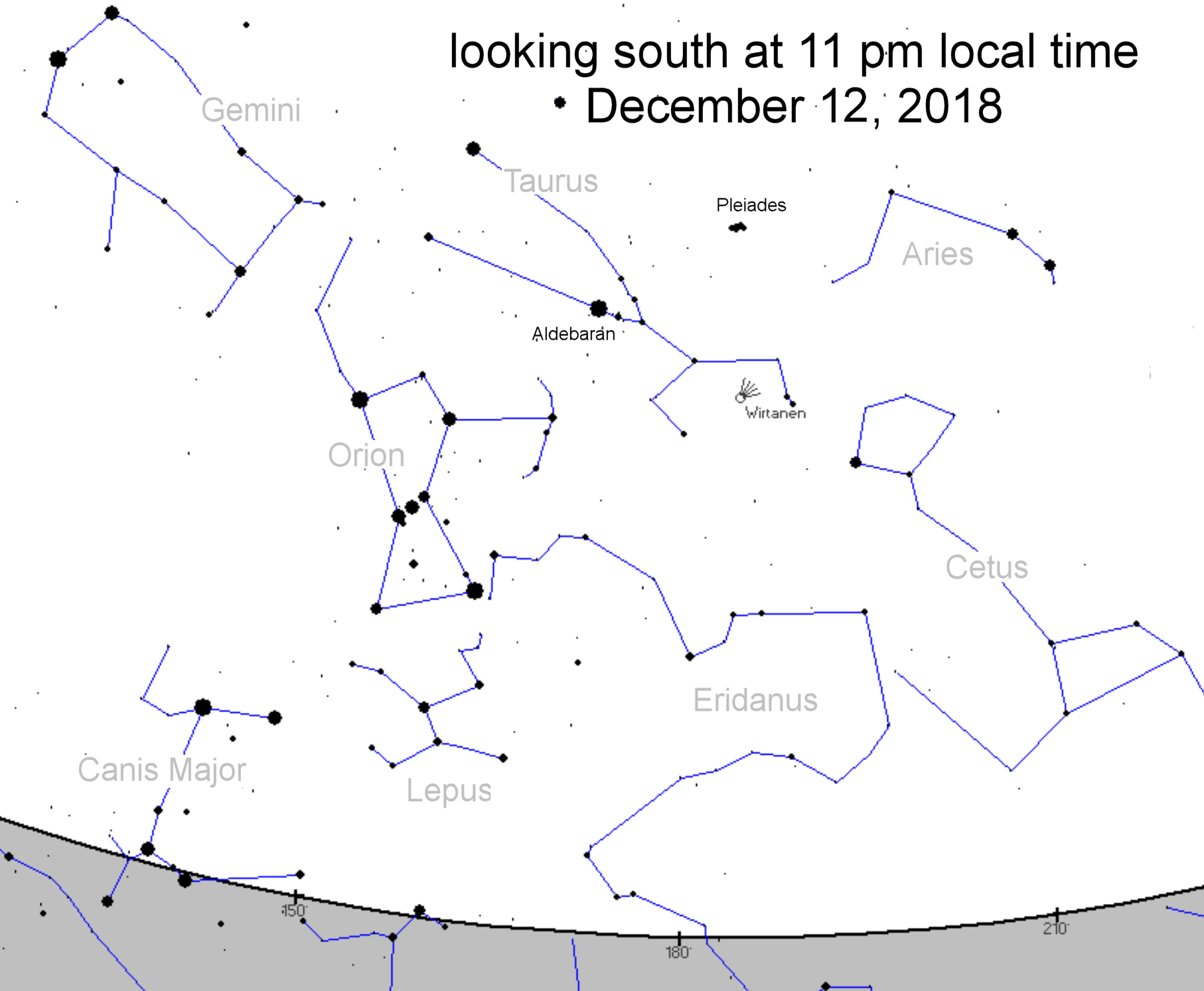
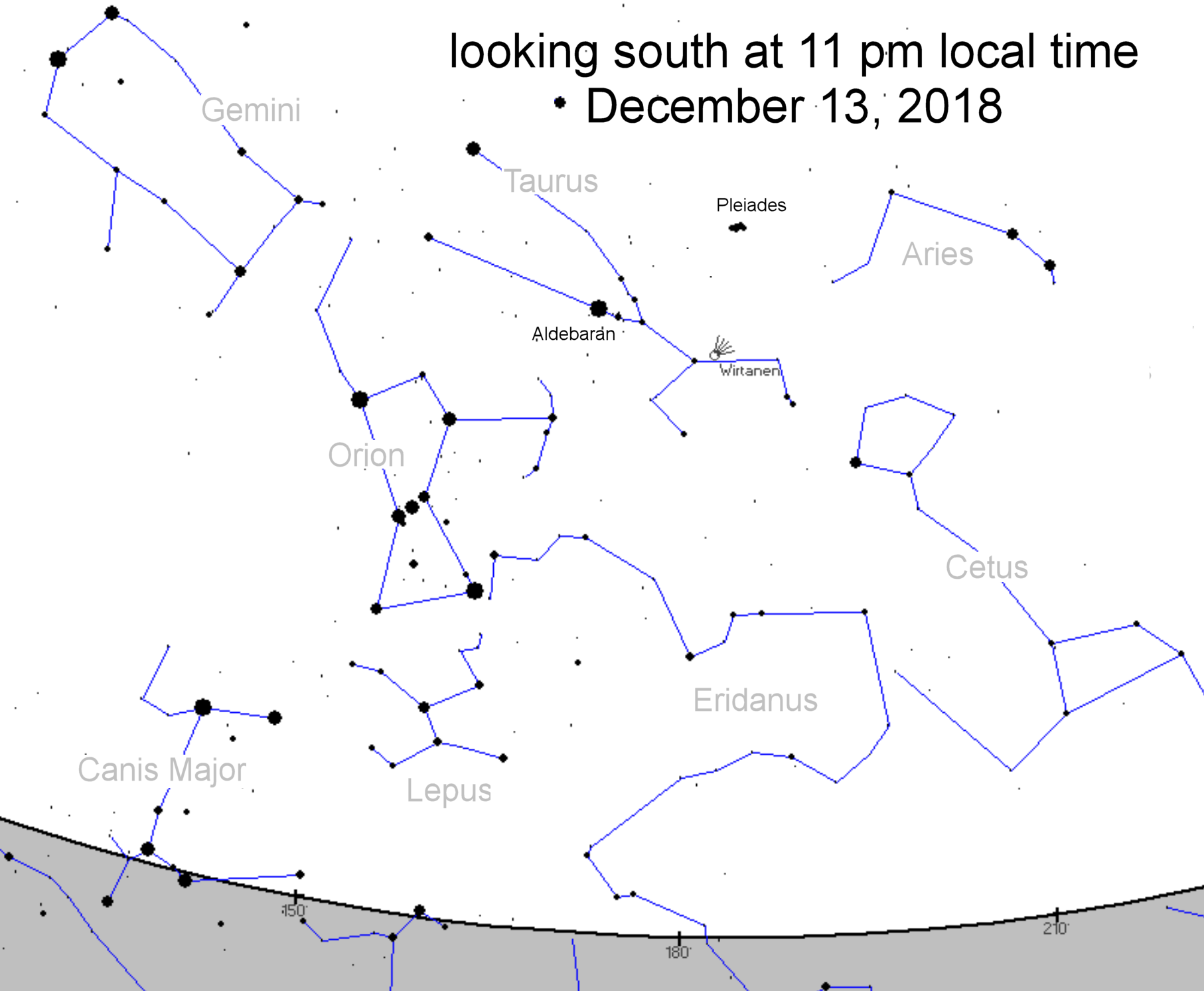
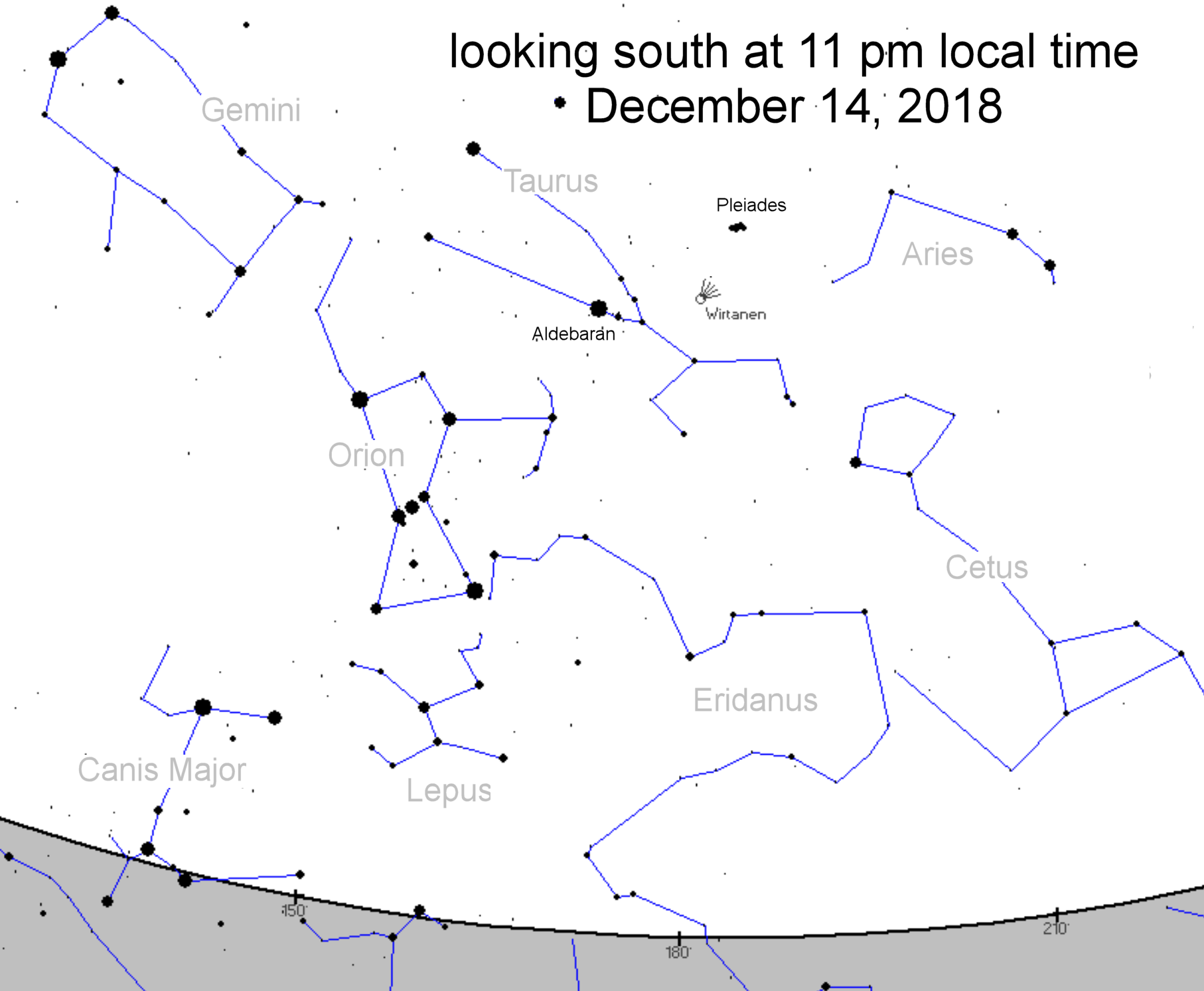
The view will improve in the nights ahead. The comet is already shining like a (big fuzzy) star of 5th magnitude, and its brightness could increase another 3 to 5-fold. On Dec. 16th, the green comet will be nicely positioned in the constellation Taurus for easy viewing by observers in the northern hemisphere. Use these sky maps to plan your photos: Dec. 10, Dec. 11, Dec. 12, Dec. 13, Dec. 14, Dec. 15, Dec. 16