CHANCE OF STORMS THIS WEEKEND: NOAA forecasters say there is a 65% chance of G1-class geomagnetic storms on Jan. 5th. That's when a stream of solar wind flowing from a large hole in the sun's atmosphere is expected to hit Earth's magnetic field. A New Moon will provide dark skies for good visibility of Arctic auroras. Free: Aurora Alerts


PARTIAL SOLAR ECLIPSE: When the sun rises over Beijing on Jan 6th, something will be missing. As in ... 31.5% of the sun. On that morning, the New Moon is going to pass in front of the sun, off center, turning the usual disk into a crescent. This movie created by graphic artist Larry Koehn shows the eclipse zone, which includes significant population centers in China, Korea and Japan:

This is not a total eclipse. At maximum, the Moon will cover 71% of the sun--a deep crescent that may be seen by the residents of Srednekolymsk, a small town in northern Russia. Elsewhere, such as Tokyo, Seoul, and Beijing, less than half of the sun will vanish behind the black lunar disk. The zone of visibility stretches from coastal China to the Aleutian islands of Alaska.
Sunrise observers of the eclipse could witness scenes like this:

James Kevin Ty took this picture from the Philipines during a similar eclipse in Jan. 2010. "The low-hanging sun was dim and I didn't need any special filter to photograph it using my Canon 350D," says Ty. "In the foreground, a young couple sat together in a boat enjoying the romantic view."
Many people watching the eclipse at sunrise or sunset may be tempted to stare at the relatively dim sun. BE CAREFUL. Even the tiniest sliver of sun left uncovered by the Moon can hurt your eyes. Eclipse glasses are recommended for safety.
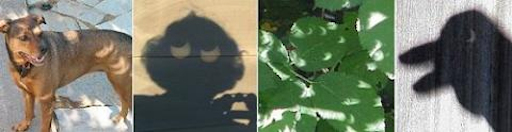
Observing tip: Try looking down. Beneath a leafy tree, you might be surprised to find hundreds of crescent-shaped sunbeams dappling the grass. Overlapping leaves create natural pinhole cameras, each one casting an image of the crescent-sun onto the ground beneath the canopy. Note the crescent-eyed turkey shown above. Partial eclipse shadow play is safe--and lots of fun.
During the eclipse, photographers in Asia will be posting photos to Spaceweather.com. Monitor our realtime photo gallery for the latest:
Realtime Solar Eclipse Photo Gallery
SPACE WEATHER ALERTS--NEW! Spaceweather.com is proud to announce our new and improved space weather alert system. Sign up now and you'll never miss another solar storm in 2019. Subscribers receive instant text messages when there are solar flares, geomagnetic storms, and CMEs about to strike Earth. And if you sign up for the PRO PLAN, you'll receive a type of alert available no where else. Keep reading after the graphic to learn more:

PRO PLAN subscribers get a text message whenever a crack is opening in Earth's magnetosphere. Magnetic cracks are caused by south-pointing magnetic fields ("BsubZ") in the solar wind, which partially cancel Earth's magnetic defenses. Solar wind pours in through these cracks to fuel bright auroras and geomagnetic storms. Veteran aurora chasers know that watching "BsubZ" is the best way to anticipate geomagnetic activity. Now your cell phone can do this job for you, alerting you when cracks are forming in the invisible magnetic field overhead.
To kick off the New Year, we are offering annual plans as low as $49.95. Sign up now and check off that New Year's Resolution: I'll never miss another solar storm.
Far Out Gifts: Earth to Sky Store
All sales support hands-on STEM education
Realtime Space Weather Photo Gallery