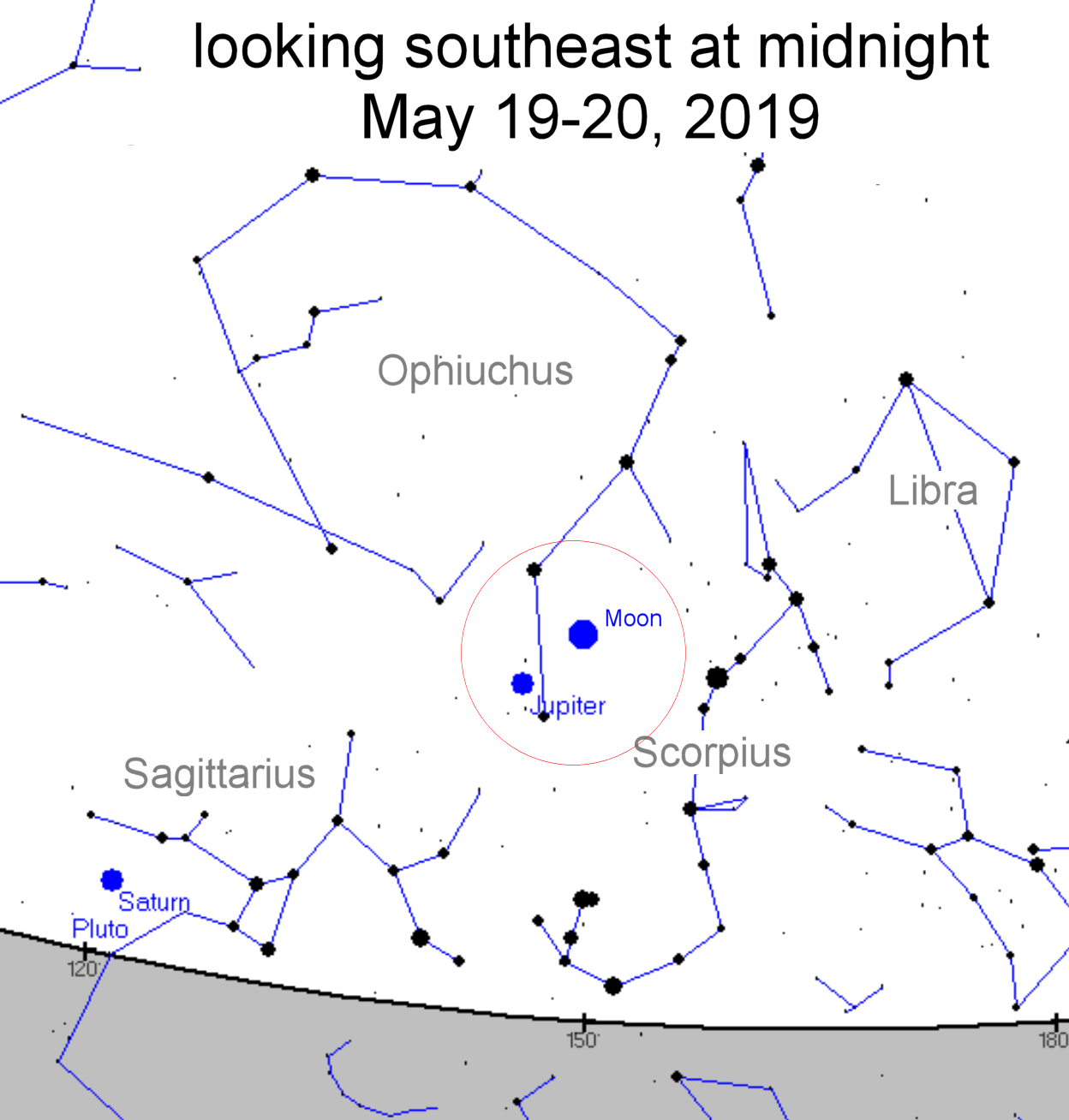
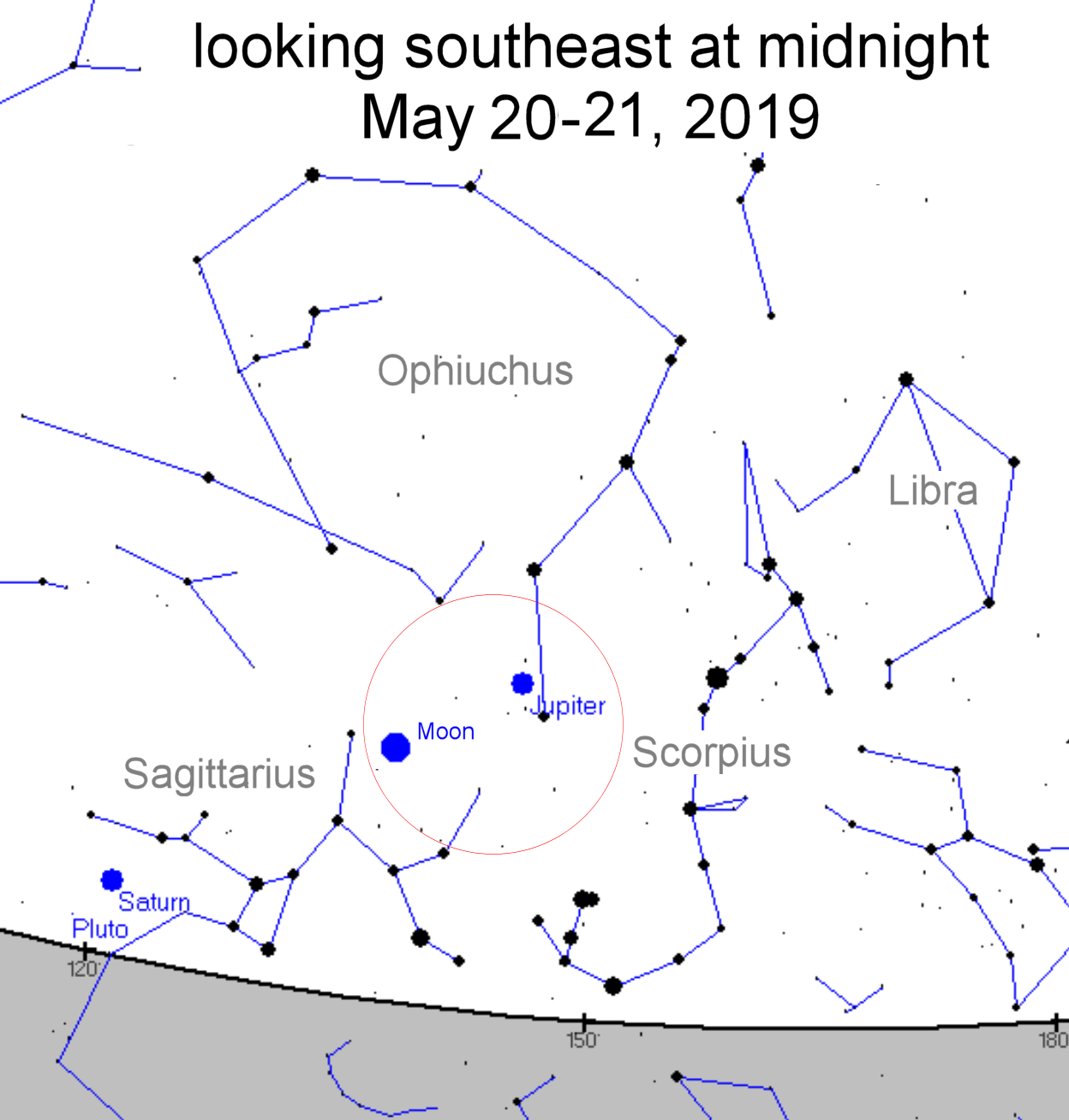
JUPITER-MOON CONJUNCTION-TONIGHT: Awake at midnight? Go outside and look southeast. The Moon and Jupiter are having a bright conjunction in the constellation Ophiuchus, only a few degrees apart. Enjoy the show! Sky maps: May 19, 20.
A HOLE IN THE SUN'S ATMOSPHERE: A hole has opened in the sun's atmosphere and it is spewing solar wind toward Earth. NASA's Solar Dynamics Observatory took this extreme ultraviolet picture of the opening on May 19th:
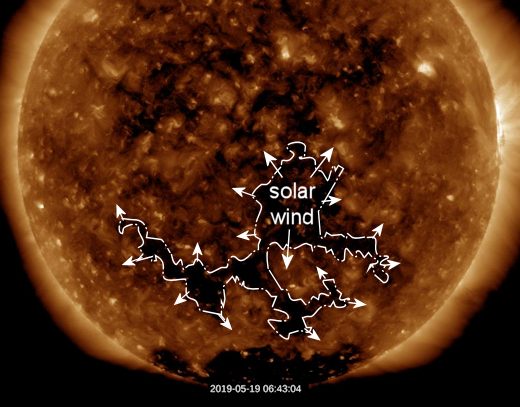
This is a "coronal hole"--a place where magnetic fields peel back and allow solar wind to escape. It looks dark because hot glowing gas normally contained there is missing. In this case, it is en route to Earth.
Expected May 21st, the gentle impact of the solar wind could cause geomagnetic unrest around the poles and perhaps even a minor G1-class geomagnetic storm. Unfortunately, glare from the waning full Moon will interfere with the visibility of high-latitude auroras. Aurora Alerts: SMS Text.

3D-PRINTED GLOWING MOON GLOBE: Are you looking for an over-the-Moon gift? Consider this: Last month, the students of Earth to Sky Calculus flew this 3D printed Moon globe to the stratosphere, 36.3 km (119,095 ft) above California's Sierra Nevada mountains:
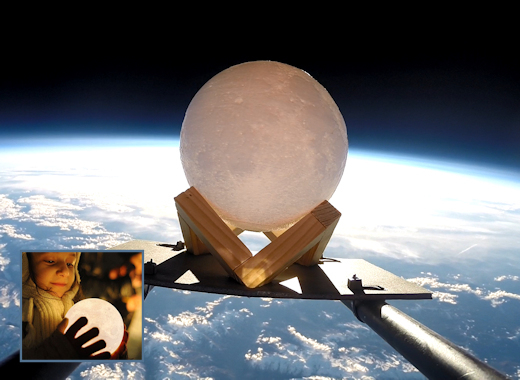
You can have it for $149.95. The students are selling these globes to support their cosmic ray ballooning program. Each glowing orb comes with a greeting card showing the Moon in flight and telling the story of its journey to the edge of space.
The surface of the sphere is an accurate topo-map of lunar terrain, tracing every major crater and mountain range. It is also a night light. A built-in USB-rechargeable battery provides up to 20 hours of romantic illumination.
Far Out Gifts: Earth to Sky Store
All sales support hands-on STEM education
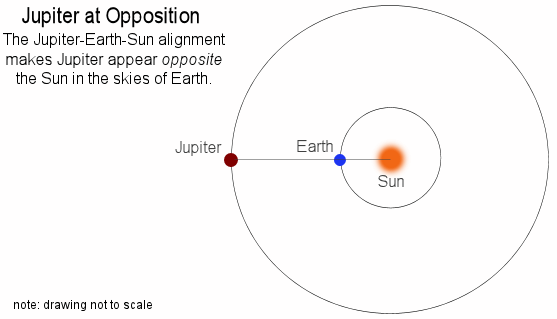
At opposition, Jupiter and the sun are on opposite sides of the sky. Jupiter rises at sunset and stays up all night long. This is also the time when Jupiter is closest to Earth. Small telescopes easily reveal Jupiter's moons and stormy cloud belts.
Even now, more than 3 weeks before opposition, the view is superb. Efrain Morales Rivera of Aguadilla, Puerto Rico, took this picture on May 17th:
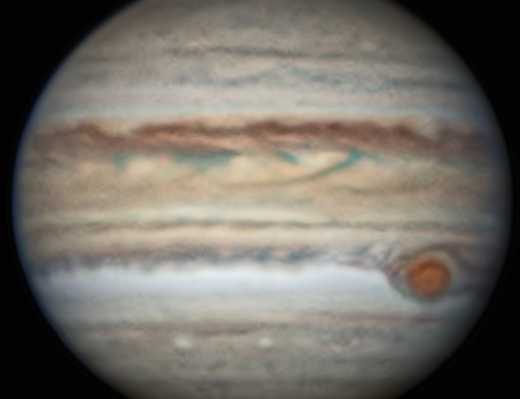
"The Great Red Spot was easy to see through my 12-inch telescope," says Rivera. "I used Custom Scientific RGB filters to capture its ruddy color."
Finding Jupiter is easy. It's shining almost four times brighter than Sirius, the brightest star in the sky. Look southeast at midnight. Jupiter is located in the constellation Ophiuchus right beside the waning full Moon. Sky maps: May 19, 20.
Realtime Space Weather Photo Gallery