CO-ROTATING INTERACTION REGION: NOAA forecasters say there is a chance of G1-class geomagnetic storms on July 5th when a co-rotating interaction region (CIR) is expected to hit Earth's magnetic field. CIRs are transition zones between slow- and fast-moving streams of solar wind. They contain shock-like density gradients that sometimes do a good job sparking auroras. Aurora alerts: SMS Text.

TOTAL ECLIPSE OF THE SUN: Yesterday ended with a black hole in the sky. Across the South Pacific and parts of South America on July 2nd, the New Moon passed directly across the face of the sun, producing a sunset solar eclipse. Thierry Legault photographed totality from Rodeo, Argentina:

"I was on the shore of the lake La Cuesta Del Viento with the Andes in the background," says Legault. "We had beautiful weather for a wonderful eclipse!"
Browse the Solar Eclipse Photo Gallery for more images from the path of totality, which stretched from the South Pacific across great observatories in Chile to the eastern reaches of Argentina.
Realtime Solar Eclipse Photo Gallery
Free: Spaceweather.com Newsletter
SUNSPOTS FROM THE NEXT SOLAR CYCLE: Solar Minimum is here, but it won't last forever. In fact, the next solar cycle made a brief appearance this week. On July 1st, a small sunspot materialized in the sun's southern hemisphere (S21W02), then, hours later, vanished again. The polarity of its magnetic field marks it as a likely member of Solar Cycle 25:
 Above: A magnetic map of the solar surface on July 1, 2019. Credit: NASA/SDO
Southern sunspots from old Solar Cycle 24 have a -/+ polarity. This ephemeral sunspot was the opposite: +/-. According to Hale's Law, sunspots switch polarities from one solar cycle to the next. The unnumbered sunspot of July 1st appears to be a herald of Solar Cycle 25.
Solar cycles always mix together at their boundaries. Indeed, ephemeral sunspots belonging to Solar Cycle 25 have already been reported on Dec. 20, 2016; April 8, 2018; Nov. 17, 2018; and May 28, 2019. Now we can add July 1, 2019, to list. The slow transition between Solar Cycle 24 and Solar Cycle 25 is underway.
Earlier this year, an international panel of experts predicted that Solar Minimum would deepen in 2019 and begin to rebound sometime next year. The increasing pace of ephemeral sunspots from the next solar cycle is roughtly consistent with their forecast.
Realtime Space Weather Photo Gallery
Free: Spaceweather.com Newsletter
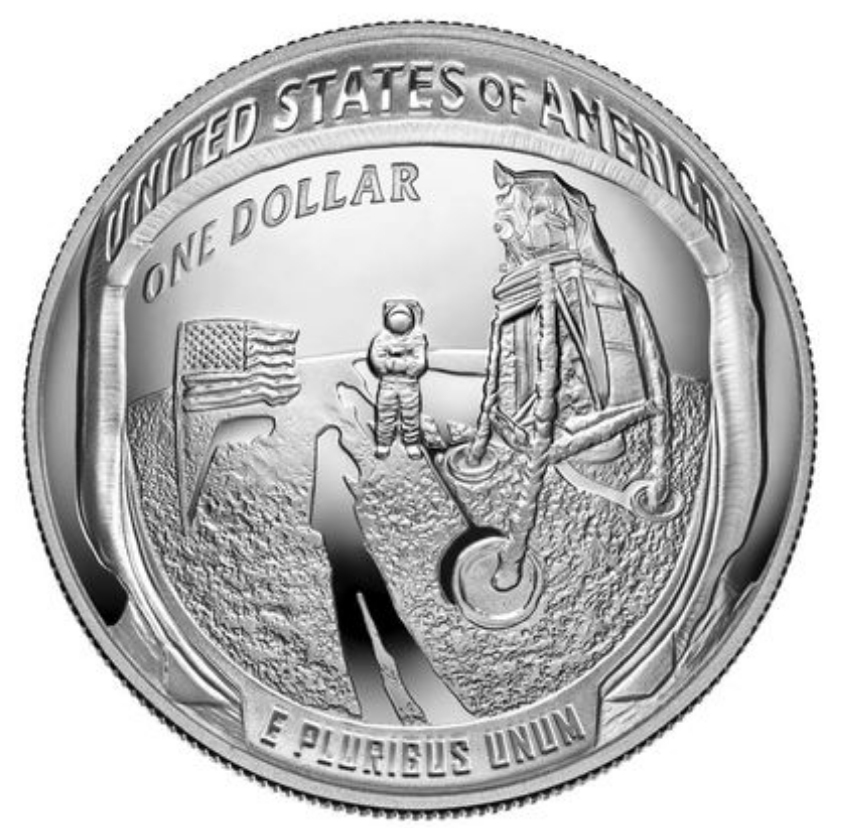
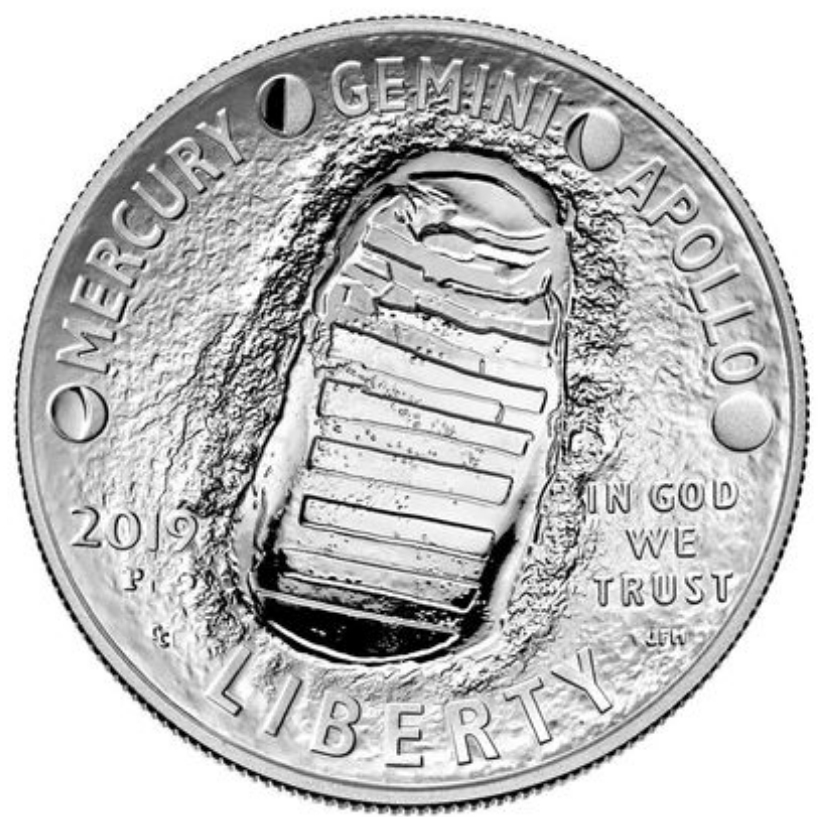
APOLLO 11 PROOF SILVER DOLLAR To celebrate the 50th anniversary of the Apollo 11 Moon landing, the United States Mint has created a commemorative 2019 Proof Silver Dollar. We decided to celebrate even more by flying the coins to the edge of space. On June 23rd, the students of Earth to Sky Calculus launched this 99.9% silver dollar 102,034 feet above Earth's surface:

You can have it for $197.95. The students are selling the coins to support their cosmic ray ballooning program. The silver dollar is curved and reproduces the helmet of astronaut Buzz Aldrin. Reflected in Buzz's visor are Neil Armstrong, the United States flag, and the lunar lander. The opposite side of the coin shows Neil's iconic footprint on the Moon. Each of these coins comes with a greeting card showing the item in flight and a certificate of authenticity.
Far Out Gifts: Earth to Sky Store
All sales support hands-on STEM education
Realtime Aurora Photo Gallery
Free: Spaceweather.com Newsletter
Realtime Noctilucent Cloud Photo Gallery
Free: Spaceweather.com Newsletter