THE FULL HUNTER'S MOON: This weekend's full Moon has a special name: The Hunter's Moon. Like the Harvest Moon of September, this full moon rises soon after sunset, adding extra hours of light to waning northern days. It gets its name from Native American hunters who once tracked their prey by autumn moonlight, stockpiling food for the winter ahead. Browse: Photo Gallery
THE ORIONID METEOR SHOWER: Earth is entering a stream of debris from Halley's Comet, source of the annual Orionid meteor shower. Last night, NASA's Network of All-Sky Cameras detected the first Orionid fireballs of the weeks-long display. Here's one of them streaking over Mount Lemmon, Arizona, bright enough to be seen despite the proximity of the full Hunter's Moon:

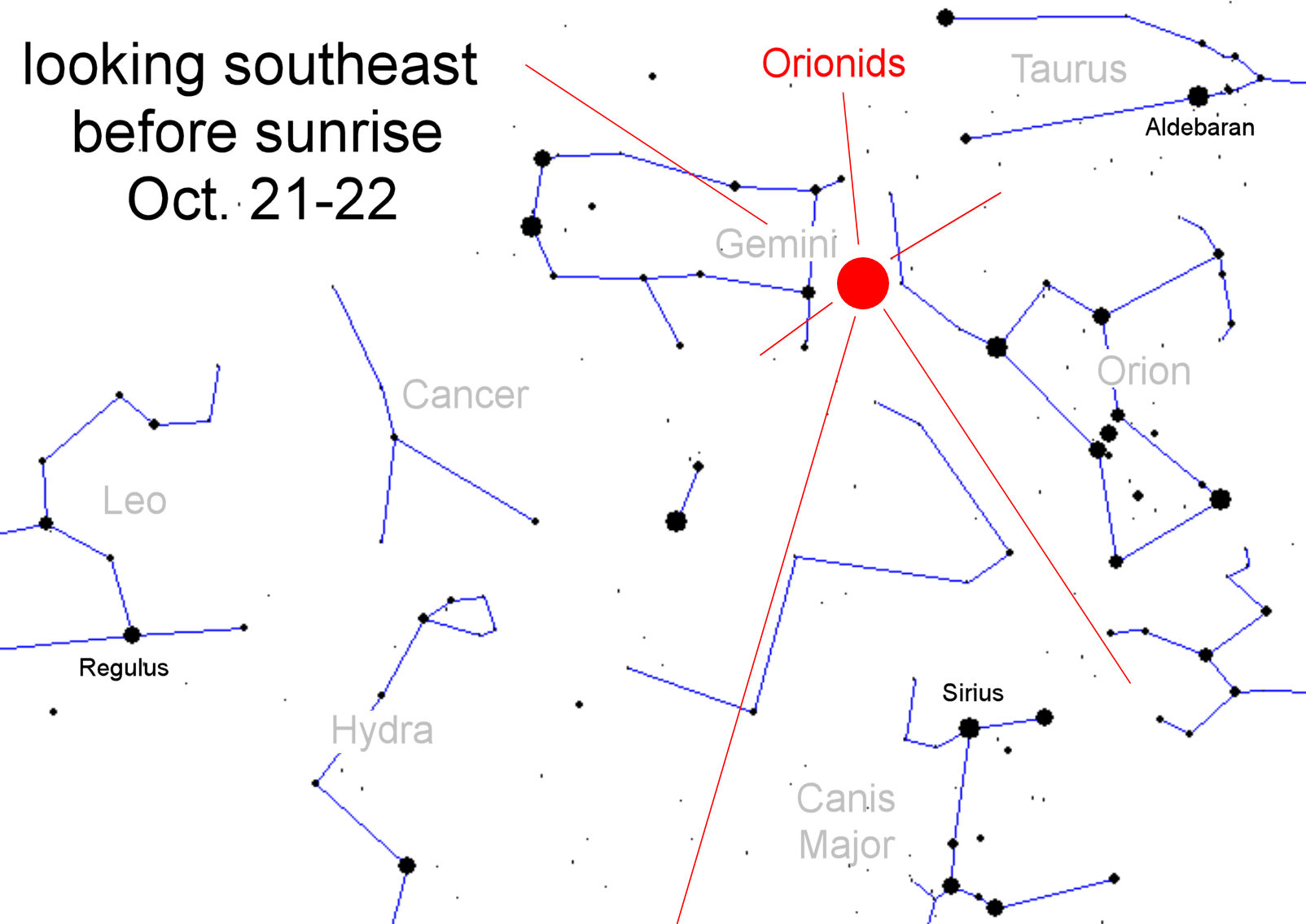
NASA cameras picked up only two Orionids last night. Rates will increase sharply in the nights ahead as Earth moves deeper into the debris stream. Forecasters expect the shower to peak on Oct. 20-21 with as many as 20 meteors per hour. The best time to look is during the hours before sunrise when the constellation Orion is high in the sky: finder chart.
AURORAS--NO SUNSPOTS REQUIRED: Last night, the sun and Moon combined to produce a beautiful scene in Tromsø, Norway. The sun contributed a gust of solar wind, while the Moon added its almost-full luminosity. Markus Varik photographed the result:

"The Northern Lights were fantastic," he says. "We could even see their reflection from the water as the Hunter's Moon lit up the surrounding landscape. It's hard to believe this is happening during such a deep Solar Minimum."
Indeed, how does this happen during Solar Minimum? The sun is completely spotless and we haven't had a solar flare all year long. The answer is "the Russell-McPherron Effect." During weeks around the autumnal equinox, cracks open in Earth's magnetic field. Solar wind pours in to fuel Arctic auroras--no sunspots required.
Realtime Aurora Photo Gallery
Free: Spaceweather.com Newsletter
PICTURE THIS ON YOUR CHRISTMAS TREE: How do you go to the bathroom in space? The space toilet, of course. On Oct. 6, 2019, the students of Earth to Sky Calculus launched this unique ornament to the stratosphere (108,893 feet altitude) onboard one of their cosmic ray balloons:

You can have it for $99.95. The students are selling edge of space ornaments to support their cosmic ray balloning program. Each one comes with a greeting card showing the item in flight and telling the story of its journey to the edge of space and back again. And just imagine how good Frosty will look on your Christmas tree.
Far Out Gifts: Earth to Sky Store
All sales support hands-on STEM education