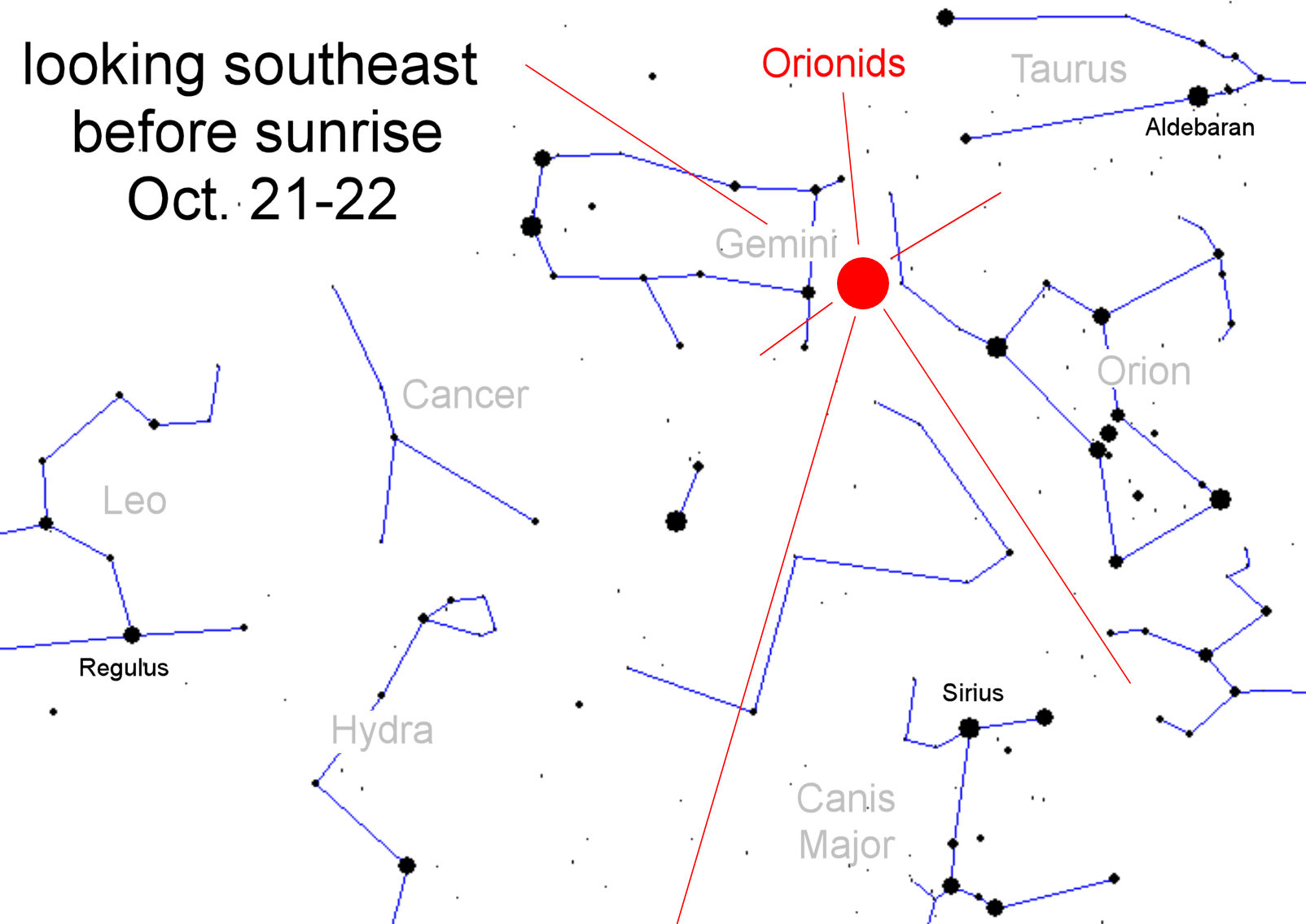
THE ORIONID METEOR SHOWER: Earth is entering a stream of debris from Halley's Comet, source of the annual Orionid meteor shower. Forecasters expect the shower to peak on Oct. 21-22 with as many as 20 meteors per hour. The best time to look is during the hours before local sunrise when the constellation Orion is high in the sky. Browse: photo gallery, sky map.
A DOUBLE-GUST OF SOLAR WIND: Earth is about to get hit by solar wind--twice. Two streams of solar wind are heading our way. They're flowing from a pair of holes in the sun's atmosphere, shown in this extreme ultraviolet image from NASA's Solar Dynamic Observatory:

The first blow is due on Oct. 21 when gaseous material arrives from the coronal hole on the right. It is expected to spark Arctic auroras, but probably not full-fledged geomagnetic storms. The wind from this hole is blowing ~500 km/s.
The second blow will fall on Oct. 24-25 when gaseous material arrives from the coronal hole on the left. This is a more potent stream, blowing ~700 km/s. It could cause G1-class geomagnetic storms and auroras in northern-tier US states from Maine to Washington. Aurora alerts: SMS Text.

Realtime Aurora Photo Gallery
Free: Spaceweather.com Newsletter
THE SHOOTING STAR PENDANT: It's simple. It's elegant. And it's been to the edge of space. On Sept. 27th, the students of Earth to Sky Calculus launched a cosmic ray balloon to the stratosphere. This stainless steel "shooting star" pendant hitched a ride, all the way to 108,245 feet:
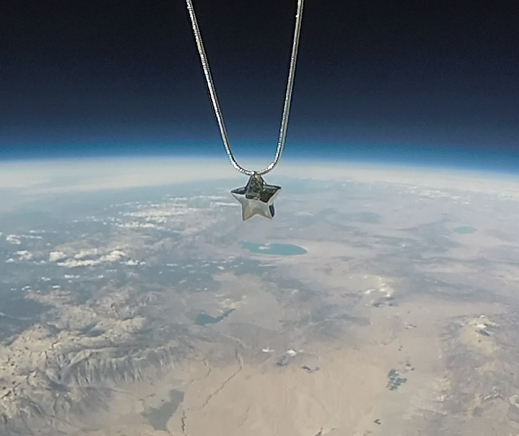
You can have it for $89.95. The students are selling shooting star pendants to support their cosmic ray ballooning program. Each one comes with greeting card showing the item in flight and telling the story of its journey to the edge of space and back again. These make great birthday and Christmas gifts.
Bonus: The star contains a hidden chamber, which you may fill with the ashes of a loved one or anything else you wish to keep close to your heart.

Far Out Gifts: Earth to Sky Store
All sales support hands-on STEM education