GEOMAGNETIC STORM WARNING: A large hole in the sun's atmosphere is facing Earth and spewing solar wind in our direction. Estimated time of arrival: Oct. 24-25. Minor G1-class geomagnetic storms are likely when the gaseous material arrives. Wind speeds are expected to reach 700 km/s, sparking bright auroras around the Arctic Circle and maybe even in northern-tier US states from Maine to Washington. Aurora alerts: SMS Text.


BIG SPRITES OVER OKLAHOMA: Oklahoma is a good place to see sprites--exotic forms of lightning that leap up from thunderstorms instead of down. Last night near Edmund, OK, Paul Smith photographed a giant batch:

"These were some of the largest spanning multi-events I have personally seen, with sometimes five or six sprites sequentially firing along the line of the storm for what must have been more than one hundred miles," says Smith. "It was a very strong and fast moving cold front with strong winds, large hail, tornadoes--perfect conditions for sprites."

Oklahoma is the epicenter of a region that we call "Sprite Alley," a corridor stretching across the US Great Plains where intense thunderstorms produce lots of sprites. Increasing levels of cosmic rays in the atmosphere may be boosting the phenomenon, because cosmic rays are known to help trigger lightning.
"I have been recording sprites since the summer of 2017 when I accidentally caught a few during the Perseid meteor shower," says Smith. "These large frontal storm systems are fairly typical in the southern plains in the fall, and I hope for more captures over the coming weeks." More examples may be found on Paul Smith's Facebook page and Youtube channel.
Realtime Sprite Photo Gallery
Free: Spaceweather.com Newsletter
THE ORIONID METEOR SHOWER: The Orionid meteor shower is peaking today as specks of dust from Halley's Comet slam into Earth's atmosphere at 148,000 mph. Thomas Ashcraft sends this report from New Mexico: "Last night, I captured an Orionid fireball zinging overhead with a dynamic radio echo." When you play the video, don't forget to turn up the volume:
The space-y warbling sound is caused by terrestrial TV stations bouncing off the ionized trail of the meteor. "The full radio reflection lasted over one minute. My VHF (very high frequency) fireball array records in stereo and operates at 54.309 MHz and 76.309 MHz," explains Ashcraft, who is an amateur radio astronomer.
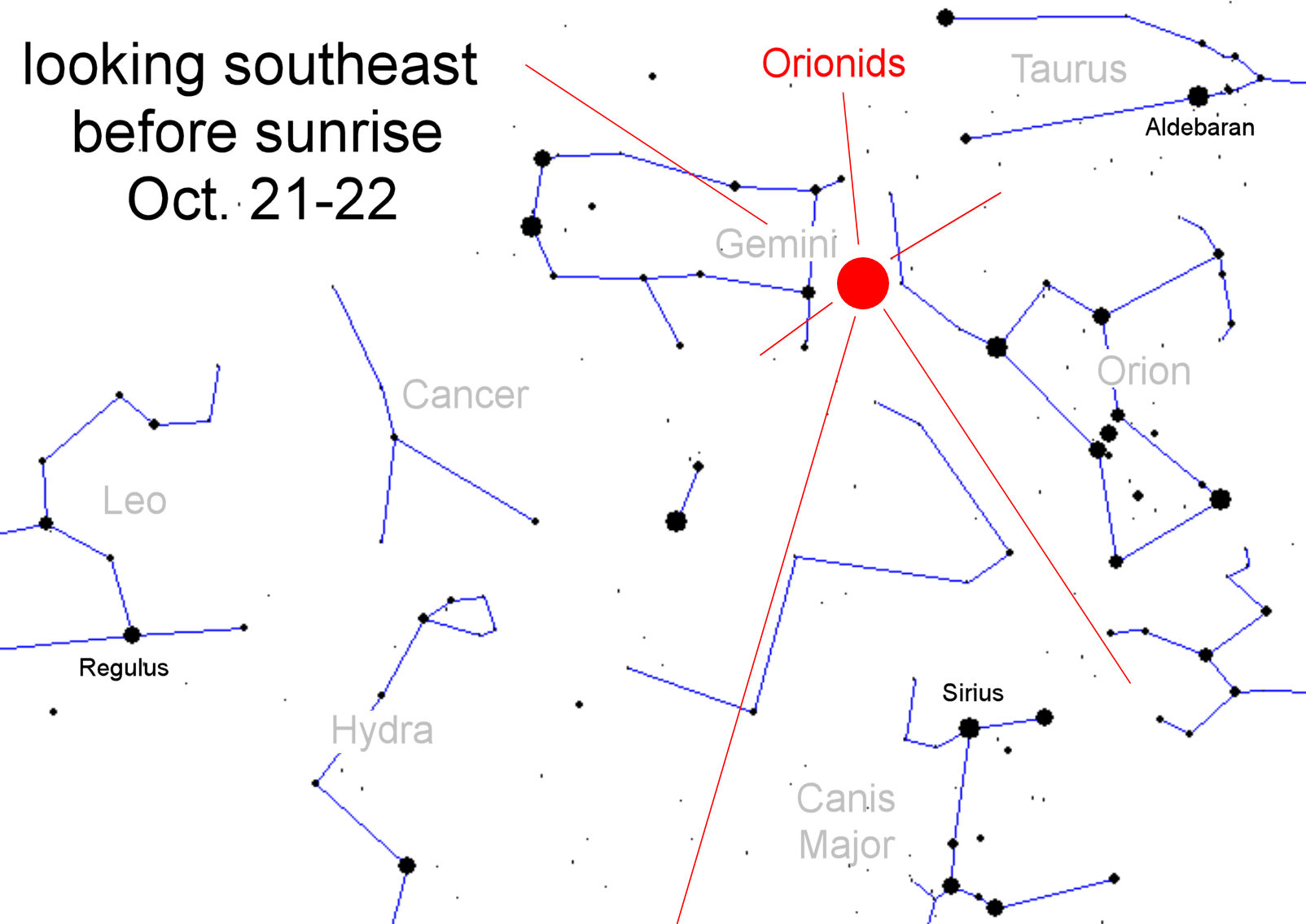
The best time to look for Orionids is during the hours before local sunrise when the constellation Orion is high in the sky. Other showers may produce more shooting stars, but the Orionids are second to none in beauty. They strike Earth's atmosphere traveling 66 km/s (148,000 mph). Only the Leonids of November are faster at 72 km/s. Orionids often leave glowing "trains" (incandescent bits of debris in the wake of the meteor) that last for minutes, swirling among the glittering stars of Orion, Gemini, and Taurus. More: photo gallery, sky map.
Realtime Spaceweather Photo Gallery
Free: Spaceweather.com Newsletter
HOUSTON ASTROS IN THE STRATOSPHERE: The Astros are in the World Series. Now they're in the stratosphere, too. The students of Earth to Sky Calculus launched this Houston Astros baseball 113,845 feet above Earth's surface using a high-altitude cosmic ray balloon:
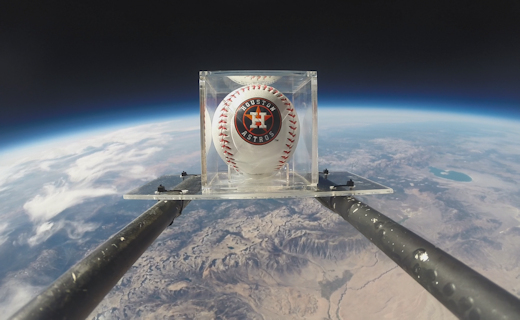
You can have it for $99.95. The students are selling space baseballs to support their cosmic ray ballooning program. Not an Astros fan? No problem. You can also purchase space baseballs for the Yankees, Red Sox, Dodgers, Cubs, Cardinals, Angels, Padres, Giants or--coming soon!--the Nationals!
Each baseball comes with a greeting card showing the ball in flight and telling the story of its journey to the stratosphere. Plus, you'll receive a UV-resistant cubical display case with decorating stickers depicting the ball at the edge of space.
Far Out Gifts: Earth to Sky Store
All sales support hands-on STEM education