CO-ROTATING INTERACTION REGION: A co-rotating interaction region (CIR) is expected to hit Earth's magnetic field late on Nov. 26th, according to NOAA forecasters. CIRs are transition zones between fast- and slow-moving solar wind streams. Solar wind plasma piles up in these regions, producing shock-like density gradients that can do a good job of sparking Arctic auroras. Aurora alerts: SMS text.
RECORD-COLD SETS STAGE FOR BIG NOCTILUCENT CLOUDS : Noctilucent clouds (NLCs) are now circumnavigating the South Pole. New images from NASA's AIM spacecraft show a 3000-mile ring of frosted meteor smoke glowing in the mesosphere 83 km above the frozen continent. This time-lapse video shows the clouds rapidly spreading since their first appearance on Nov. 15th:

It's not unusual to see NLCs above Antarctica in November. Every year around this time, summertime water vapor billows up into the high atmosphere over Antarctica, providing the moisture needed to form icy clouds at the edge of space. Tiny meteoroids seed the clouds, which glow electric-blue as sunlight shines through them.
However, 2019 could turn out to be unusual. Data from NASA's orbiting Microwave Limb Sounder (MLS) instruments show that the mesosphere above Antarctica is currently experiencing record cold.
"For the past week, 2019 has been the coldest year in the mesosphere since AIM was launched in 2007," says University of Colorado AIM science team member Lynn Harvey who processed the data. Note the red line in the graph below:

This is significant because NLCs love cold weather. Low temperatures help water molecules stick to specks of meteor smoke. Indeed, the cold has already helped 2019 break one record: "The Antarctic season started early on Nov. 15th," notes Cora Randall of the University of Colorado Laboratory for Atmospheric and Space Physics. "The previous mark was Nov. 17th set in 2013 and 2016,"
So the clouds have a head start. If mesospheric temperatures remain this low for much longer, the Antarctic 2019 season could become the best ever, rivaling the record-setting Arctic season of 2019.
Ground sightings of NLCs over Antarctica are rare--but only because the population is low. The clouds can in fact be seen. Jorgelina Alvarez successfully photographed the clouds over Argentina's Marabio Base on the Antarctic Peninsula. Antarctic researchers, if you see electric-blue clouds in the twilight sky, please send us a picture!
Realtime Spaceweather Photo Gallery
Free: Spaceweather.com Newsletter
THE SUNFLOWER SPACE PENDANT: Are you looking for a far-out gift? Consider the sunflower space pendant. On Oct. 18, 2019, the students of Earth to Sky Calculus launched a cosmic ray balloon to the stratosphere. This cheerful pendant went along for the ride, 109,923 feet high:
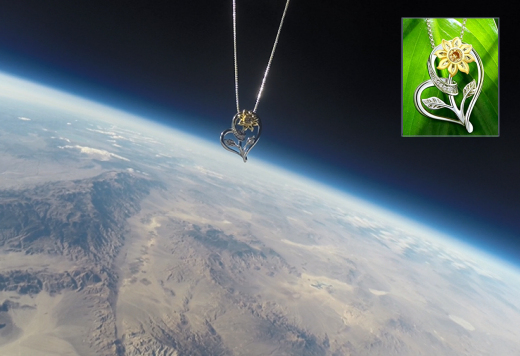
You can have it for $109.92 (its altitude divided by 1000). The students are selling these pendants to support their cosmic ray ballooning program. Each rose gold-plated pendant comes with a greeting card showing the flower in flight and telling the story of its journey to the edge of space and back again. They make great birthday, anniversary and Christmas gifts.
Far Out Gifts: Earth to Sky Store
All sales support hands-on STEM education
Realtime Aurora Photo Gallery
Free: Spaceweather.com Newsletter