COSMIC RAYS NEAR THE SPACE AGE RECORD: Cosmic rays are surging. According to neutron counters in Finland, cosmic rays percolating through Earth's atmosphere came within a percentage point of setting a Space Age record on Feb. 10th. This comes as no surprise. During Solar Minimum (happening now) the sun's magnetic field weakens and allows more cosmic radiation into the solar system. The record could be broken soon. You can monitor the numbers right here on Spaceweather.com.

A METEOR STORM IN SPACE? Spoiler alert: It's not a meteor storm. Earlier today, coronagraphs onboard the Solar and Heliospheric Observatory (SOHO) were staring at the sun, waiting for the next coronal mass ejection, when a flurry of objects streaked across the field of view. This animation shows what happened:

The starry background was briefly overwhelmed by smears of light, as if a stream of debris had engulfed the spacecraft. In fact, the "meteor storm" may have come from the spacecraft itself.
Ever since SOHO was launched in 1995, coronagraph images have occasionally recorded streaks of light. Mission controllers believe they are bits of insulation flaking off the sun-facing side of the spacecraft, reflecting sunlight as they race out-of-focus in front of the coronagraph's digital camera.
Today's event was more dramatic than most. Indeed, a meteoroid might have been involved. A micrometeoroid strike might have dislodged a spray of insulation, resulting in not one but dozens of luminous streaks. Whatever happened, it didn't harm the spacecraft. SOHO is still operating normally.
Realtime Spaceweather Photo Gallery
Free: Spaceweather.com Newsletter
VALENTINE'S GIFTS FROM THE EDGE OF SPACE: Valentine's Day is less than a week away. Nothing says "I love you" like a gift from the edge of space. Everything in the Earth to Sky Store is 10% off from now until Feb. 14th:
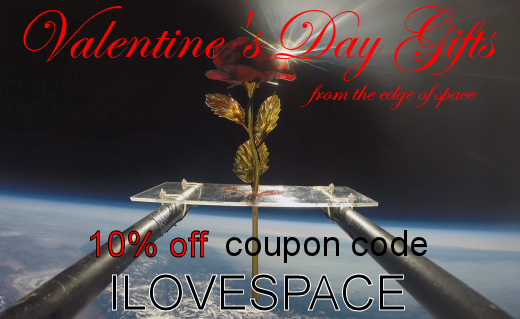
Everything in the store has been flown to the stratosphere onboard cosmic ray balloons, which the students of Earth to Sky Calculus launch approximately once a week to monitor atmospheric radiation. All sales support our cosmic ray ballooning program and help launch young scientists into research careers through hands-on STEM education.
At checkout, be sure to enter the coupon code "ILOVESPACE"!
Far Out Gifts: Earth to Sky Store
All sales support hands-on STEM education
Realtime Aurora Photo Gallery
Free: Spaceweather.com Newsletter