LYRID METEOR SHOWER: Earth is approaching a stream of debris from Comet Thatcher (C/1861 G1), source of the annual Lyrid meteor shower. If forecasters are correct, the Lyrids will peak on the night of April 21-22 with as many as 15 meteors per hour. These meteors are best seen from the northern hemisphere where the radiant is high in the sky before dawn.
A BIG PUNY SOLAR FLARE: The biggest solar flare of the year happened yesterday. But don't get excited; it was puny. On April 4th, NASA's Solar Dynamics Observatory captured the ultraviolet flash from new-cycle sunspot AR2759:

This is a B4-class flare. It caused only a brief and ephemeral wave of ionization to ripple through our planet's upper atmosphere. There were no radio blackouts, GPS disturbances, or satellite outages. Only during Solar Minimum would such a flare receive any attention at all.
On the other hand, perhaps "B" stands for "Bigger than you think." A typical B-class solar flare releases as much energy as 100 million WWII atomic bombs. Only on the sun, which is itself a 1027 ton self-contained nuclear explosion, would such a blast be considered "puny."
So did something big happen yesterday? Or not? Yes to both.
Realtime Space Weather Photo Gallery
Free: Spaceweather.com Newsletter
A MOTHER'S DAY GIFT FROM THE STRATOSPHERE: Are you looking for a far-out gift? Nothing says "I Love You" like an Infinity Pendant from the edge of space. On Jan. 8, 2020, the students of Earth to Sky Calculus launched a cosmic ray balloon. This authentic Swarovski crystal pendant hitched a ride, traveling 113,209 feet above the Sierra Nevada mountains of central California
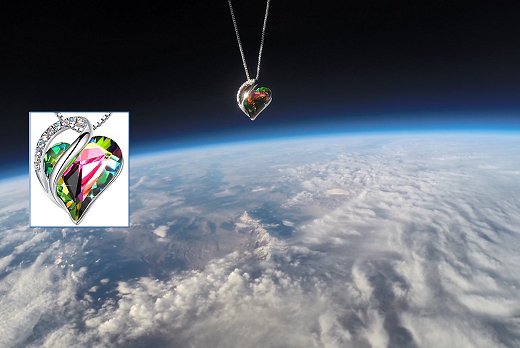
You can have it for $179.95. The students are selling these pendants to support their cosmic ray ballooning program. The glittering heart-shaped crystal is wrapped in a silver-embossed infinity clasp, symbolizing unending love. Each one comes with a romantic card showing the pendant in flight and telling the story of its journey to the edge of space and back again.
Far Out Gifts: Earth to Sky Store
All sales support hands-on STEM education
Realtime Aurora Photo Gallery
Free: Spaceweather.com Newsletter