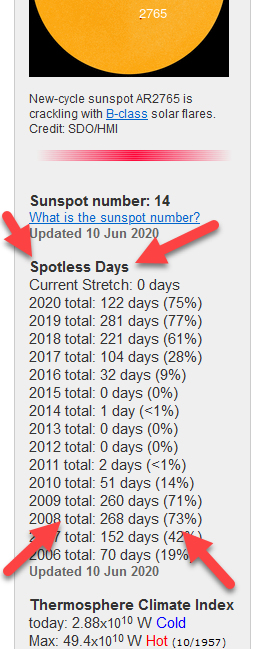
SIGNS OF LIFE FROM THE SUN: For the past few years, we've paid special attention to days without sunspots. But what about days with sunspots? Suddenly, it makes sense to talk about this again because the sun is showing signs of life. This month we've had a sunspot almost every day--11 out of 12 days so far. New Solar Cycle 25 is gaining strength, and it could bring an end to Solar Minimum during 2020. Solar flare alerts: SMS Text.
3D NOCTILUCENT CLOUDS: After more than 100 years of study, much remains unknown about noctilucent clouds (NLCs). Seeded by meteoroids, they float near the edge of space in a layer of the mesosphere no more than a few km thick. How are the clouds arranged inside that narrow layer? Two German photographers decided to find out. During a bright display of NLCs over Germany on June 7th, Michael Theusner and Maciej Libert photographed the same clouds from two cities 120 km apart:
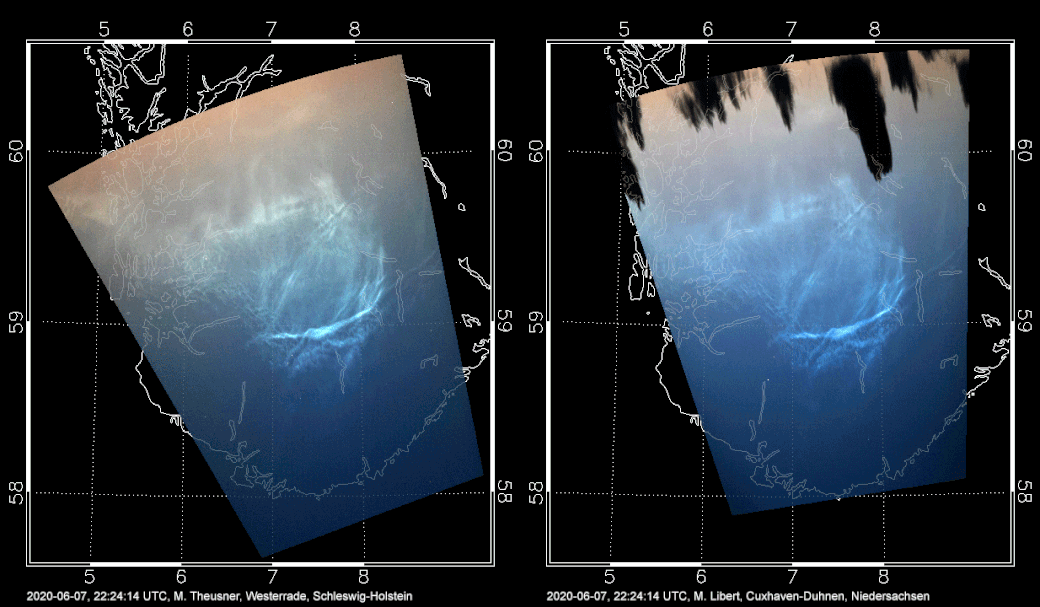
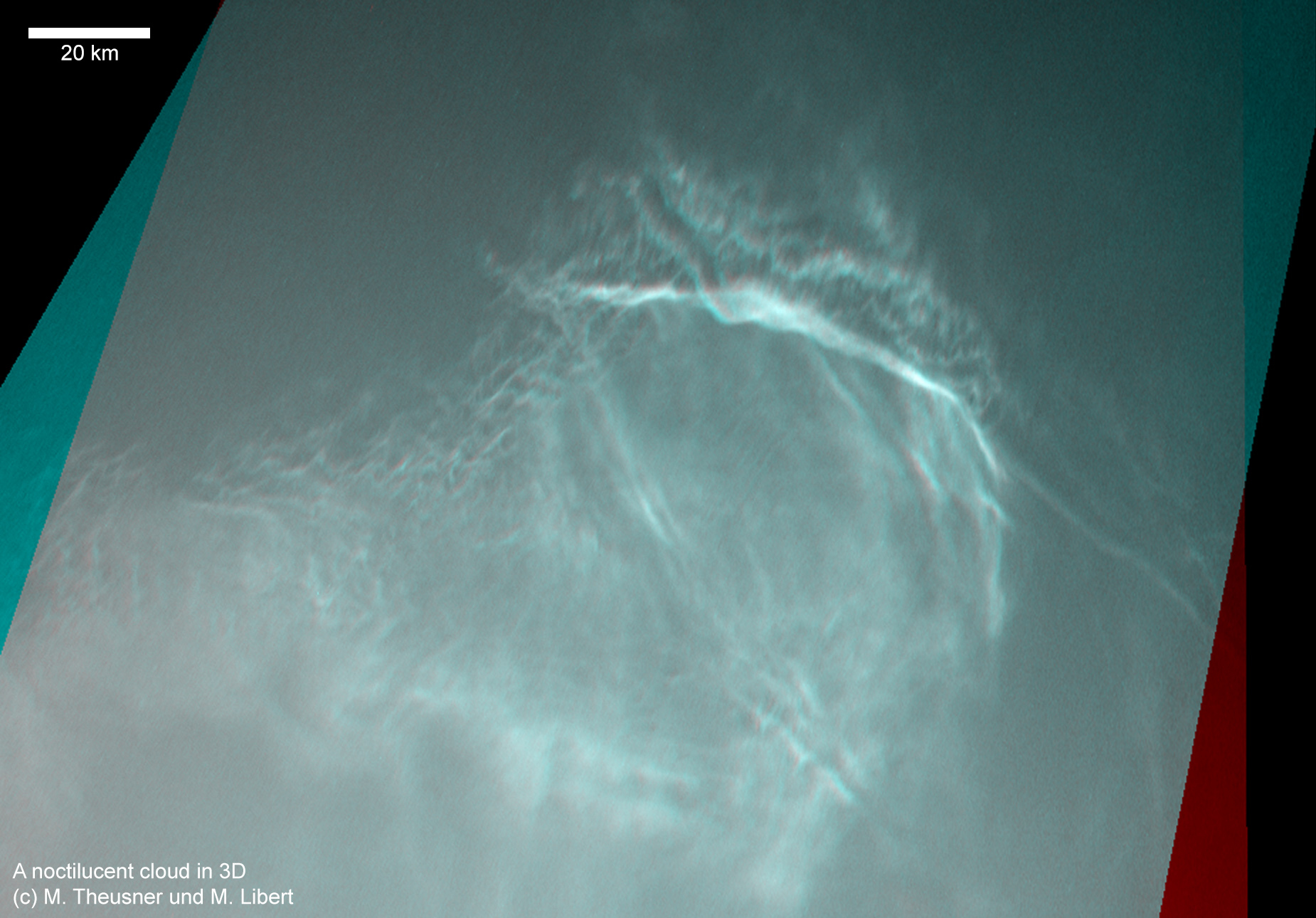
"The long baseline of 120 km allowed us to construct a real 3D image of that cloud," says Theusner. "First, we re-projected the images onto the ground. Then, we created an anaglyph from the undistorted images. Here it is. Using red/cyan glasses, you can see the true 3D-structure of that cloud."
Many readers won't have 3D glasses. For them, Theusner created a no-glasses version, shown below. Cross your eyes to merge the two images, and relax your stare into infinity to see the cloud's 3D structure.
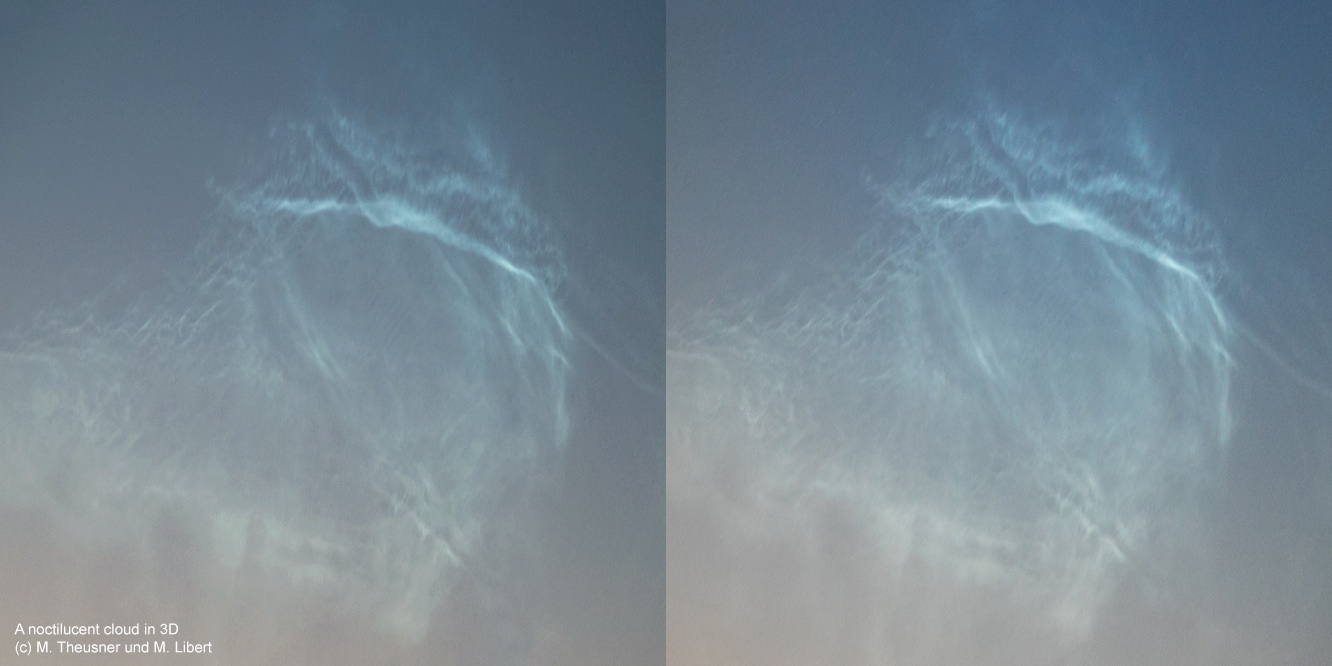
For some people, a flipped version might be easier.

The most striking feature of the 3D view is a fold in the cloud. In a wide arc across the top of the image, one layer of frosted meteor smoke is clearly floating atop another.
"The cloud is shown as if viewed from below," adds Theusner. "Thus, structure closer to you is closer to the ground. From the images and their geolocation, the average altitude of the cloud of 84 km could be deduced. Its lowest parts were at 83 km and its highest at 85 km."
Researchers using NASA's AIM spacecraft have tried something similar. AIM is located high above the clouds, taking pictures as it orbits over the poles. In 2018, a team led by Vern Hart of Utah Valley University combined successive AIM snapshots to create 3D images of NLCs from space. Their work revealed ripples caused by atmospheric gravity waves with bright troughs and dimmer crests.
Realtime Noctilucent Cloud Photo Gallery
Free: Spaceweather.com Newsletter
THIS IS NOT A PHOTO OF A SEAGULL: When you look at this picture, the first thing you probably notice is the seagull. But that's not what photographer Lasse Nurminen was aiming at. "I was after the pollen corona," he says. Note the oval rings of light around the sun behind the seagull:
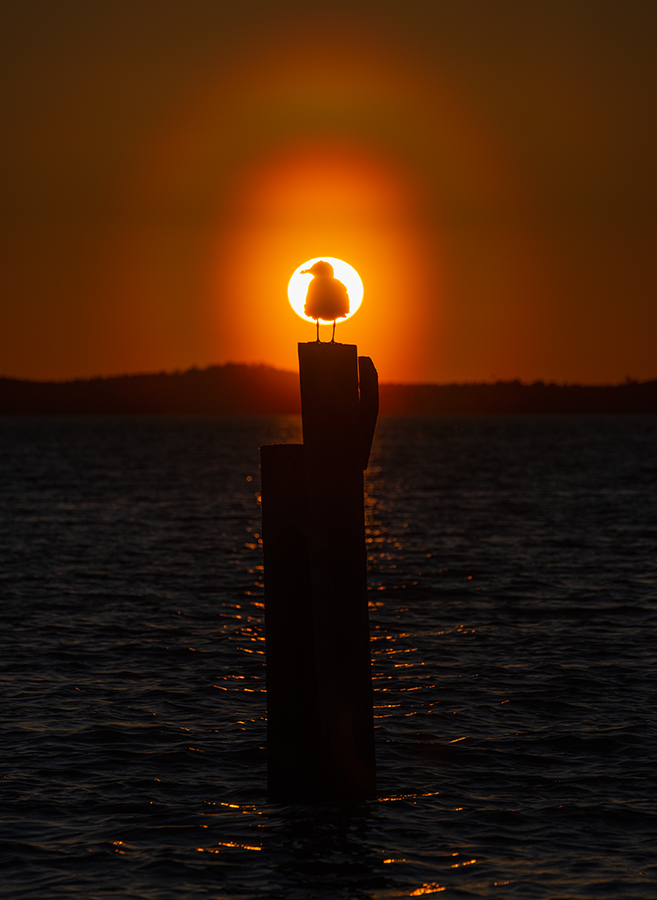
Coronas are rings of light produced by sunlight scattering from the outsides of small particles--in this case, pollens. At this time of year, the air in southern Finland where Nurminen lives is often sprinkled with pine pollen. When clouds of the allergen drift in front of the sun, a pollen corona appears.
Pollens are non-spherical--and this adds to their magic. Pine pollens have air sacs to help carry them in the wind. These align the grains so that their coronas are elliptical. This effect may be seen in Nurminen's coronas, which are taller than they are wide.
Realtime Space Weather Photo Gallery
Free: Spaceweather.com Newsletter
APOLLO 11 PROOF SILVER DOLLAR (COLLECTOR'S ITEM): Are you looking for a far-out Father's Day gift? Consider this: On July 20, 2019 (the 50th anniversary of the Apollo 11 Moon landing), the students of Earth to Sky Calculus flew this rare proof silver dollar to the stratosphere:
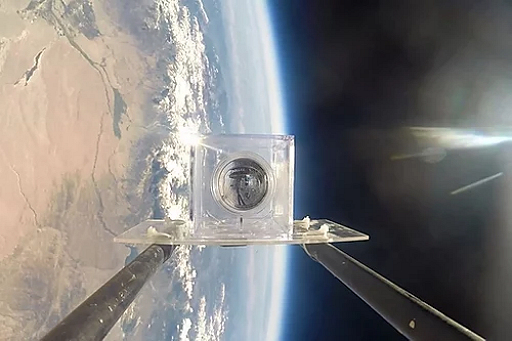
The US Mint created the coins to celebrate the first Moon landing--but you can no longer buy them from the Mint. You can, however, get one from Earth to Sky Calculus. The students are selling the collector's item for $229.95 to support their cosmic ray ballooning program.
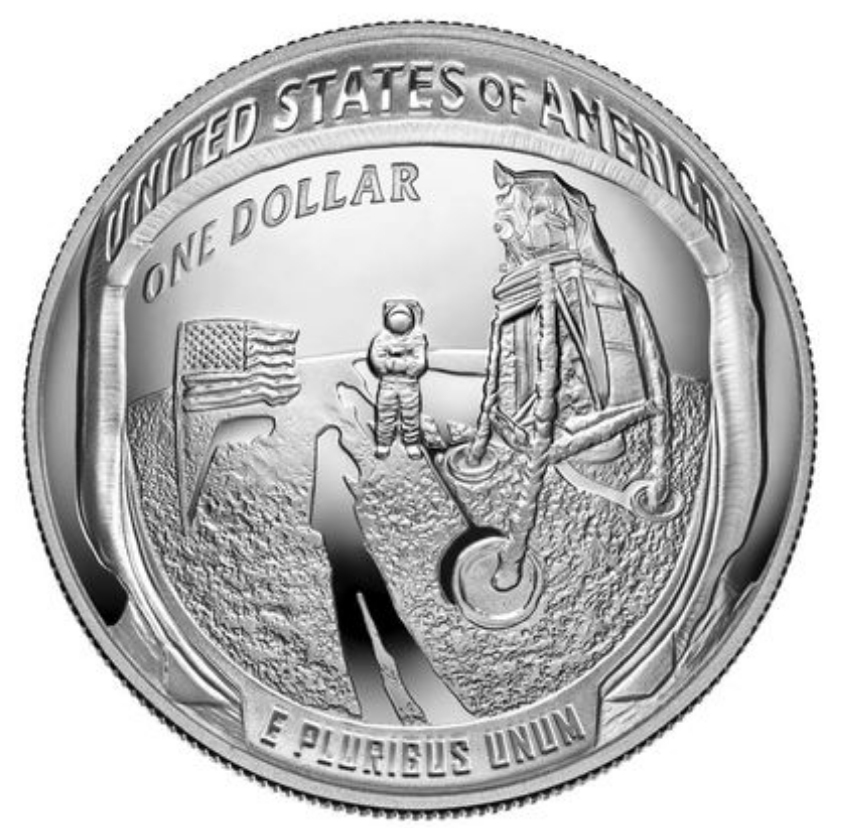
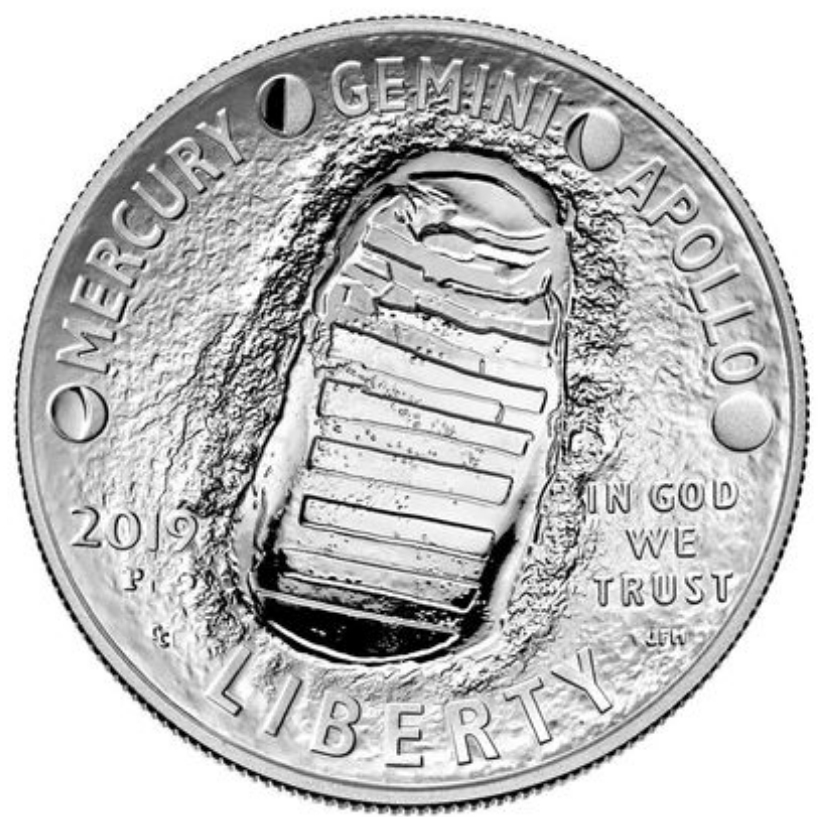
The silver dollar is curved and reproduces the helmet of astronaut Buzz Aldrin. Reflected in Buzz's visor are Neil Armstrong, the United States flag, and the lunar lander. The opposite side of the coin shows Neil's iconic footprint on the Moon. Included is a greeting card showing the coin in flight and a certificate of authenticity.
Far Out Gifts: Earth to Sky Store
All sales support hands-on STEM education
Realtime Aurora Photo Gallery
Free: Spaceweather.com Newsletter