COMET NEOWISE, LOOKING GOOD: Comet NEOWISE (C/2020 F3) is plunging toward the sun for a close encounter near the orbit of Mercury on July 3rd. SOHO coronagraphs are monitoring the approach, and it's looking good. The comet has brightened to 3rd magnitude, which would make it a naked-eye object when it emerges from the sun's glare in mid-July. SOHO will be monitoring the comet for the rest of the week, so stay tuned for updates.

NOCTILUCENT CLOUDS OVER LONDON: On June 21st, something rare and magical happened in London. The skies of the great city filled with noctilucent clouds (NLCs). Phil Halper noticed the display, grabbed a camera, and raced from one landmark to another, hurriedly recording pictures like this:

"Even the bright lights of the London Eye on the river Thames couldn't drown out the display," says Halper. "These were the most spectacular NLCs I've ever seen."
If NLCs look alien--that's because they are. The clouds are seeded by meteoroids. They form every year around this time when summertime wisps of water vapor rise up to the mesosphere, allowing water to crystallize around specks of meteor smoke.
Usually you have to be under a dark sky at high latitudes to see these rare clouds--but 2020 is not usual. Record-cold temperatures in the mesosphere are boosting NLCs, brightening them enough to see from places like London.

Halpert is a longtime observer of NLCs, and when he saw their electric-blue ripples forming over the city, he immediately realized it was a special occasion. "I hired a bike and cycled from landmark to landmark, stopping at the London Eye, the Tower of London, Blackfriar's Bridge, St. Paul's Cathedral and Temple," he says. "I had to hurry because there is only about one hour of night when the NLCs are visible.'


"Alas, in the rush, I fell off my bike and I ended up in hospital," he says. "But still it was well worth it. I was thrilled to see this magical display." (Thank you, Phil!)
The outbreak over London is a sign that even more intense NLCs could be on the way. Last summer, bright noctilucent clouds over European capitals heralded a descent to even lower latitudes. Indeed, just this morning sky watchers in Oregon witnessed their own outbreak. James W. Young sends this picture from Seaside, OR:

"The NLCs were incredibly intense on the morning of June 23rd," says Young. "I was able to take this picture using just a 1/4-second exposure (ISO 800)."
Observing tips: The best time to look for noctilucent clouds is during the hours after sunset (or before sunrise) when the sun is at least 6 degrees below the horizon: diagram. If you see electric-blue tendrils spreading across the sky ... submit your photos here!

Realtime Noctilucent Cloud Photo Gallery
Free: Spaceweather.com Newsletter
APOLLO 11 PROOF SILVER DOLLAR (COLLECTOR'S ITEM): Are you looking for a far-out gift? Consider this: On July 20, 2019 (the 50th anniversary of the Apollo 11 Moon landing), the students of Earth to Sky Calculus flew this rare proof silver dollar to the stratosphere:
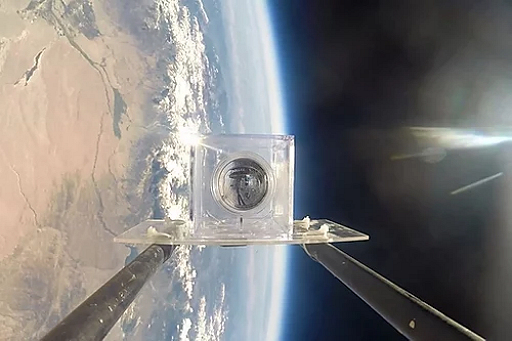
The US Mint created the coins to celebrate the first Moon landing--but you can no longer buy them from the Mint. You can, however, get one from Earth to Sky Calculus. The students are selling the collector's item for $229.95 to support their cosmic ray ballooning program.
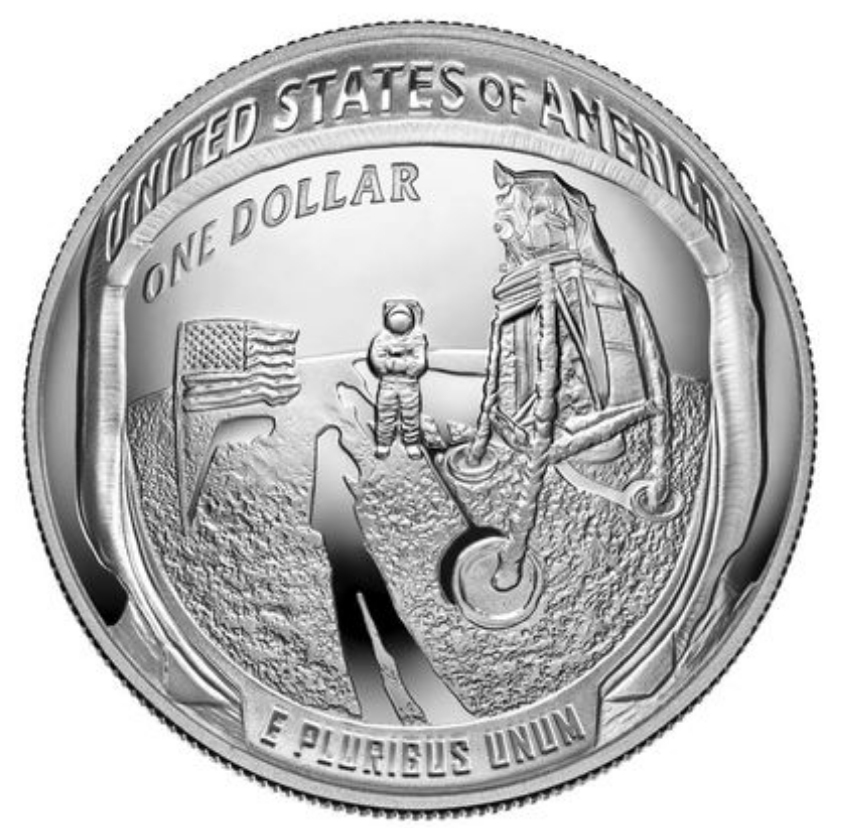
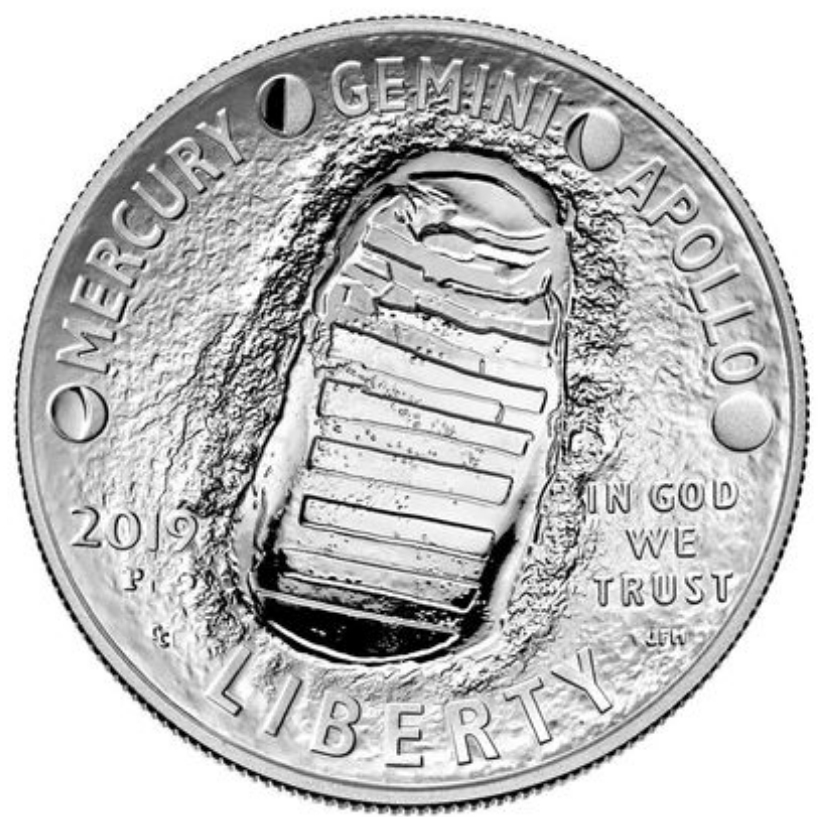
The silver dollar is curved and reproduces the helmet of astronaut Buzz Aldrin. Reflected in Buzz's visor are Neil Armstrong, the United States flag, and the lunar lander. The opposite side of the coin shows Neil's iconic footprint on the Moon. Included is a greeting card showing the coin in flight and a certificate of authenticity.
Far Out Gifts: Earth to Sky Store
All sales support hands-on STEM education
Realtime Aurora Photo Gallery
Free: Spaceweather.com Newsletter
Realtime Space Weather Photo Gallery
Free: Spaceweather.com Newsletter