4TH OF JULY LUNAR ECLIPSE: Spoiler alert: This is a minor eclipse. On the night of July 4th, the full Moon will pass through the pale outskirts of Earth's shadow, producing a penumbral lunar eclipse. The northern half of the full Moon will be only slightly darkened during the 3 hour event, which begins just after 11 pm EDT (8 pm PDT). Most people won't notice, but if you know the eclipse is happening, you can see it. Happy 4th of July! More: movie, visibility map.

COMET NEOWISE AT PERIHELION: Today, Comet NEOWISE (C/2020 F3) is at perihelion (closest approach to the sun) near the orbit of Mercury. Fierce solar heat has brightened the comet so much, it was visible this morning in dawn twilight. Chris Schur sends this picture from Payson, Arizona:

"Playing hide and seek with monsoon clouds this morning, I finally got my first glimpse of Comet NEOWISE at 4:29am," says Schur. "This is a 0.5 second exposure shot using my 6 inch telescope and Canon Xti digital camera (ISO 400). How often do we get a shot of a comet with a nearly overexposed nucleus in that short time!?"
Val Italo of Auburn, Alabama, tracked the comet using a Celestron 8SE telescope and stacked a series of three 2-sec exposures to reveal a V-shaped tail:

"It's a really nice-looking comet, although not quite naked eye amidst all the glare," says Italo. "I was able to track it in the eyepiece (with a visible tail!) until about 30 minutes before sunrise."
How bright is Comet NEOWISE? It's hard to know because there are no reference stars in the glow of dawn for comparison. However, experienced observers are making educated guesses. The consensus seems to be between magnitude +1 and 0--that is, very bright.
Although the comet is technically very bright, you probably can't see it without using binoculars or a telescope. Blame the twilight. The situation could improve in the mornings ahead as the comet begins to move away from the sun. Wake up early and start looking about an hour before local sunrise. Venus and the bright star Capella can help you triangulate the position of the comet. Sky maps: July 4, 5, 6.


Stay tuned for updates as more images arrive.
Realtime Space Weather Photo Gallery
Free: Spaceweather.com Newsletter
APOLLO 11 PROOF SILVER DOLLAR (COLLECTOR'S ITEM): Are you looking for a far-out gift? Consider this: On July 20, 2019 (the 50th anniversary of the Apollo 11 Moon landing), the students of Earth to Sky Calculus flew this rare proof silver dollar to the stratosphere:
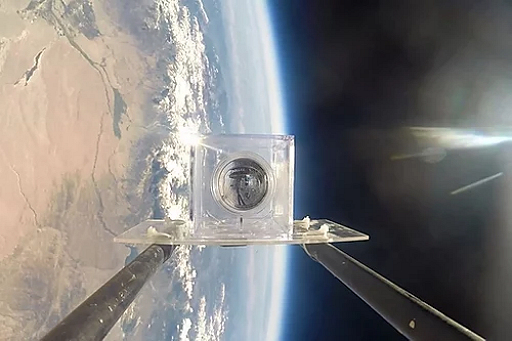
The US Mint created the coins to celebrate the first Moon landing--but you can no longer buy them from the Mint. You can, however, get one from Earth to Sky Calculus. The students are selling the collector's item for $229.95 to support their cosmic ray ballooning program.
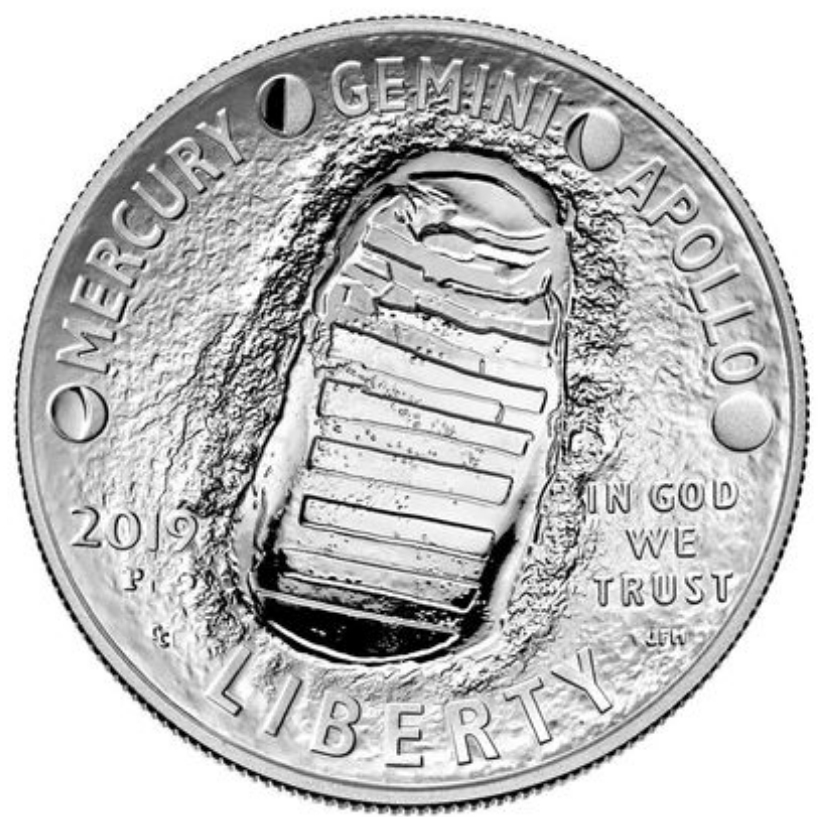
The silver dollar is curved and reproduces the helmet of astronaut Buzz Aldrin. Reflected in Buzz's visor are Neil Armstrong, the United States flag, and the lunar lander. The opposite side of the coin shows Neil's iconic footprint on the Moon. Included is a greeting card showing the coin in flight and a certificate of authenticity.

Far Out Gifts: Earth to Sky Store
All sales support hands-on STEM education
Realtime Aurora Photo Gallery
Free: Spaceweather.com Newsletter