SOLAR WIND SPARKS GEOMAGNETIC UNREST: Earth is inside a fast-moving (~600 km/s) stream of solar wind, and this is causing geomagnetic unrest around the poles. The gaseous material is flowing from a northern hole in the sun's atmosphere. High-latitude sky watchers should be alert for auroras on Aug. 3-4 as Earth passes through the stream. Aurora alerts: SMS Text.

SOLAR CYCLE 25 STRENGTHENS: There's no longer any doubt. New Solar Cycle 25 is coming to life. The latest sign came today with the emergence of a new sunspot group, inset in this magnetic map of the sun's surface from NASA's Solar Dynamics Observatory (SDO):

In this false-color image of the sun, intense magnetic fields are denoted by yellow (-) and green (+).
Provisionally numbered AR2770, the sunspot has two dark cores (each about the size of Mars) and is crackling with minor B-class solar flares. Its potential for even stronger flares will become clear in the days ahead as the sunspot turns toward Earth, more fully revealing its magnetic complexity.
Active regions from Solar Cycle 25 are now strewn across the sun's northern hemisphere. These are places where magnetic fields are intensifying, creating islands of magnetism on the sun's surface.

The -/+ magnetic polarities of these regions mark them as members of Solar Cycle 25, per Hale's Law.
In the cases of AR2769 and AR2770, the fields have intensified enough to form dark cores--that is, sunspots. A few days ago, AR2768 also had visible sunspots. It's a target-rich environment for amateur astronomers with safe solar telescopes.
The appearance of so many active regions at once is a clear sign that Solar Cycle 25 is gaining steam. However, that doesn't mean Solar Minimum is finished. These are just "starter sunspots," pipsqueaks compared to the behemoths expected when Solar Cycle 25 reaches its peak a few years from now. Solar activity should remain generally low despite this uptick in sunspot counts.
On the other hand, even a starter sunspot can occasionally cause a very big storm--so stay tuned. Solar flare alerts: SMS Text.
Realtime Space Weather Photo Gallery
Free: Spaceweather.com Newsletter
NLCs BEGIN THEIR LATE-SUMMER FADE: Northern sky watchers are starting to see fewer noctilucent clouds (NLCs). New data from NASA's AIM spacecraft explain why. This month-long animation of NLCs from the spacecraft's CIPS instrument shows the clouds in retreat, withdrawing toward polar latitudes at the end of July:

This is normal. NLCs form when summertime wisps of water vapor rise to the edge of space, crystallizing around specks of meteor smoke. The clouds are always strongest in June and July, then naturally begin to fade in late summer.
Good-bye NLCs? Not quite yet. 2020 has been an unusually good year for NLCs, and they are not fading as quickly as usual. High-latitude sky watchers can expect to see them for another two weeks at least.
Realtime Noctilucent Cloud Photo Gallery
Free: Spaceweather.com Newsletter
APOLLO 11 PROOF SILVER DOLLAR (COLLECTOR'S ITEM): Are you looking for a far-out gift? Consider this: On July 20, 2019 (the 50th anniversary of the Apollo 11 Moon landing), the students of Earth to Sky Calculus flew this rare proof silver dollar to the stratosphere:
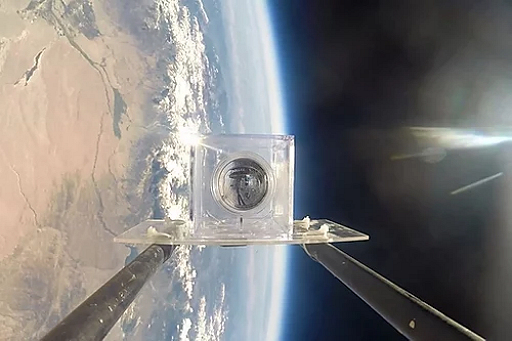
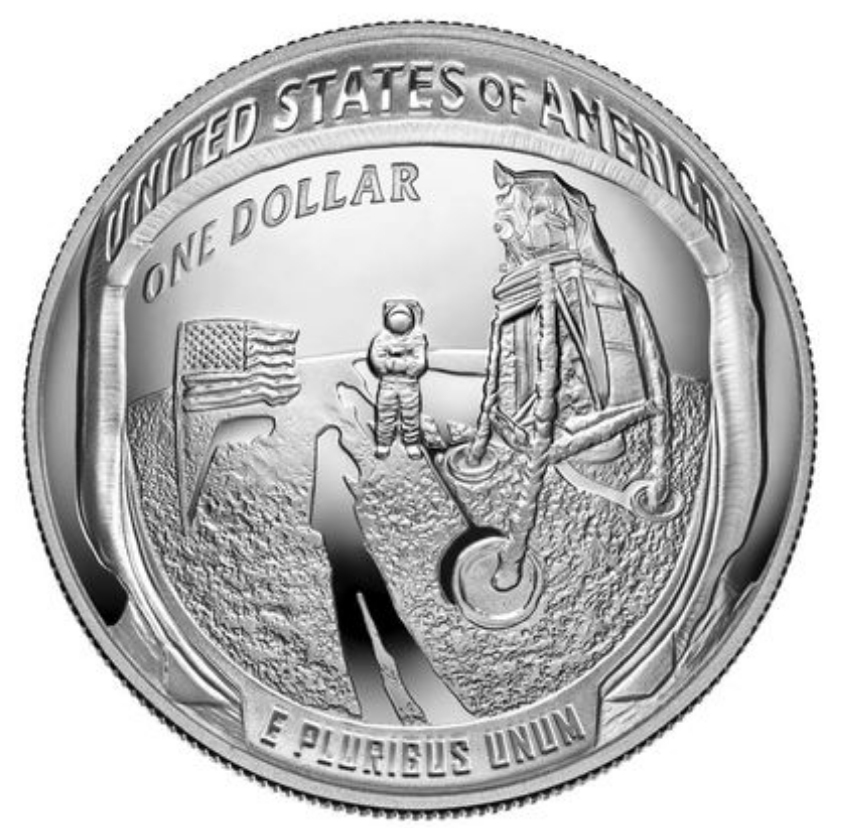
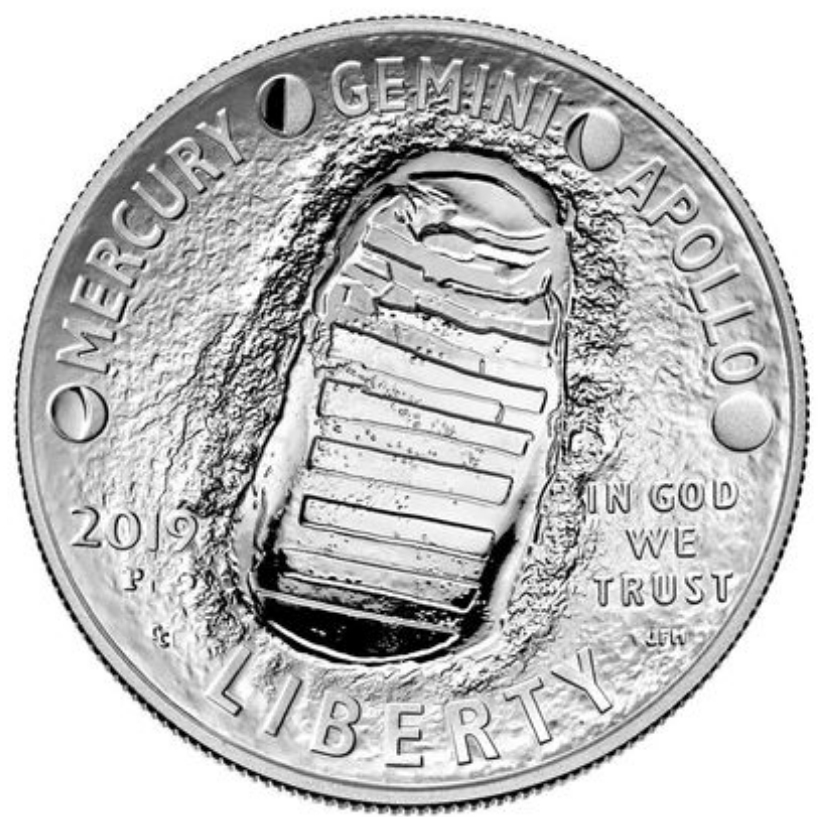
The US Mint created Apollo 11 coins to celebrate the first Moon landing--but you can no longer buy them from the Mint. You can, however, get one from Earth to Sky Calculus. The students are selling the collector's item for $229.95 to support their cosmic ray ballooning program.
The silver dollar is curved and reproduces the helmet of astronaut Buzz Aldrin. Reflected in Buzz's visor are Neil Armstrong, the United States flag, and the lunar lander. The opposite side of the coin shows Neil's iconic footprint on the Moon. Included is a greeting card showing the coin in flight and a certificate of authenticity.
Far Out Gifts: Earth to Sky Store
All sales support hands-on STEM education
Realtime Aurora Photo Gallery
Free: Spaceweather.com Newsletter
Realtime Comet NEOWISE Photo Gallery
Free: Spaceweather.com Newsletter