RESEARCHERS PREDICT A SURGE OF COSMIC RAYS: Interplanetary space is about to become a more dangerous place. A new study just published in the research journal Space Weather predicts that galactic cosmic rays will surge in the decades ahead--a result of the sputtering solar cycle. This could limit deep space missions for astronauts to as little as 200 days. FULL STORY.
A CME IS COMING--MAYBE: Sometime today, a CME (coronal mass ejection) might hit Earth. The solar storm cloud was hurled into space on Aug. 16th by a slow-motion solar flare in the sun's southern hemisphere. Click to play a NOAA forecast model of the CME sweeping past Earth on Aug. 20th:
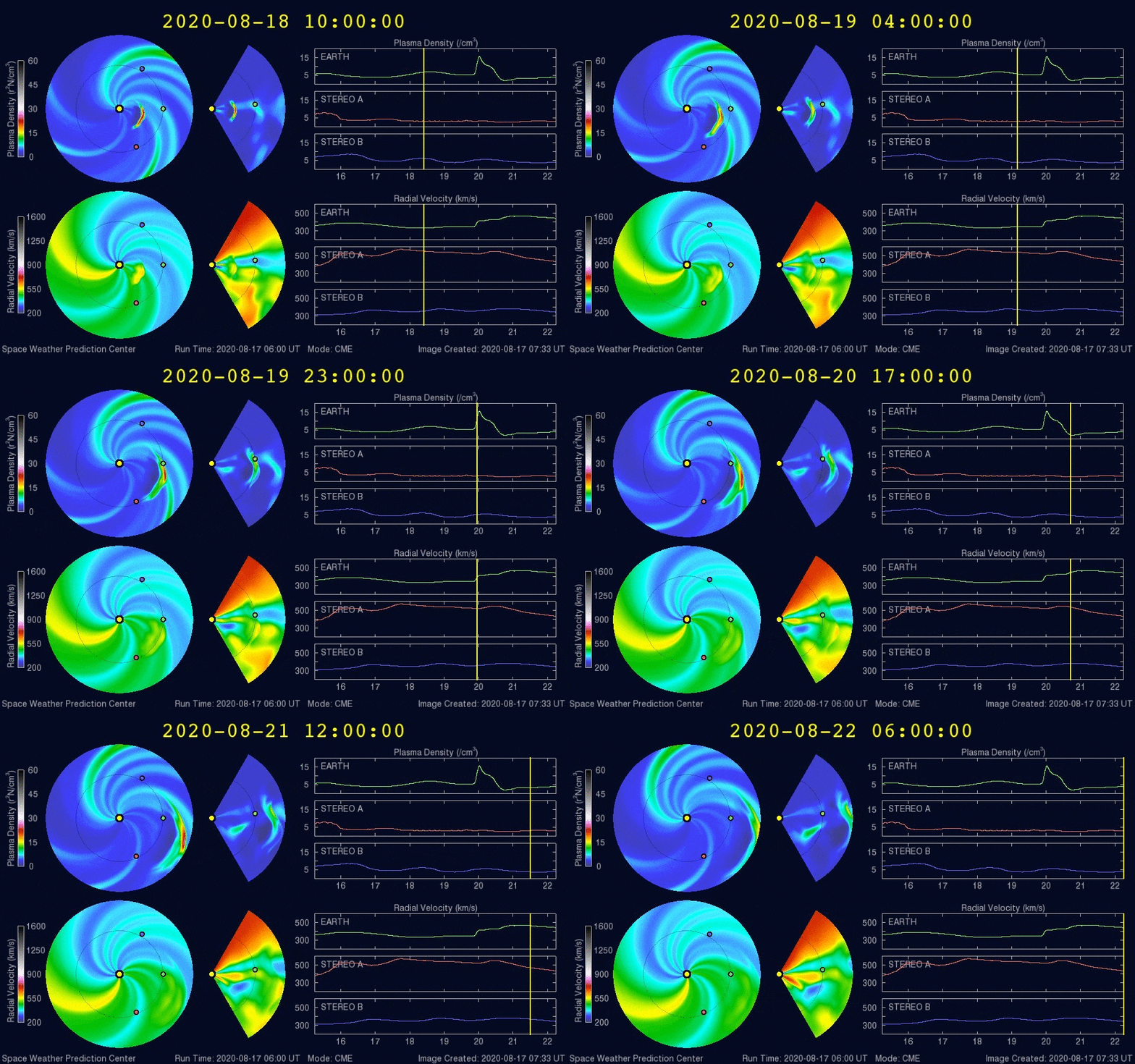
As the forecast animation shows, the CME was never heading directly for us. The bulk of the plasma cloud is expected to sail to the south of our planet. However, its outer edge could graze Earth's magnetic field, and that might be enough to spark a minor (G1-class) geomagnetic storm. There's also a chance the CME will miss, and space weather will remain quiet. Either way, high-latitude sky watchers should be alert for auroras on August 20th. Aurora alerts: SMS Text

Realtime Space Weather Photo Gallery
Free: Spaceweather.com Newsletter
COSMIC RAY DATA--DELIVERED BY MULE: For the past 6 years, Spaceweather.com and the students of Earth to Sky Calculus have been launching balloons to the stratosphere, monitoring cosmic rays. Almost every data point we collect has a story behind it. This one involves a mule.
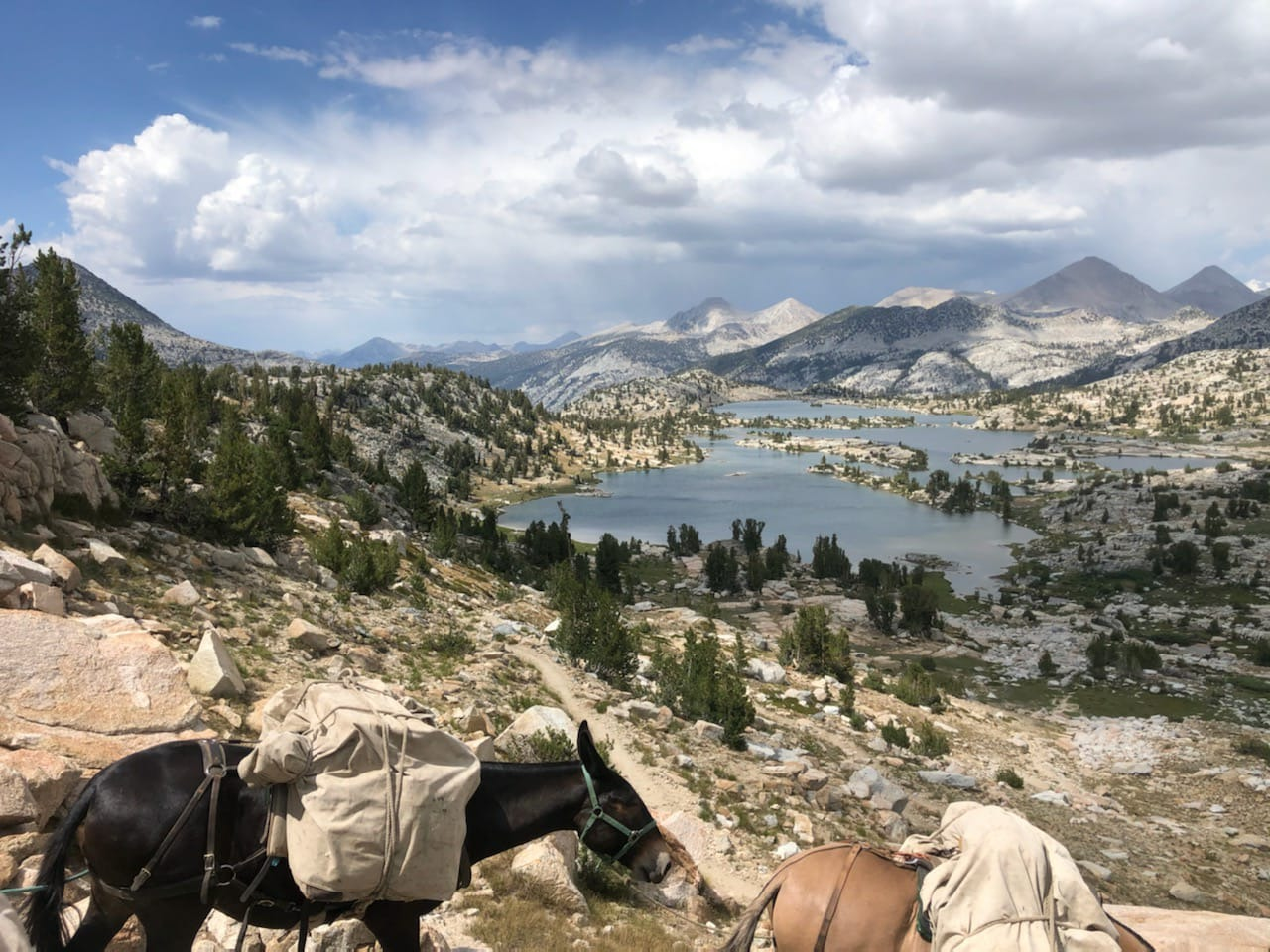
Above: The view from the landing site of our July 23, 2020, cosmic ray balloon.
On July 23rd, we launched a balloon as usual. It carried 4 cosmic ray sensors, GPS trackers, a flight computer, and a dozen pepper seeds (a student astrobiology project). The payload flew 35.8 km high--one of our highest flights ever. After the balloon popped, the adventure began. The payload hurtled downward briefly faster than 500 mph. The parachute opened, arresting its fall, and proceeded to guide the payload ... WAY OFF COURSE. The payload was supposed to land in the Buttermilks, a popular climbing area near Bishop, California, where we could easily retrieve it. Instead it touched down almost 40 miles away in the remote Sierra Nevada mountains.
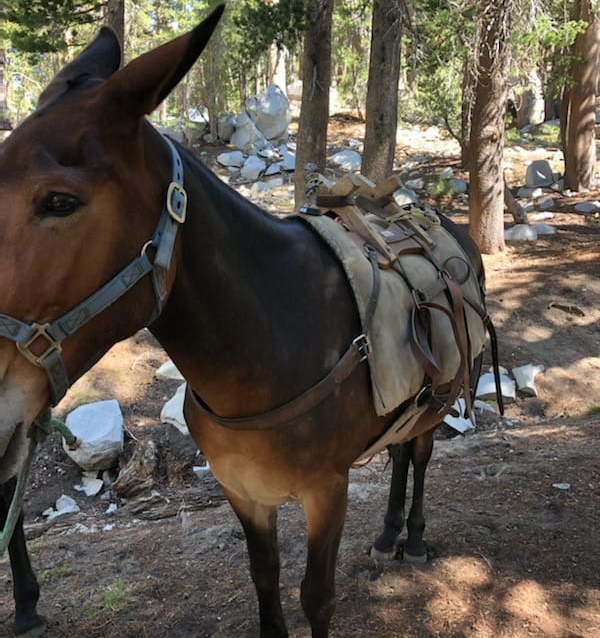
As we began to make our plans to hike in and get it--a 2 day, 60 mile expedition-- something strange happened. The payload started moving again. Little did we know at the time, it was on the back of a mule.
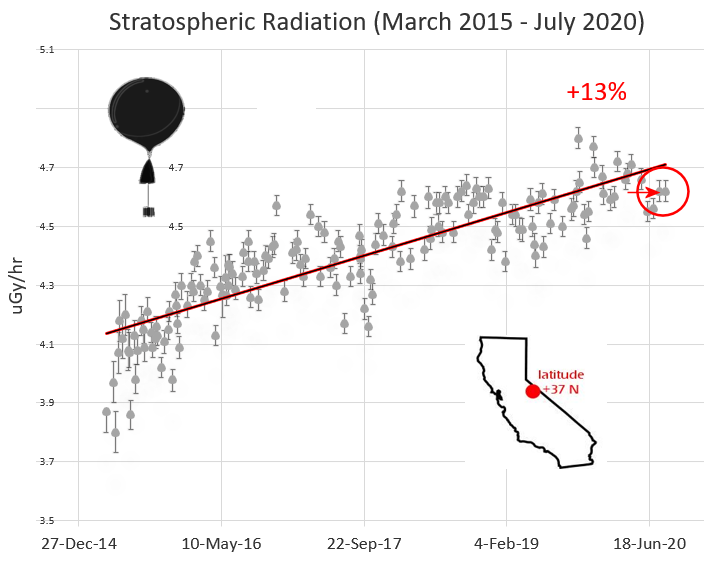
Above: The red circled data point was delivered by Mule Train
About 15 minutes after the payload came to rest in the Sierra backcountry, it was discovered by Will Ellis, a packer from Sierra Pack Station leading a train of mules along the John Muir trail. "It was only two feet from the trail," he says. "What are the odds?"
Will strapped the payload to the back of his lead mule, and proceeded to carry it almost 50 miles from the landing site to Red's Meadow, just outside Mammoth Lakes, CA. From there, Will phoned Earth to Sky and returned the payload to some very grateful young scientists.
Thank you Will Ellis and the Sierra Pack Station for helping us with our research!
THE NORTHERN LIGHTS PENDANT: On Dec. 6, 2019, the students of Earth to Sky Calculus launched a cosmic ray balloon to the stratosphere. This Northern Lights pendant went along for the ride, flying more than 107,612 feet above the rugged Sierra Nevada mountains of central California:
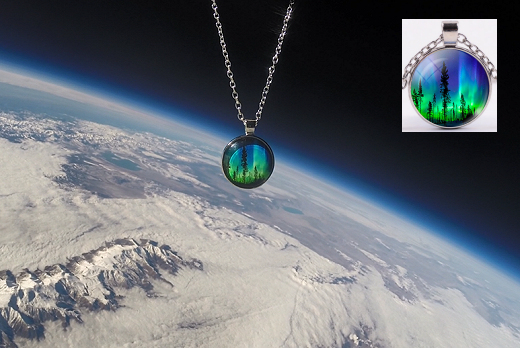
You can have it for $119.95. The students are selling these pendants to support their cosmic ray ballooning program. Each one comes with a greeting card showing the pendant in flight and telling the story of its journey to the edge of space. It makes an out-of-this-world birthday, anniversary, or Christmas gift!
Far Out Gifts: Earth to Sky Store
All sales support hands-on STEM education
Realtime Aurora Photo Gallery
Free: Spaceweather.com Newsletter
Realtime Noctilucent Cloud Photo Gallery
Free: Spaceweather.com Newsletter