AURORAS LOVE EQUINOXES: Northern autumn begins in less than a week. That's good news for Arctic sky watchers, because auroras love equinoxes. At this time of year, cracks form in Earth's magnetic field--a phenomenon known as the "Russell-McPherron effect." Solar wind pours through the gaps to fuel bright Northern Lights. Happy autumn! Aurora alerts: SMS Text.

SOLAR CYCLE 25 HAS BEGUN: Solar Cycle 25 is officially underway. NASA and NOAA made the announcement during a media teleconference earlier today. According to an international panel of experts, the sunspot number hit rock bottom in Dec. 2019, bringing an end to old Solar Cycle 24. Since then, sunspot counts have been slowly increasing, heralding new Solar Cycle 25.
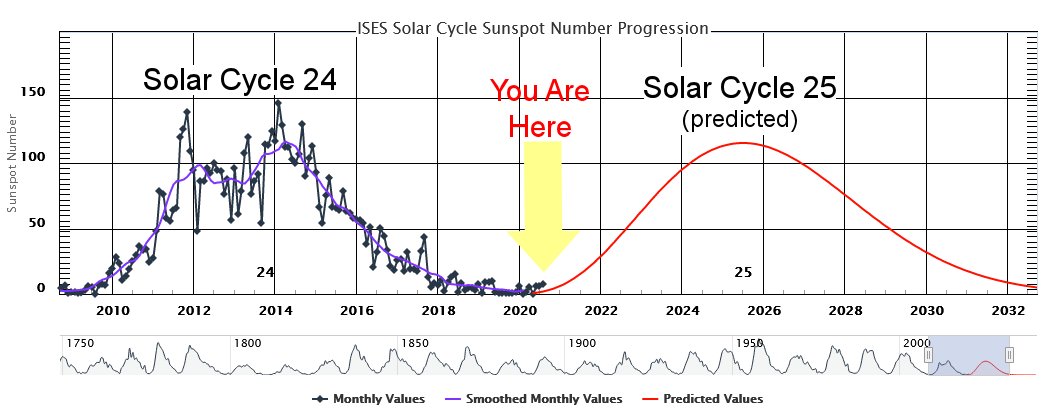
Click here to view NOAA's interactive sunspot plotter
"How quickly solar activity rises is an indicator on how strong the next solar cycle will be," says Doug Biesecker of NOAA's Space Weather Prediction Center, co-chair of the Solar Cycle 25 Prediction Panel. "Although we've seen a steady increase in sunspot activity this year, it is slow."
The panel believes that new Solar Cycle 25 will be a weak one, peaking in 2025 at levels similar to old Solar Cycle 24. If their prediction is correct, Solar Cycle 25 (like Solar Cycle 24 before it) will be one of the weakest since record-keeping began in 1755.
"While we are not predicting a particularly active Solar Cycle 25, violent eruptions from the sun can occur at any time," warns Biesecker. Indeed, even Solar Minimum can produce a superstorm, so Solar Cycle 25 should not be taken lightly despite the panel's low expectations. Radio blackouts, power outages and severe geomagnetic storms are possible in the years ahead.
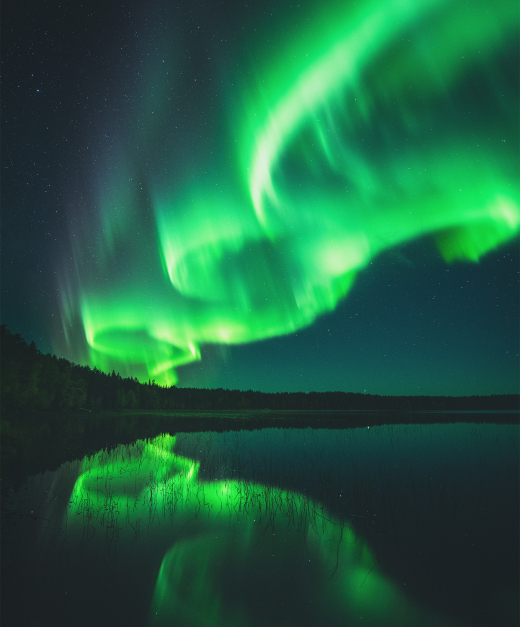
Above: Solar Cycle 25 auroras photographed on Sept. 14, 2020, by Jani Ylinampa in Finland.
For now, solar activity should remain generally low. Sunspot counts still have a long way to go before they reach levels typical of Solar Maximum. For the rest of 2020, periods of quiet will be occasionally interrupted by minor solar storms, with only a slight chance of big events.
On the bright side, the first Northern Lights of Solar Cycle 25 are dancing around the Arctic Circle right now, and the coming season for aurora watching promises to be the best in years. Stay tuned! Aurora alerts: SMS Text.
Realtime Aurora Photo Gallery
Free: Spaceweather.com Newsletter
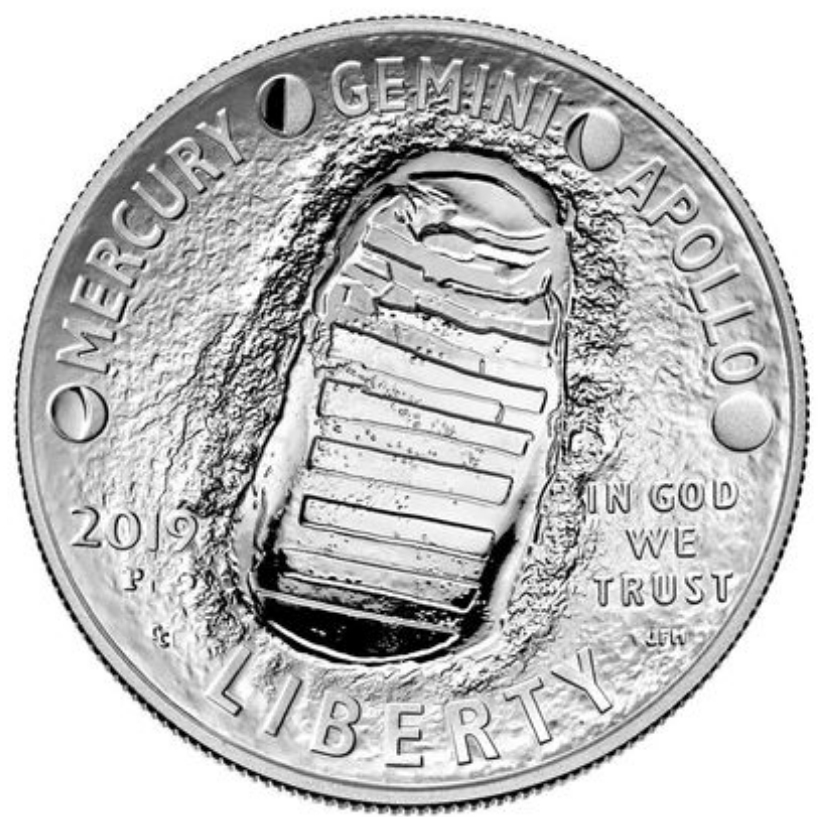
APOLLO 11 PROOF SILVER DOLLAR (COLLECTOR'S ITEM): Are you looking for a far-out gift? Consider this: On July 20, 2019 (the 50th anniversary of the Apollo 11 Moon landing), the students of Earth to Sky Calculus flew this rare proof silver dollar to the stratosphere:
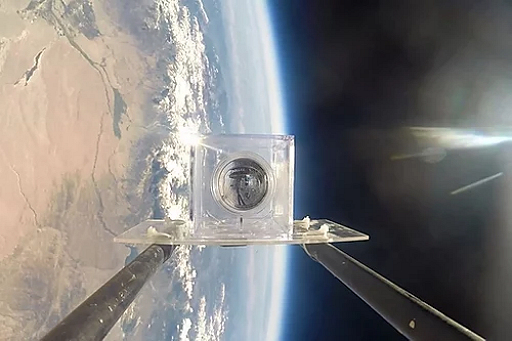
The US Mint created Apollo 11 coins to celebrate the first Moon landing--but you can no longer buy them from the Mint. You can, however, get one from Earth to Sky Calculus. The students are selling the collector's item for $229.95 to support their cosmic ray ballooning program.
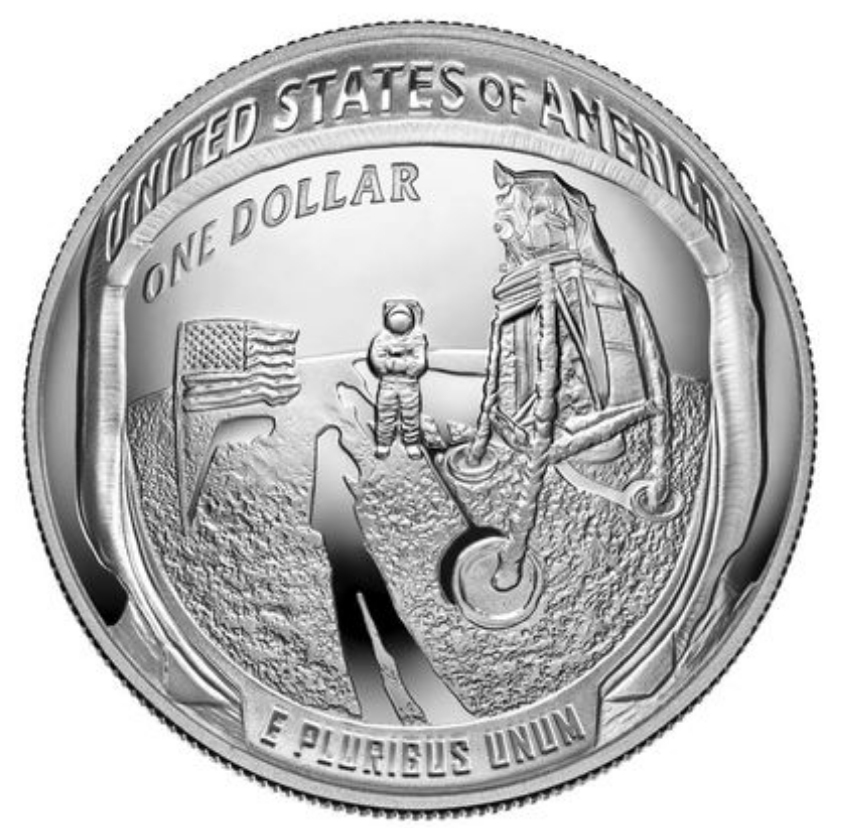
The silver dollar is curved and reproduces the helmet of astronaut Buzz Aldrin. Reflected in Buzz's visor are Neil Armstrong, the United States flag, and the lunar lander. The opposite side of the coin shows Neil's iconic footprint on the Moon. Included is a greeting card showing the coin in flight and a certificate of authenticity.
Far Out Gifts: Earth to Sky Store
All sales support hands-on STEM education
Realtime Space Weather Photo Gallery
Free: Spaceweather.com Newsletter
Realtime Mars Photo Gallery
Free: Spaceweather.com Newsletter