GEOMAGNETIC STORM WATCH: NOAA forecasters say there is a chance of minor G1-class geomagnetic storms on Oct. 22nd when a high-speed stream of solar wind hits Earth's magnetic field. The gaseous material is flowing from a northern hole in the sun's atmosphere. Bright auroras may be seen in Alaska, Canada, and the countries of Scandinavia. Aurora alerts: SMS Text.


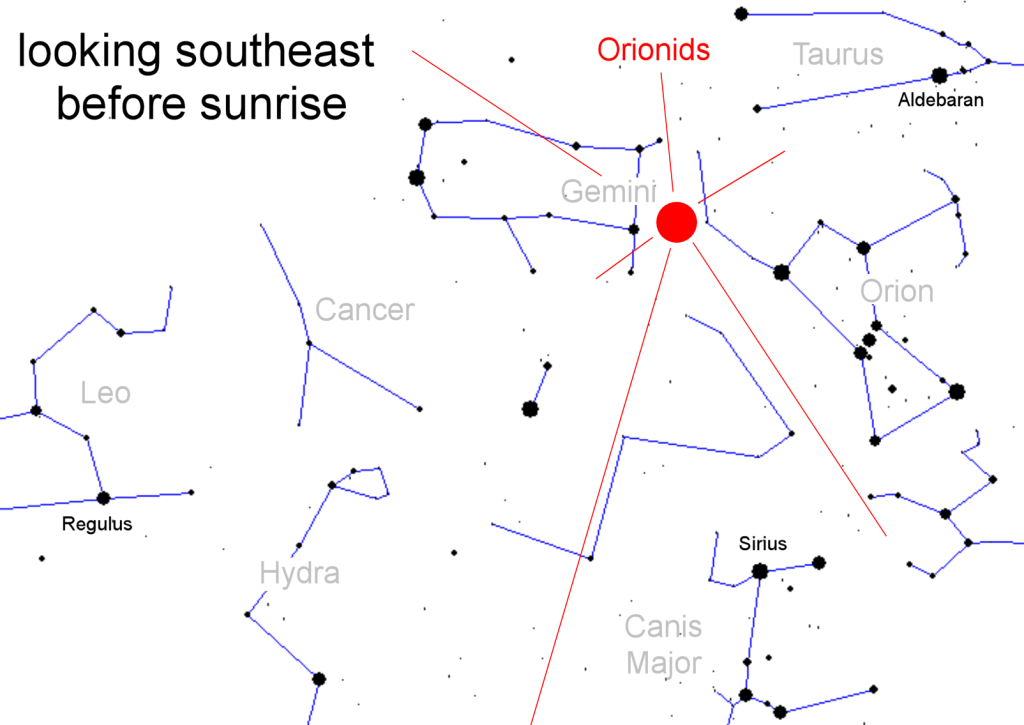
THE ORIONIDS HAVE ARRIVED: Earth has entered a stream of debris from Halley's Comet, source of the annual Orionid meteor shower. In recent nights, sky watchers have noted an uptick in meteors flying out of the constellation Orion. Marc Charron of Ayr, Scotland, photographed this fireball disintegrating just below the Hunter's sword:

"I saw it just before local sunrise at 06:27am BST," says Charron. "The fireball's debris lingered in the sky, rotating in the winds of Earth's upper atmosphere for 5 whole minutes after the flash."
Charron was looking at the right time. Orionid meteor counts are highest just before dawn. Forecasters expect this year's Orionid shower to peak on Wednesday morning, Oct 21st, with as many as 20 meteors per hour. Set your alarm for dawn and enjoy the show: sky map.
Realtime Spaceweather Photo Gallery
Free: Spaceweather.com Newsletter
CAPT. KIRK BOBBLEHEAD (COLLECTOR'S ITEM): To support their crowdfunded research program, the students of Earth to Sky Calculus have launched James T. Kirk to the stratosphere onboard a cosmic ray balloon. Note the moon over Kirk's shoulder in this photo taken 36 km (118,100 ft) above Earth's surface:

You can have him for $170.10. The price is the serial number of the Enterprise, NCC1701, divided by 10. The students are selling Kirk to buy more helium! He comes with a greeting card showing the high-quality resin bobblehead in flight and telling the story of his journey to the stratosphere and back again.
Far Out Gifts: Earth to Sky Store
All sales support hands-on STEM education
Realtime Aurora Photo Gallery
Free: Spaceweather.com Newsletter