POSSIBLE CME IMPACT: A coronal mass ejection (CME) might sideswipe Earth's magnetic field on Nov. 1st, causing minor geomagnetic storms. The incoming CME was not produced by giant sunspot AR2778. It was hurled into space on Oct. 27th by an erupting filament of magnetism unrelated to the sunspot. Aurora alerts: SMS Text.

BIG SUNSPOT AR2778:There's a new spot on the sun--and it's a big one. Only two days old, AR2778 is already 8 times wider than Earth with a dozen dark cores sprawling 100,000 km across the solar surface. It is inset in this magnetic map of the sun from NASA's Solar Dynamics Observatory:

The +/- magnetic polarity of AR2778 identifies it as a member of new Solar Cycle 25. It is, so far, the largest sunspot of the young solar cycle by a wide margin. AR2788 has a "beta-gamma" magnetic field that harbors energy for M-class solar flares. If any such eruptions occur today, they will be geoeffective as the sunspot is almost directly facing Earth. Stay tuned! Solar flare alerts: SMS Text.
Realtime Spaceweather Photo Gallery
Free: Spaceweather.com Newsletter
A RED ARC OVER SWEDEN: You've heard of auroras--green and purple lights that dance in the sky during geomagnetic storms. But have you ever heard of an SAR? Stable Auroral Red arcs (SARs) were discovered in 1956 at the beginning of the Space Age and have been recorded by cameras on satellites hundreds of times since. Most aurora watchers have never seen one, though, because they are usually invisible to the human eye. Last Friday in Sweden, photographer Göran Strand saw one:

"It was a spectacular night with some really nice Northern Lights, but this arc turned out to be the gem for the night," says Strand. "It was relatively faint to the naked eye; my camera easily detected the red color."
SARs are related to auroras, but they are not the same. Regular auroras appear when high-energy particles rain down along polar magnetic field lines, hitting the atmosphere (100-200 km high) and causing it to glow like the picture tube of an old color TV. SARs form differently. They are a sign of heat energy leaking into the upper atmosphere (~400 km high) from Earth's ring current system. The heat, in this case, may have been delivered by a high-speed solar wind stream that hit Earth's magnetic field shortly before Strand's photo.
Realtime Aurora Photo Gallery
Free: Spaceweather.com Newsletter
APOLLO 11 PROOF SILVER DOLLAR (COLLECTOR'S ITEM): Are you looking for a far-out gift? Consider this: On July 20, 2019 (the 50th anniversary of the Apollo 11 Moon landing), the students of Earth to Sky Calculus flew this rare proof silver dollar to the stratosphere:
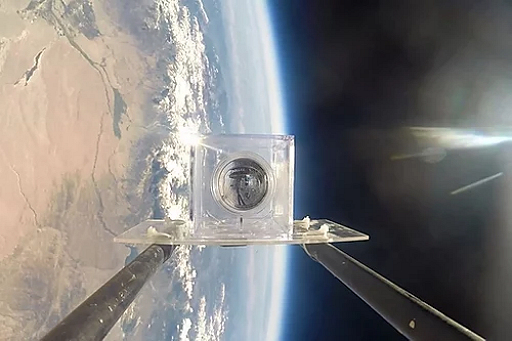
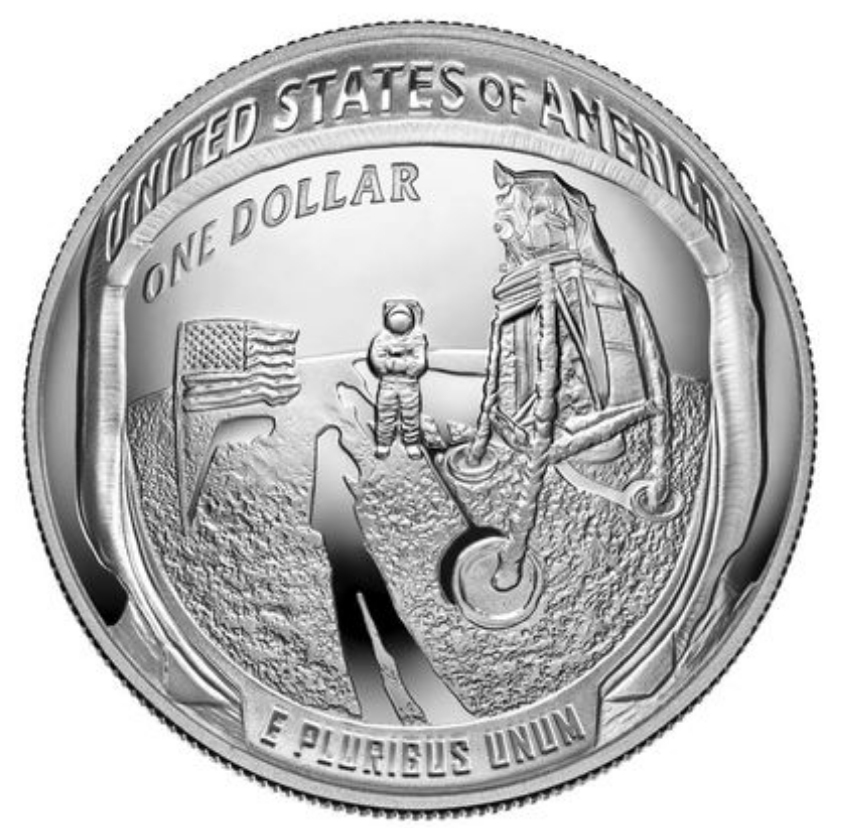
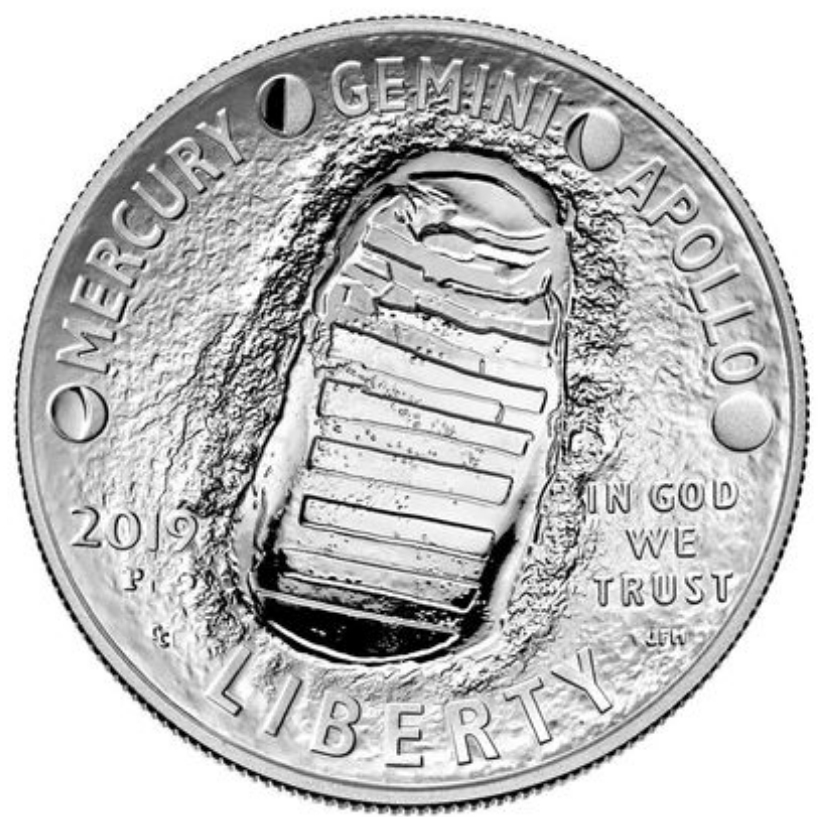
The US Mint created Apollo 11 coins to celebrate the first Moon landing--but you can no longer buy them from the Mint. You can, however, get one from Earth to Sky Calculus. The students are selling the collector's item for $229.95 to support their cosmic ray ballooning program.
The silver dollar is curved and reproduces the helmet of astronaut Buzz Aldrin. Reflected in Buzz's visor are Neil Armstrong, the United States flag, and the lunar lander. The opposite side of the coin shows Neil's iconic footprint on the Moon. Included is a greeting card showing the coin in flight and a certificate of authenticity.
Far Out Gifts: Earth to Sky Store
All sales support hands-on STEM education
Realtime Mars Photo Gallery
Free: Spaceweather.com Newsletter