GEMINID METEOR ALERT: This weekend, Earth is passing through a stream of debris from rock comet 3200 Phaethon, source of the annual Geminid meteor shower. Forecasters expect more than 60 meteors per hour when the shower peaks on the night of Dec. 13/14. For best results, get away from city lights and keep an eye on the sky between ~10 pm Sunday night and ~5 am Monday morning; after midnight is better. Thanks to a perfectly-timed New Moon on Dec. 14th, rural skies will be velvety dark during the shower's peak. Sky maps: Dec. 13, 14. More: Observing tips, photo gallery.


NOCTILUCENT CLOUD SEASON BEGINS, FINALLY: Weeks later than usual, noctilucent clouds (NLCs) are finally forming over the South Pole. NASA's AIM spacecraft spotted the first electric-blue cloudlet high above East Antarctica on Dec. 8th:

NLCs are Earth’s highest clouds. They form when summertime wisps of water vapor rise up from the poles to the edge of space. Water crystallizing around specks of meteor dust 83 km above Earth’s surface creates beautiful electric-blue structures. The southern season for NLCs usually begins in November. This year's onset has been delayed by strange Antarctic weather.
If the clouds return to form, they will blossom in the days ahead, completely ringing the South Pole within a week to 10 days. You can check their progress every day right here on Spaceweather.com.

Realtime Aurora Photo Gallery
Free: Spaceweather.com Newsletter
THE GREAT CONJUNCTION OF JUPITER & SATURN: It's only 9 days away--The Great Conjunction of Jupiter and Saturn. The two giant planets are converging for their finest naked-eye pairing in nearly 800 years. Here they are, shining through the slit of John Chumack's backyard observatory dome in Yellow Springs, Ohio:

"A very rare event is starting!" says Chumack. "Because of COVID restrictions, I can't host an event at my observatory, so I texted several of my friends to watch it. The planets are so bright, you don’t need a telescope to enjoy this event. Texting is a great way to enjoy it with others."
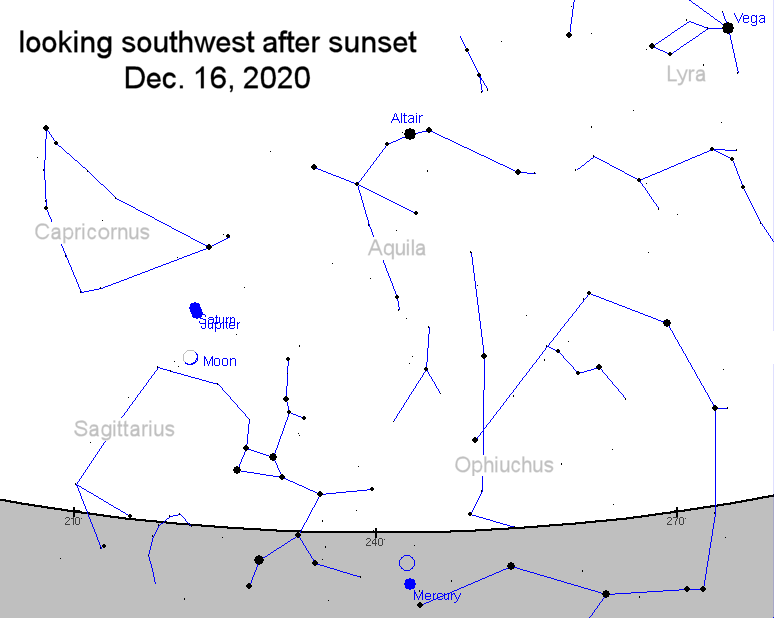
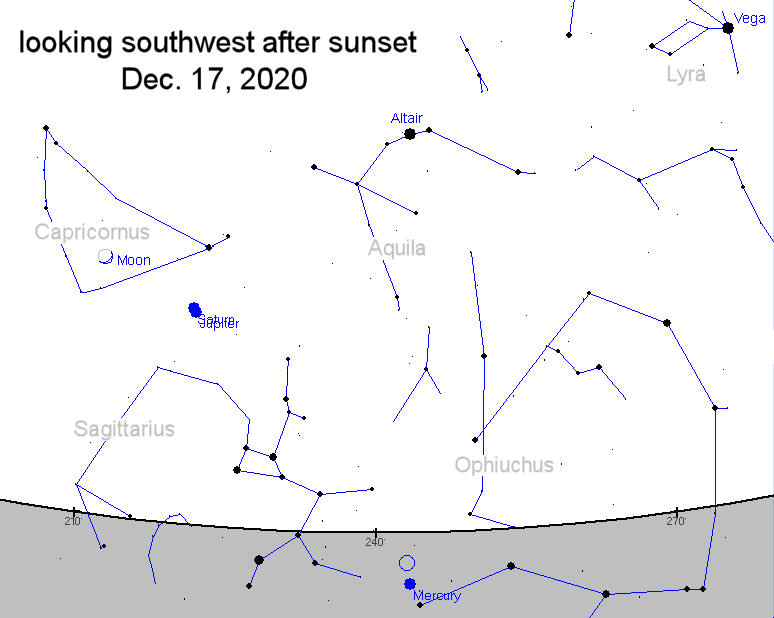
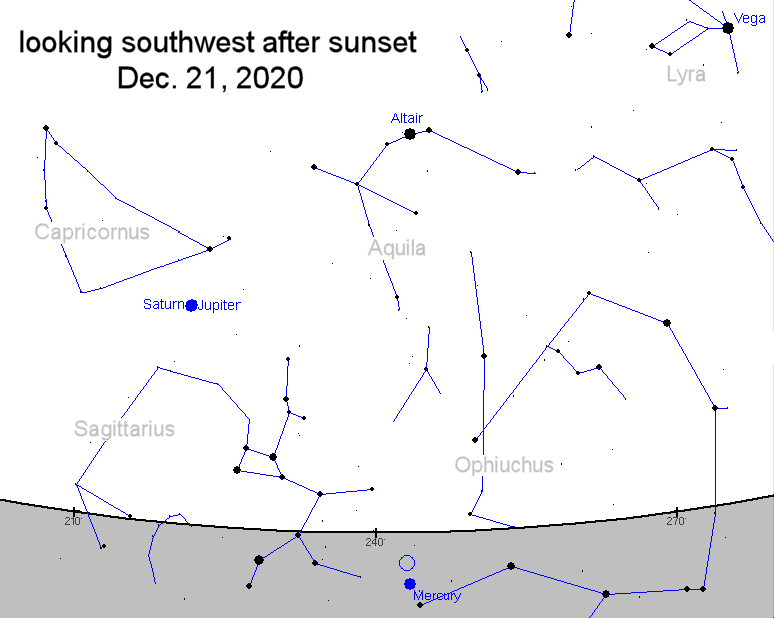
On Dec. 21st, the two planets will lie just 0.1 degrees apart. That’s so close, some people will perceive them as a single brilliant star. Viewed through binoculars or a small telescope, ringed Saturn will appear as close to Jupiter as some of Jupiter’s moons. Other dates of special interest include Dec. 16th and 17th when the crescent Moon briefly joins the conjunction. Look west at sunset and enjoy the show! Sky maps: Dec. 16, 17; Dec. 21.

Realtime Spaceweather Photo Gallery
Free: Spaceweather.com Newsletter
GIFTS FROM THE EDGE OF SPACE: Christmas is less than two weeks away. Are you looking for a far-out gift? Check out the Earth to Sky Store. It's filled with unique items that have flown to the edge of space onboard cosmic ray research balloons. From now until Christmas, all gifts are 10% off:

Carried aloft by giant helium balloons, these unique gifts have flown above 99.7% of Earth's atmosphere, experiencing space-like blasts of cosmic rays, extreme cold, and a wild ride parachuting back to Earth after the balloon explodes. Even Amazon doesn't carry items this far out.
All items come with a greeting card showing the gifts in flight, and telling the story of their journey to the edge of space and back again. Don't forget to enter coupon code "SPACESANTA" at checkout for a 10% holiday discount!
Far Out Gifts: Earth to Sky Store
All sales support hands-on STEM education
Realtime Aurora Photo Gallery
Free: Spaceweather.com Newsletter