ALL QUIET: 2020 is ending on a quiet note. The solar wind is ebbing, solar flare activity is nil, and both sunspot groups on the solar disk are in decay. 2021 will not be so quiet, however. Solar Cycle 25 is gaining strength, and a New Year of increased solar activity is only a day away. Instant solar flare alerts: SMS Text.
A GREEN FLASH ON JUPITER: You've heard of a green flash on the sun. But a green flash on Jupiter? "I've never come across one before," says atmospheric optics expert Les Cowley. Until now, that is. Spanish astrophotographer Juan Manuel Perez Rayego captured the rare phenomenon on Dec. 26th:
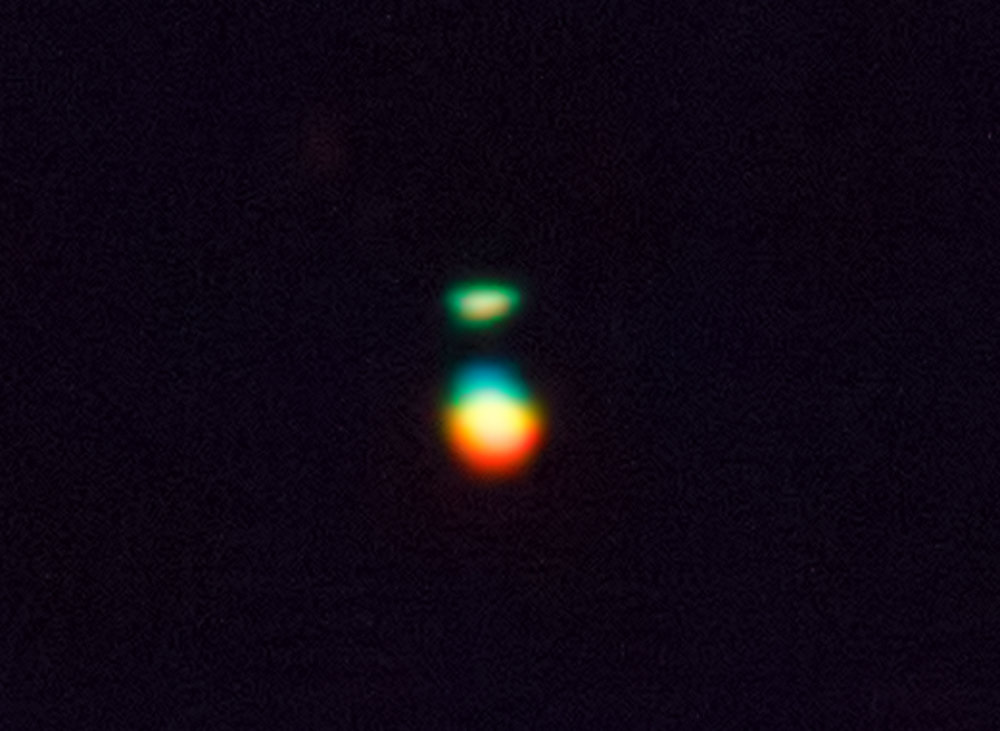
"I was taking one last photo of the Great Conjunction between Jupiter and Saturn, just saying goodbye," says Rayego. "Suddenly, a green fragment of Jupiter split off and floated away from the planet. It was spectacular."
"I've analyzed Juan's image and conclude that it is very likely a mock mirage--the same type of mirage that can create green flashes on the sun," says Cowley.
Mock mirages are caused by atmospheric temperature inversions, in which layers of air are warmer than usual. An extra 1 or 2 degrees Celsius is all it takes. Inversion layers can be quite close to ground. Indeed, Jupiter was only 1/3rd of a degree above the horizon of Arroyo de San Serván, Spain, when Rayego recorded the flash.
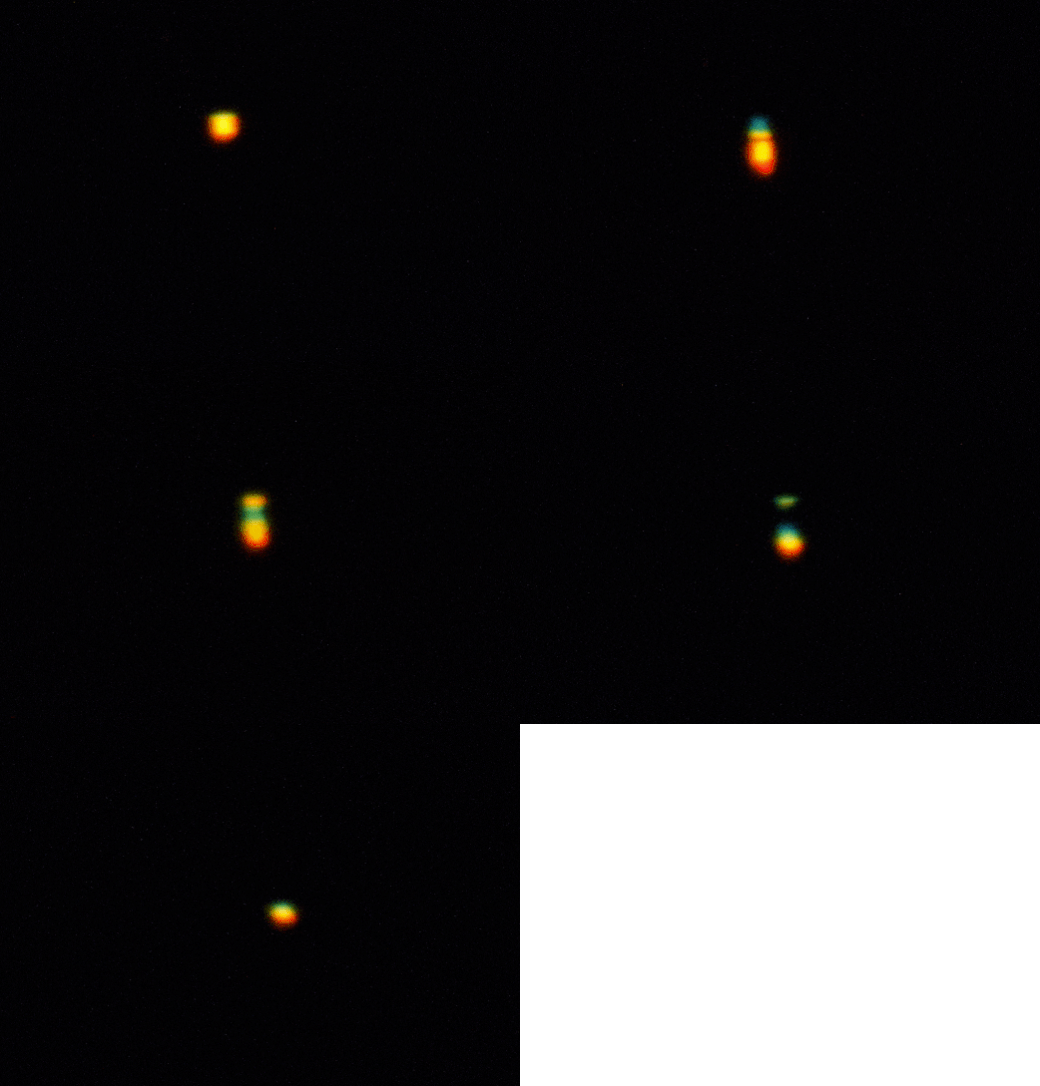
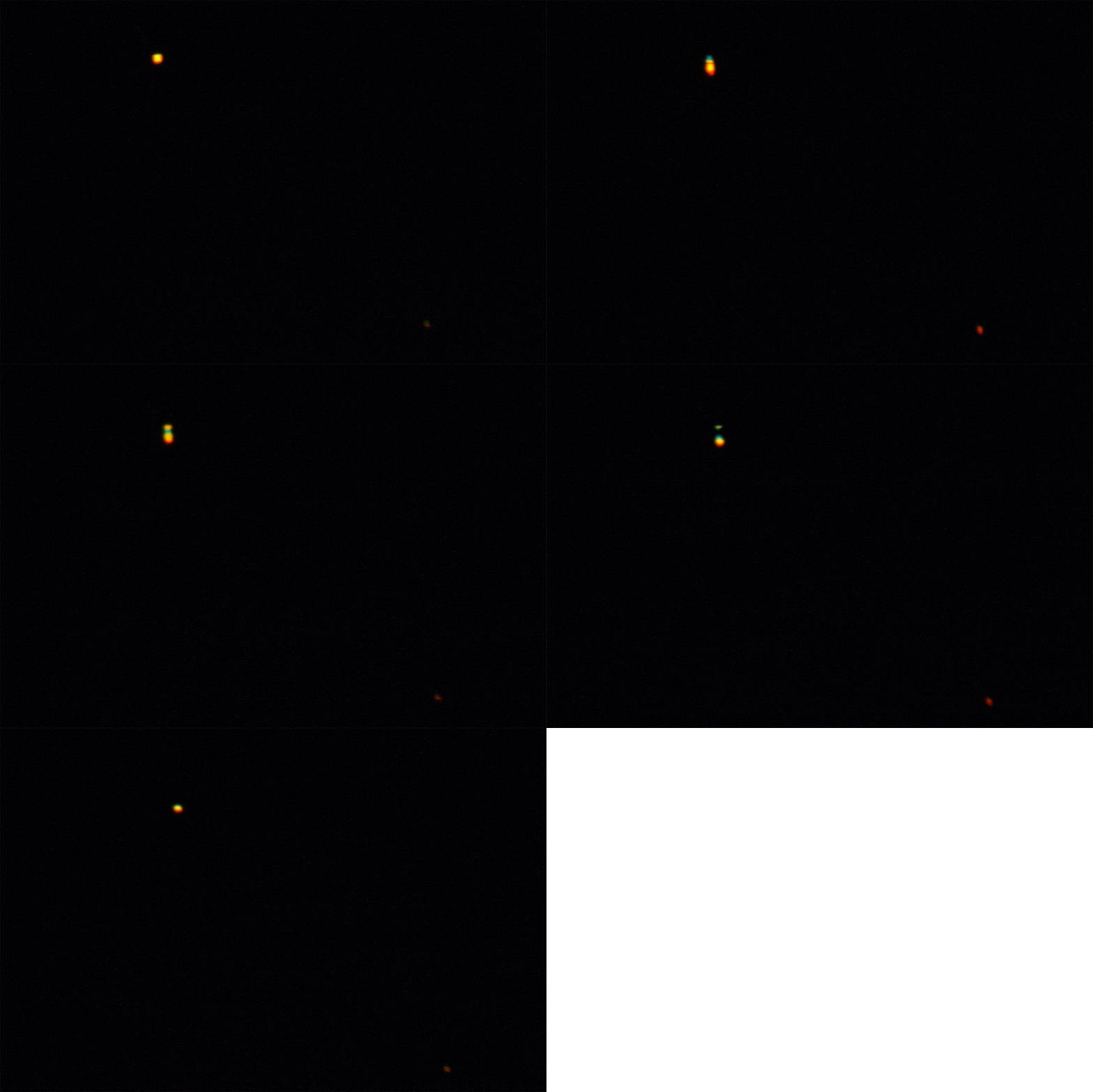
The low altitude of Jupiter is why the planet looked like a rainbow-colored smear when the flash occurred. The low atmosphere acts like a prism, spreading the light of stars and planets into their R-G-B components. In this wider-angle animation, Saturn may be seen as well (lower right). It too looks like a miniature rainbow, albeit without the green flash.
Realtime Green Flash Photo Gallery
Free: Spaceweather.com Newsletter
A GIFT FROM THE EDGE OF SPACE: Every time the students of Earth to Sky Calculus launch cosmic ray sensors to the stratosphere, they send a little something extra along for the ride. For example, this moonstone wrapped in a sterling silver Celtic love knot:
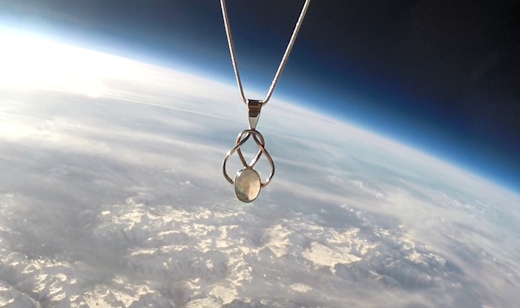
You can have it for $179.95. The students are selling these pendants as a fund-raiser for their cosmic ray monitoring program. They make great anniversary, birthday and Valentine's Day gifts. Each pendant comes with a greeting card showing the jewelry in flight and telling the story of its journey to the stratosphere and back again.
Far Out Gifts: Earth to Sky Store
All sales support hands-on STEM education
Realtime Aurora Photo Gallery
Free: Spaceweather.com Newsletter
Realtime Spaceweather Photo Gallery
Free: Spaceweather.com Newsletter