MINOR GEOMAGNETIC STORM WARNING: NOAA forecasters say there is a 40% chance of minor (G1-class) geomagnetic storms on Jan. 6th when a CME hits Earth's magnetic field. The CME is actually a pile-up of two CMEs, which makes its arrival time more difficult to predict. The actual impact could occur at any time from late Jan. 5th to Jan. 7th, potentially sparking the first significant Arctic auroras of the New Year. Aurora alerts: SMS Text.

NOCTILUCENT CLOUDS OVER THE SOUTH POLE: They're back. Noctilucent clouds (NLCs) are once again circling the South Pole. Latest images from NASA's AIM spacecraft show a complete ring of electric blue almost completely blanketing Antarctica:
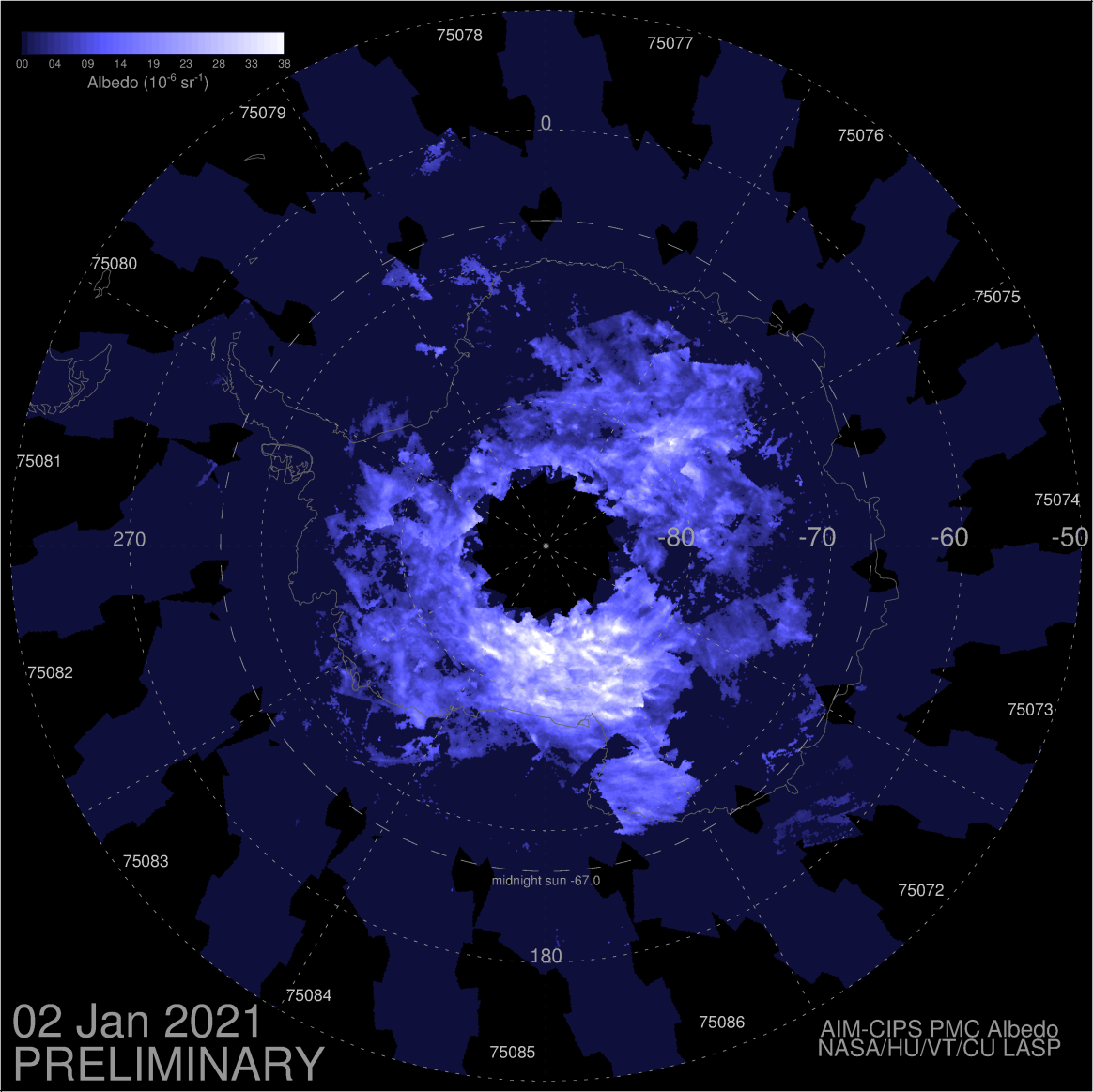
NLCs are Earth’s highest clouds. They form when summertime wisps of water vapor rise up from the poles to the edge of space. Water crystallizing around specks of meteor dust 83 km (~50 miles) above Earth’s surface creates beautiful electric-blue structures, typically visible from November to February in the south, and May to August in the north.
The onset of southern NLCs this year was delayed by strange weather over Antarctica. But now the meteorological logjam has broken, and 2021 can begin to catch up to previous years. Perhaps some ground-based photos are in the offing. (Spoiler alert: They are.) Stay tuned!
Realtime NLC Photo Gallery
Free: Spaceweather.com Newsletter
A DOUBLE-PEAKED METEOR SHOWER: The annual Quadrantid meteor shower peaked on Jan. 3rd. Actually, it peaked twice. Radio data collected by Stuart Green in Preston UK show the double signature:
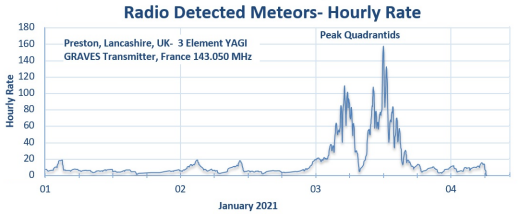
Quadrantid meteors are debris from shattered comet 2003 EH1. The shower is famous for its brevity, often lasting only a few hours as Earth transits the comet's narrow debris stream. In 2021, it looks like Earth transited two debris streams. The first favored sky watchers in Europe; the second North America. Green detected them both because radio observations are not affected by sunlight or clouds.
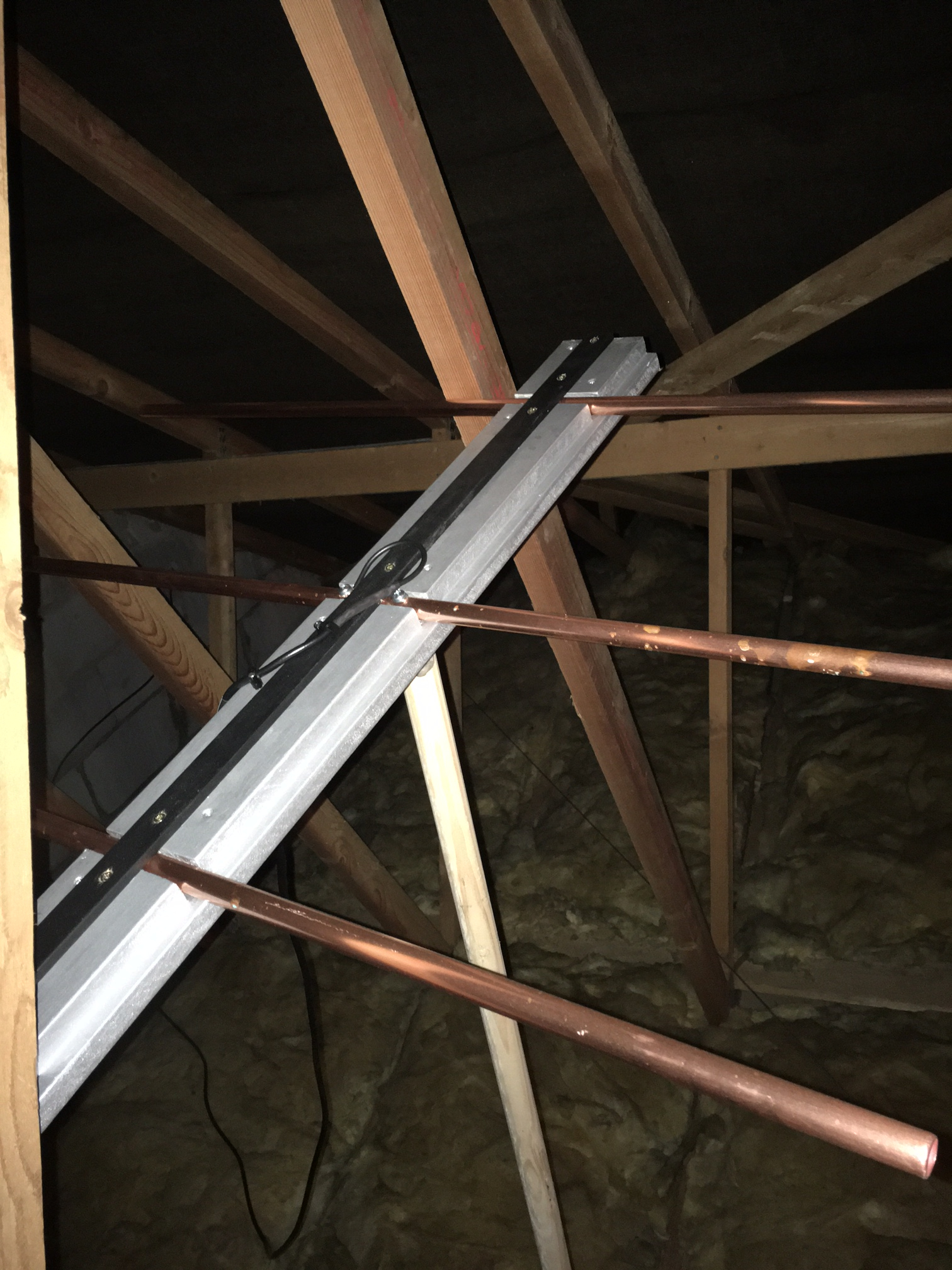
This is how he did it: Green monitors signals from France's GRAVE space surveillance radar, used by the French government to track Earth-orbiting satellites. The Quadrantids added an extra set of echoes not normally present. Using a Yagi antenna in his attic and a radio receiver tuned to 143 MHz (the operating frequency of the radar), Green listened to the activity. Twice.
Realtime Spaceweather Photo Gallery
Free: Spaceweather.com Newsletter
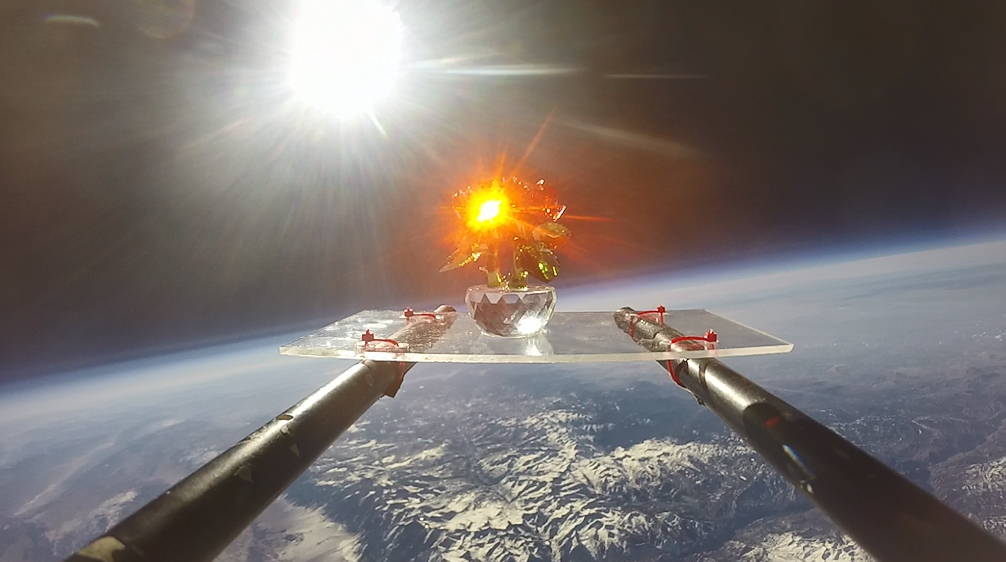
A FAR OUT VALENTINE'S GIFT: Valentine's Day is coming. To get ready for the most romantic day of the year, the students of Earth to Sky Calculus launched a crystal bouquet of roses to the stratosphere on Jan. 1, 2021. Here it is floating on a cosmic ray balloon 102,690 feet above the Sierra Nevada mountains of central California:
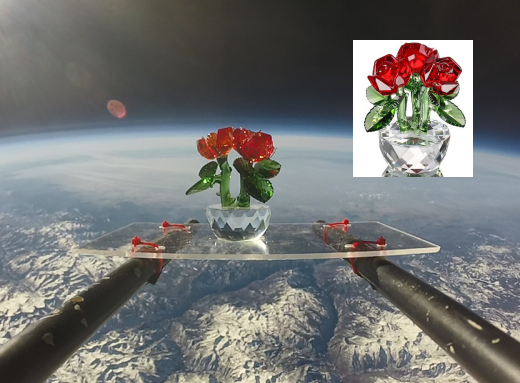
You can have them for $99.95. The students are selling space roses to fund their cosmic ray ballooning program. The flowers are made of high-quality Borosilicate Crown Crystal often used in lenses and prisms. That's why they glitter so colorfully in high-altitude sunlight. Each bouquet comes with a greeting card showing the flowers in flight and telling the story of their journey to the stratosphere and back again.
Far Out Gifts: Earth to Sky Store
All sales support hands-on STEM education
Realtime Aurora Photo Gallery
Free: Spaceweather.com Newsletter