GEOMAGNETIC STORM WATCH--CANCELED: A CME expected to strike Earth on Jan. 6th either missed or it snuck past Earth embedded in a stream of solar wind. Either way, geomagnetic storms are no longer likely. A slight enhancement of geomagnetic unrest during the early hours of Jan. 6th may have signaled the CME's stealthy passage. Aurora alerts: SMS Text.
The CME, if it indeed arrived, may have declared itself in this light show over northern Canada:
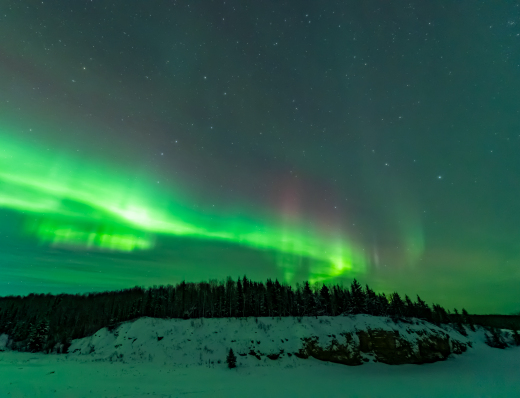
John David McKinnon took the picture from Wood Buffalo National Park in Alberta. "The auroras danced beautifully over the Salt River," he says. "This made for a very peaceful and serene night."
These auroras, and a few other high-latitude sightings around the same time, may have been sparked by the CME in combination with a high-speed solar wind stream. At the time of the display, solar wind speeds were topping 600 km/s--a gaseous flow unrelated to the expected storm cloud. CME? Solar wind? A combination of the two? We may never know for sure. Aurora alerts: SMS Text.
Realtime Aurora Photo Gallery
Free: Spaceweather.com Newsletter
SOLAR PROMINENCES: "The sun has been quiet for several days now - no sunspots, no flares - but it still produced some beautiful prominences," reports Ofer Gabzo of the Givatayim Observtory in Israel. He took this picture on the morning of Jan 6th:
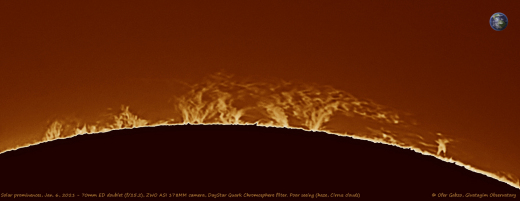
Prominences are clouds of hot plasma held above the surface of the sun by nagnetic fields. The ones Gabzo photographed are almost three times taller than Earth itself. Their scale makes them an easy target for small telescopes.
"To take this picture, I used a 70mm ED refracting telescope and a DayStar Quark H-alpha filter [tuned to the red glow of solar hydrogen]," says Gabzo. "They looked great despite poor conditions (haze and a thin cloud layer)."
Realtime Spaceweather Photo Gallery
Free: Spaceweather.com Newsletter
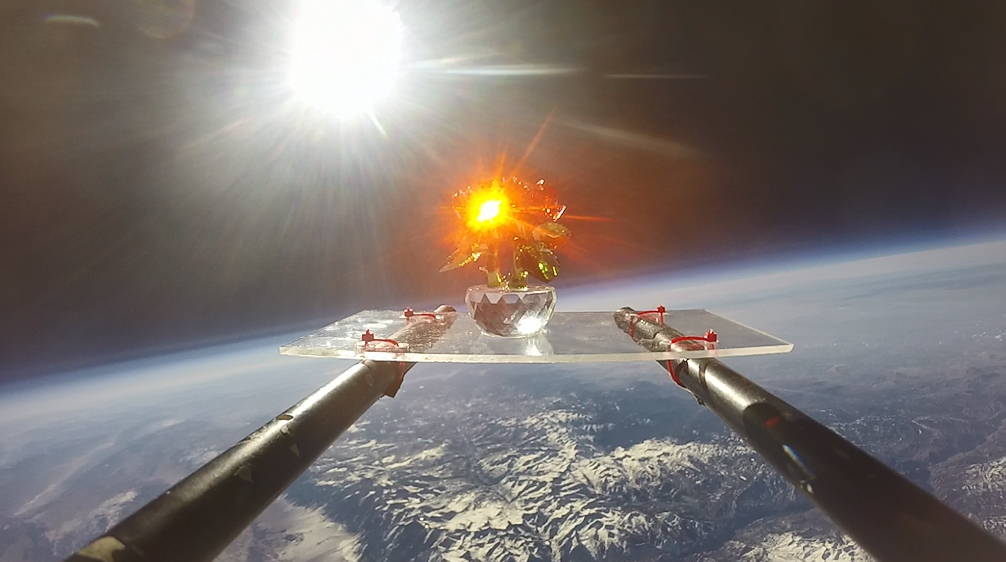
A FAR OUT VALENTINE'S GIFT: Valentine's Day is coming. To get ready for the most romantic day of the year, the students of Earth to Sky Calculus launched a crystal bouquet of roses to the stratosphere on Jan. 1, 2021. Here it is floating on a cosmic ray balloon 102,690 feet above the Sierra Nevada mountains of central California:
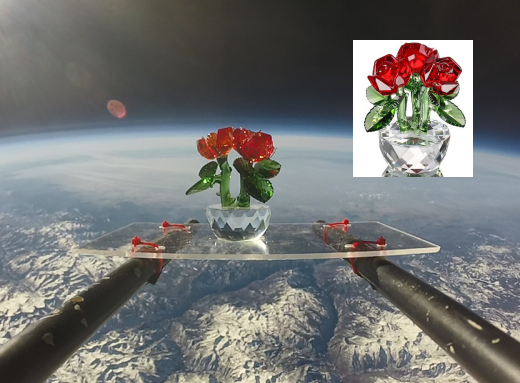
You can have them for $99.95. The students are selling space roses to fund their cosmic ray ballooning program. The flowers are made of high-quality Borosilicate Crown Crystal often used in lenses and prisms. That's why they glitter so colorfully in high-altitude sunlight. Each bouquet comes with a greeting card showing the flowers in flight and telling the story of their journey to the stratosphere and back again.
Far Out Gifts: Earth to Sky Store
All sales support hands-on STEM education
Realtime Spaceweather Photo Gallery
Free: Spaceweather.com Newsletter