THE CALM AFTER THE STORM: Earth's magnetic field is quieting after yesterday's unexpected solar wind shock wave impact. Calm has resumed and conditions could remain so for days to come. The sun is blank (no sunspots), the chance of solar flares is very low, and the next solar wind stream is not expected until ~Jan. 18th. Aurora alerts: SMS Text.
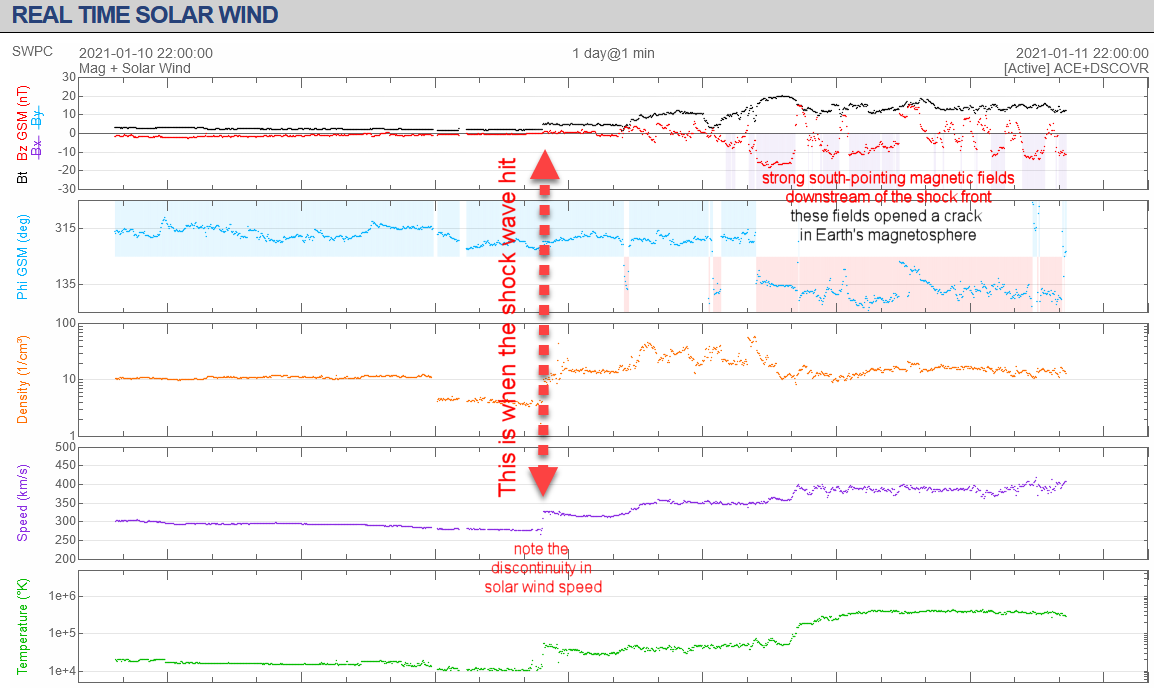
INTERPLANETARY SHOCK WAVE SPARKS AURORAS: Surprising forecasters, an interplanetary shock wave hit Earth's magnetic field on Jan. 11th. The impact just after 08:30 UT did not trigger a geomagnetic storm. However, strong magnetic fields downstream of the shockfront opened a crack in Earth's magnetosphere. Solar wind poured in to fuel a nice display of Arctic auroras:
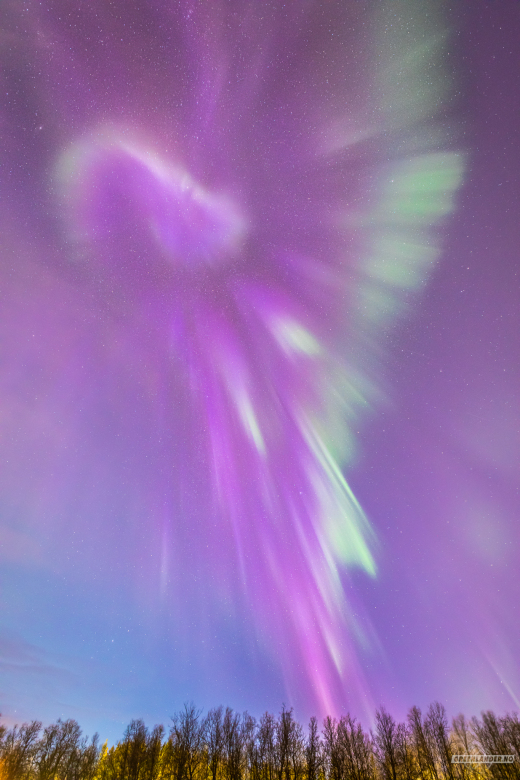
"I was running around my apartment like a maniac, looking for pants and camera equipment," says photographer Markus Varik of Tromsø, Norway. " I didn't have enough time to go to completely dark location--but I didn't need to. The auroras were so bright."
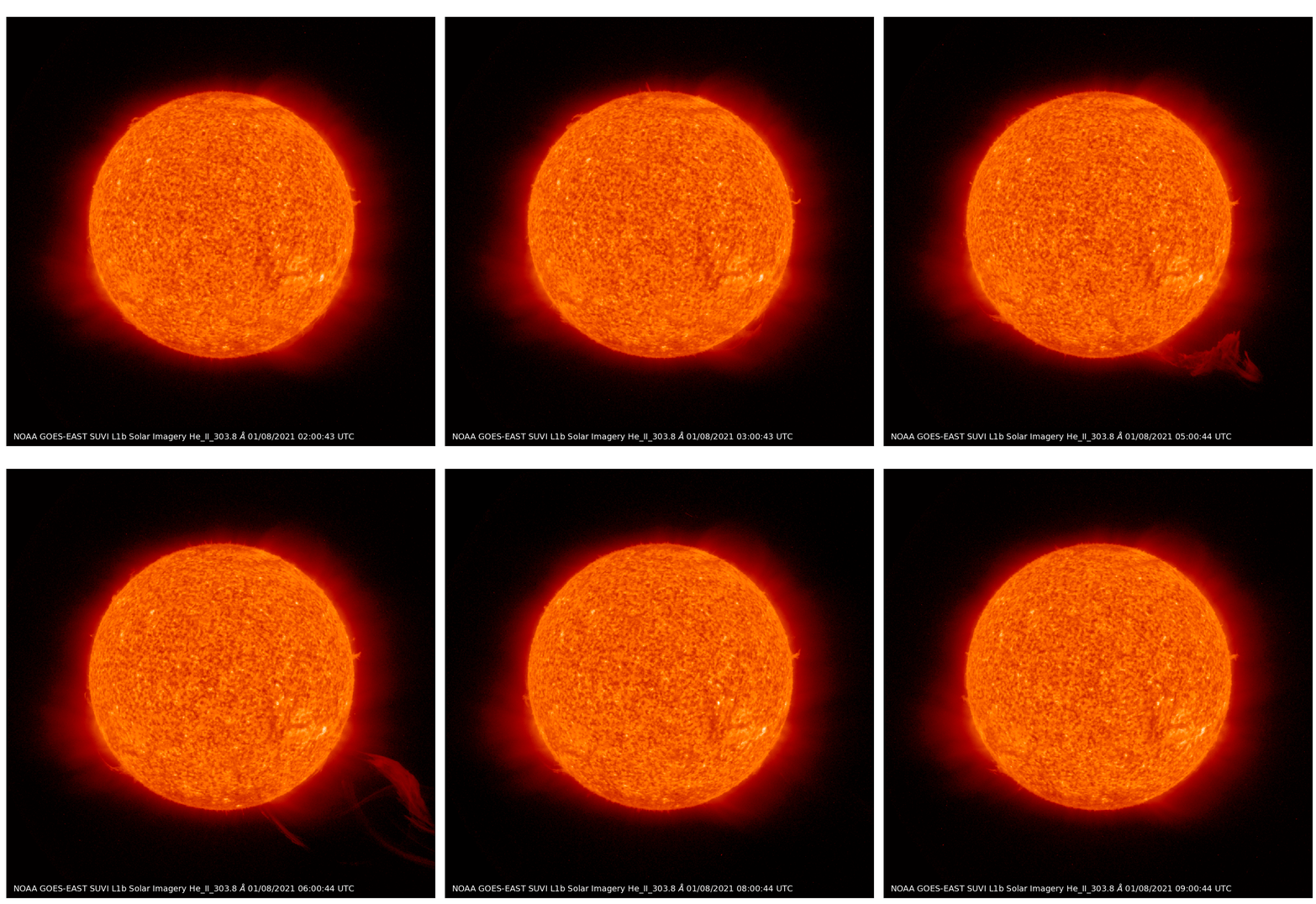
The shock wave was not expected. In retrospect, perhaps, it should have been. On Jan. 8th, a huge filament of magnetism launched itself off the surface of the sun: movie. At first the blast did not seem to be Earth-directed. However, yesterday's event may have been a glancing blow from the debris. Aurora alerts: SMS Text.
Realtime Aurora Photo Gallery
Free: Spaceweather.com Newsletter
MEANWHILE IN ENGLAND: "The solar eruption and consequent shockwave reported on Spaceweather.com certainly was geoeffective, sparking not only auroras, but also twitching magnetometer needles," reports Stuart Green who recorded the shaking of his local magnetic field in Preston UK:
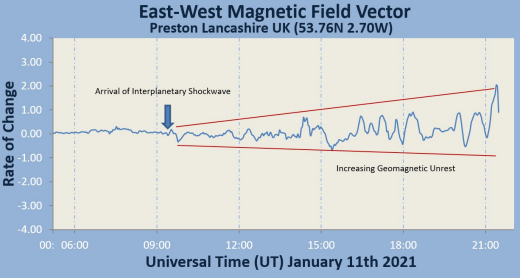
"It is always so exciting to experience the effects of space weather here at ground level," he says.
Green's magnetometer is buried in his backyard garden about 0.5 meters deep. This allows very sensitive (sub nanotesla) measurements of magnetic declination. The instrument has little trouble detecting geomagnetic storms, CMEs, and interplanetary transients like the one that hit Earth on Jan. 11th.
Realtime Spaceweather Photo Gallery
Free: Spaceweather.com Newsletter
A FAR-OUT VALENTINE'S GIFT: Valentine's Day is coming. To get ready for the most romantic day of the year, the students of Earth to Sky Calculus launched a crystal bouquet of roses to the stratosphere on Jan. 1, 2021. Here it is floating on a cosmic ray balloon 102,690 feet above the Sierra Nevada mountains of central California:
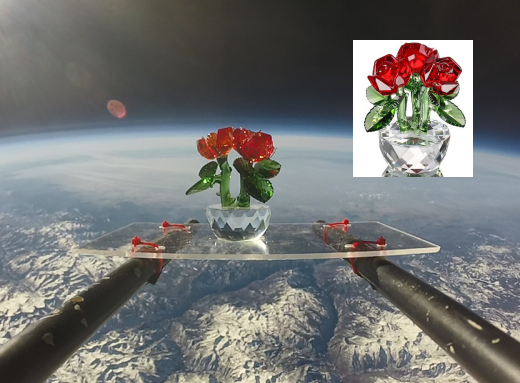
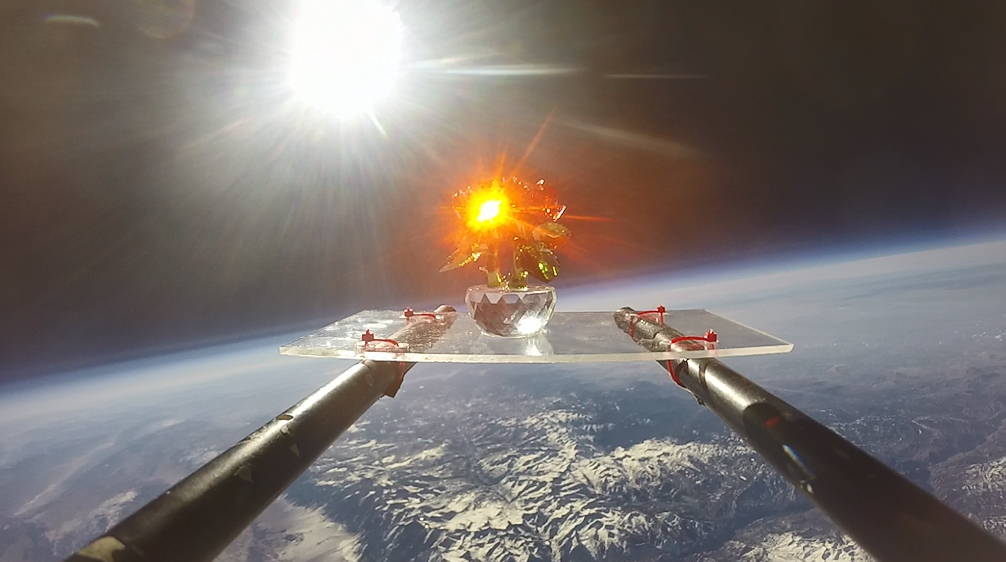
You can have them for $129.95. The students are selling space roses to fund their cosmic ray ballooning program. The flowers are made of high-quality Borosilicate Crown Crystal often used in lenses and prisms. That's why they glitter so colorfully in high-altitude sunlight. Each bouquet comes with a greeting card showing the flowers in flight and telling the story of their journey to the stratosphere and back again.
Far Out Gifts: Earth to Sky Store
All sales support hands-on STEM education
Realtime Aurora Photo Gallery
Free: Spaceweather.com Newsletter