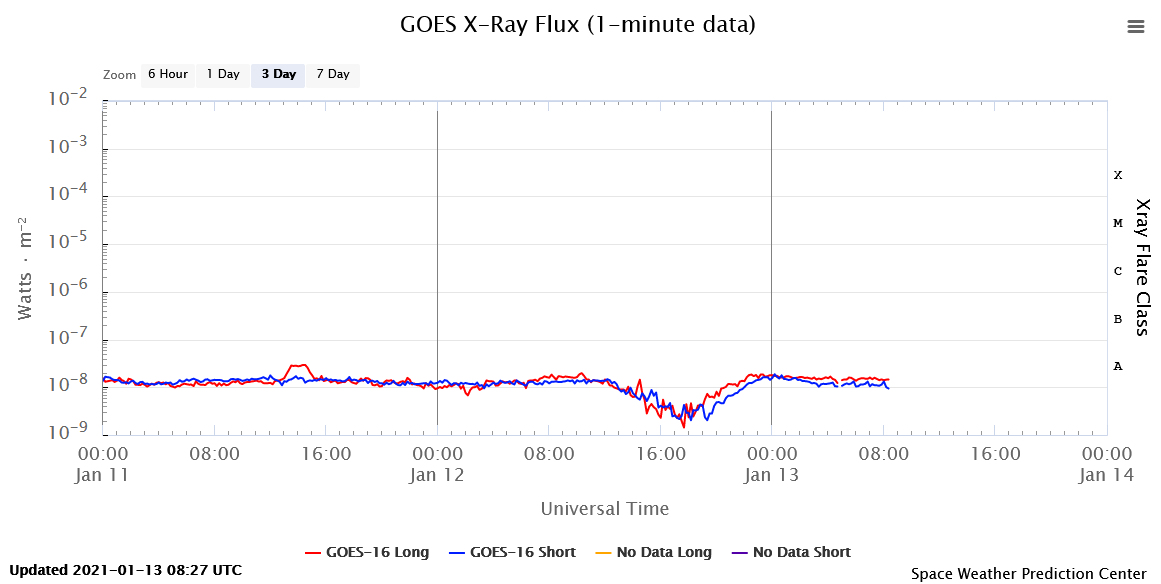
ALL QUIET ALERT: The sun is having a flashback ... to Solar Minimum. Sunspots disappeared 11 days ago and none is on the horizon. Without sunspots, the sun's X-ray output has flatlined and the chance of a strong flare today is no more than 1%. Aurora alerts: SMS Text.
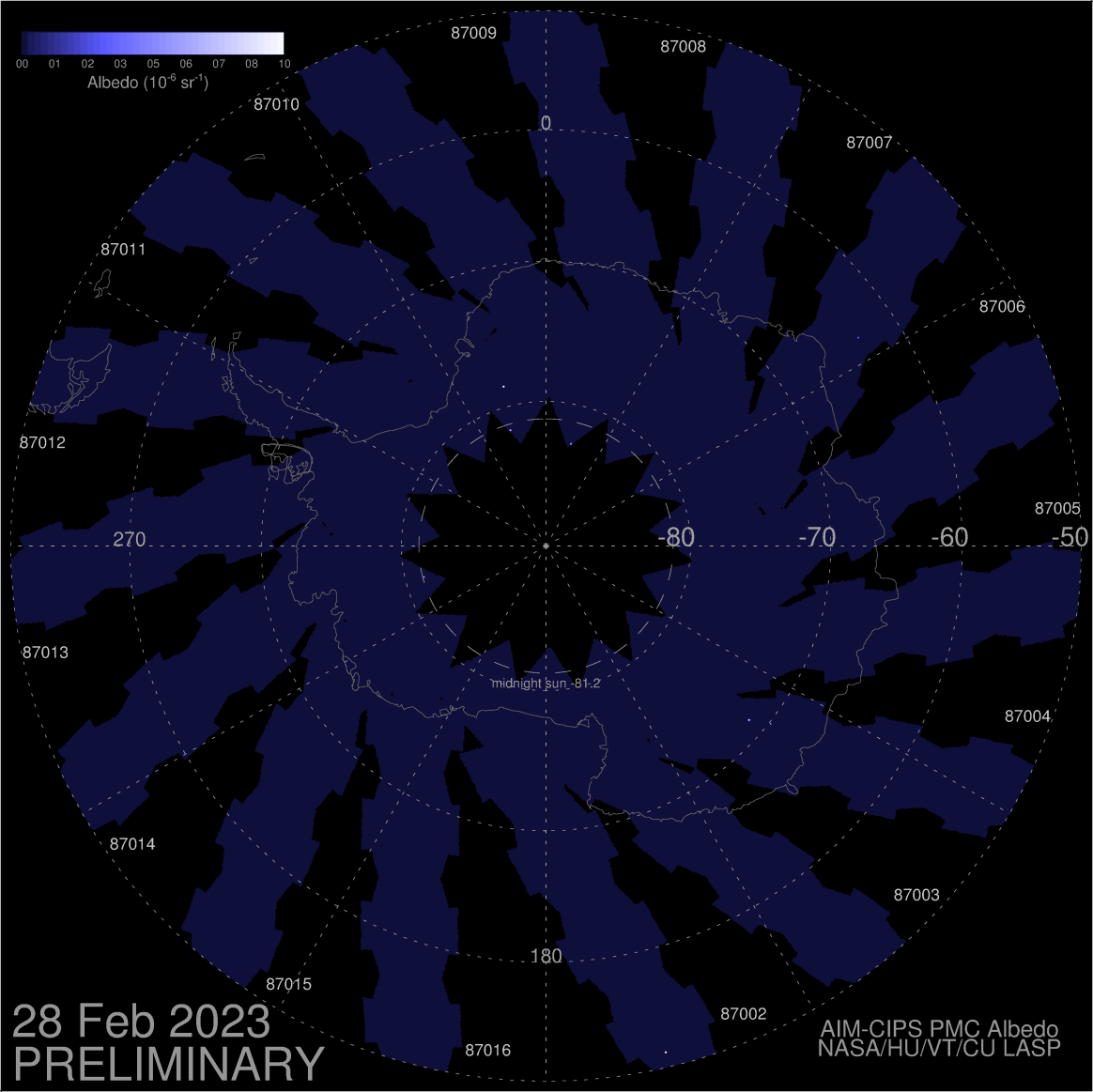
NOCTILUCENT CLOUDS OVER ARGENTINA, AGAIN: For the second tiime this month, noctilucent clouds (NLCs) have appeared over Argentina. An automated camera in Rio Gallegos recorded the unusual apparition:
"We saw these clouds over Patagonia on Jan. 10th," reports Gerd Baumgarten of the Leibniz-Institute of Atmospheric Physics, which operates the camera. "They may not be as spectacular as the Jan. 3rd clouds, but still one can see the typical silver color and rippling evolution of an NLC."
NLCs are Earth's highest clouds. They form when summertime wisps of water vapor drift up to the edge of space and crystalize around specks of meteor smoke. This is the time of year for NLCs around the South Pole. Normally the clouds are confined to Antarctica, but for some reason in 2021 they are drifting up to Argentina as well.
Realtime NLC Photo Gallery
Free: Spaceweather.com Newsletter
A SOLAR ECLIPSE IN SPACE: Two days ago, there was a solar eclipse. No one on Earth saw it. This eclipse was visible only from space:
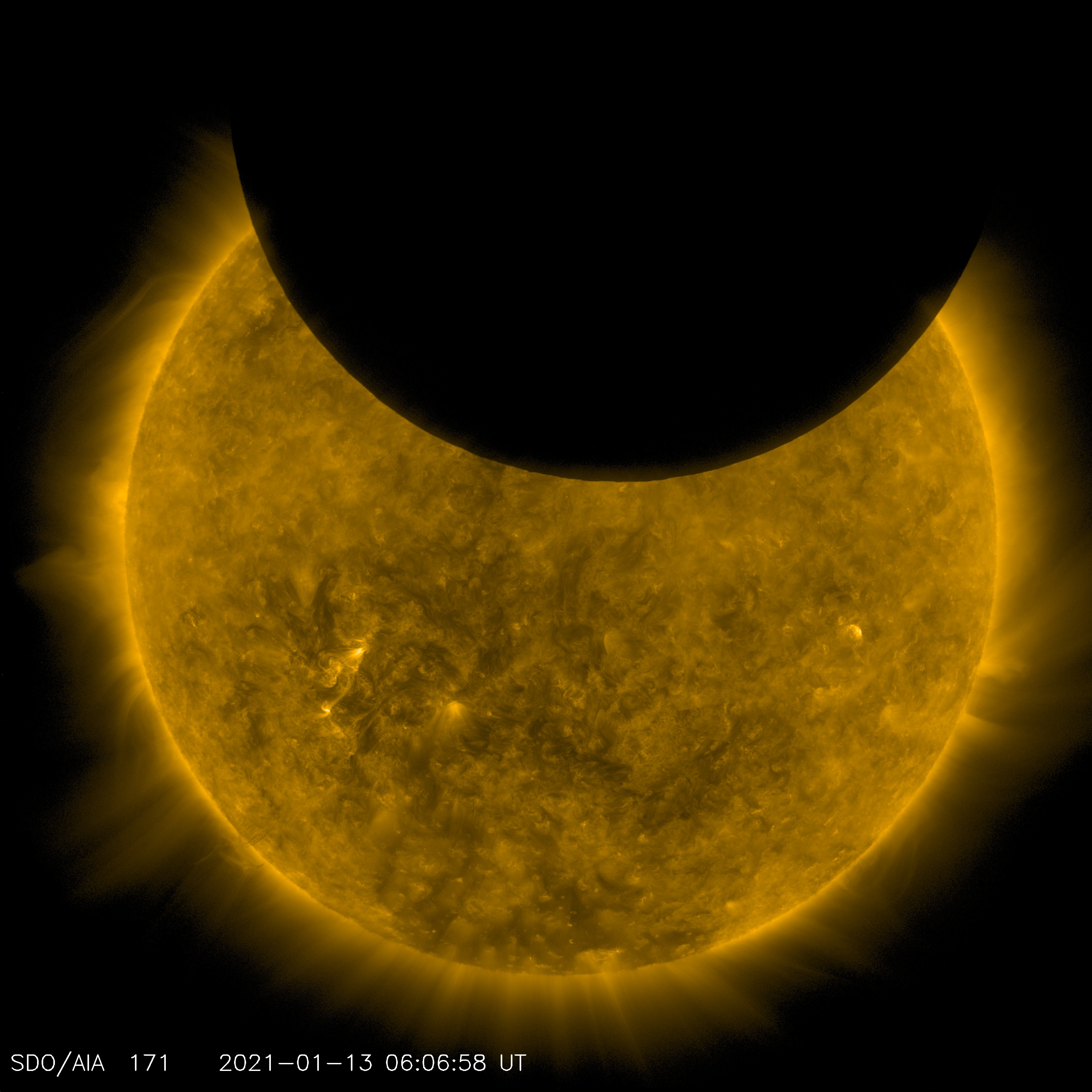
Orbiting more than 22,000 miles above Earth, NASA's Solar Dynamics Observatory (SDO) was perfectly positioned to catch the lunar disk blocking part of the sun. During the 1/2 hour-long event, as much as 30% of the sun was covered.
Every year, SDO observes several of these lunar transits. They actually come in handy. To understand why, take a close look at the edge of the Moon. The little bumps and irregularities you see are lunar mountains backlit by solar plasma:
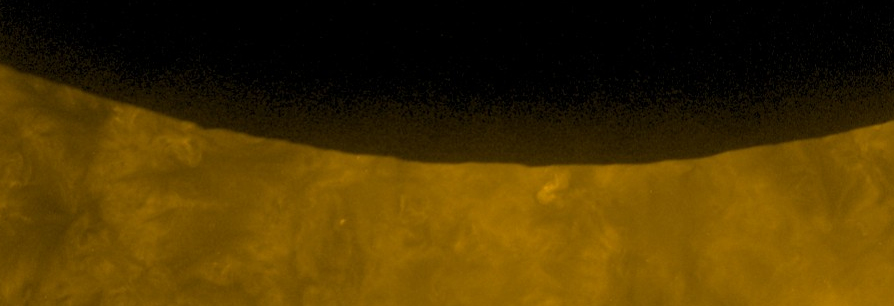
High-resolution images like these can help the SDO science team better understand the telescope. They reveal how light diffracts around SDO's optics and filter support grids. Once these are calibrated, it is possible to correct SDO data for instrumental effects and sharpen images of the sun even more than before.
Realtime Spaceweather Photo Gallery
Free: Spaceweather.com Newsletter
A FAR-OUT VALENTINE'S GIFT: It came from Tahiti--and now it's been to the edge of space. On Oct. 30, 2020, this genuine Black Tahitian South Sea Cultured Pearl flew to the stratosphere onboard an Earth to Sky Calculus cosmic ray balloon, soaring 98,424 feet above the Sierra Nevada mountains of central California:
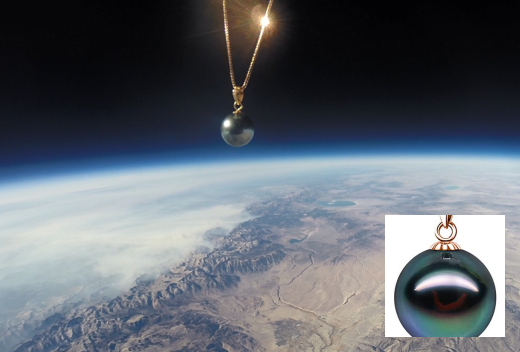
You can have it for $229.95. The students are selling these exotic space pearls to fund their cosmic ray monitoring program. Measuring 10 mm in diameter, the pearl has an 18K rose gold clasp and is suspended from a matching 925 Sterling Silver chain. Each pearl comes with a greeting card showing the pendant in flight and telling the story of its journey to the edge of space.
Far Out Gifts: Earth to Sky Store
All sales support hands-on STEM education
Realtime Aurora Photo Gallery
Free: Spaceweather.com Newsletter