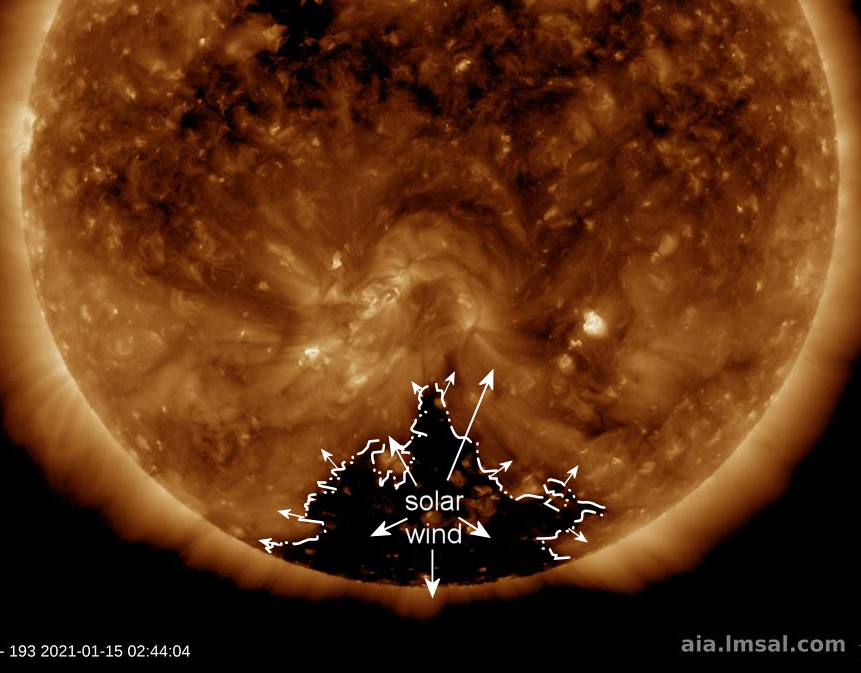
SOLAR WIND, INCOMING: A stream of solar wind is approaching Earth. Estimated time of arrival: Jan. 17-18. Its source is a southern hole in the sun's atmosphere. NOAA forecasters expect the solar wind speed to top 500 km/s when the stream arrives, probably sparking Arctic auroras. Aurora alerts: SMS Text.
SOLAR MINIMUM CONDITIONS ARE IN EFFECT: Solar Minimum, how can we miss you if you won't go away? Sunspots have disappeared, leaving the sun as blank as a billiard ball. This is how the sun has looked for past 12 consecutive days:
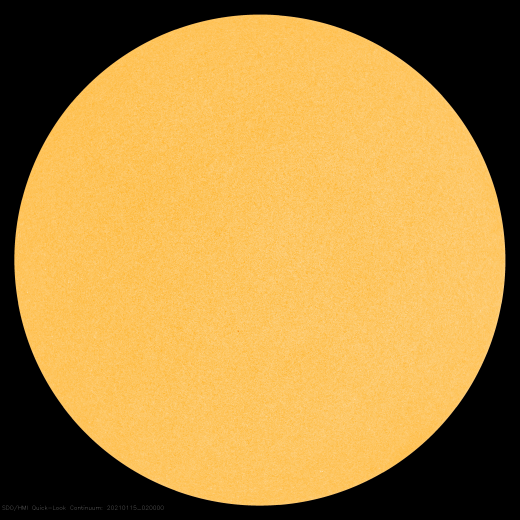
Above: The solar disk on Jan. 15, 2021, photographed by NASA's Solar Dynamics Observatory
Without sunspots, the sun's X-ray output has flatlined, and the chance of strong flares has plummeted to less than 1%. Solar activity is very low.
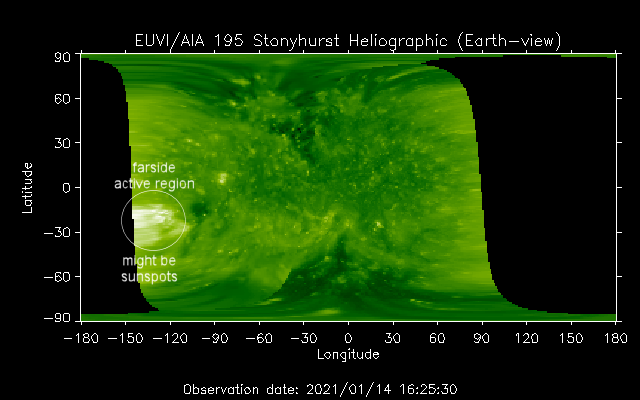
The return of Solar Minimum is only temporary. New Solar Cycle 25 is well underway, and only last month the sun was peppered with spots every day. Young solar cycles often "take a break" as they gather energy for the ascent to Solar Max. Indeed, new sunspots might be just around the corner.
Realtime Spaceweather Photo Gallery
Free: Spaceweather.com Newsletter
NOCTILUCENT CLOUDS OVER ARGENTINA, AGAIN: For the second tiime this month, noctilucent clouds (NLCs) have appeared over Argentina. An automated camera in Rio Gallegos recorded the unusual apparition:
"We saw these clouds over Patagonia on Jan. 10th," reports Gerd Baumgarten of the Leibniz-Institute of Atmospheric Physics, which operates the camera. "They may not be as spectacular as the Jan. 3rd clouds, but still one can see the typical silver color and rippling evolution of an NLC."
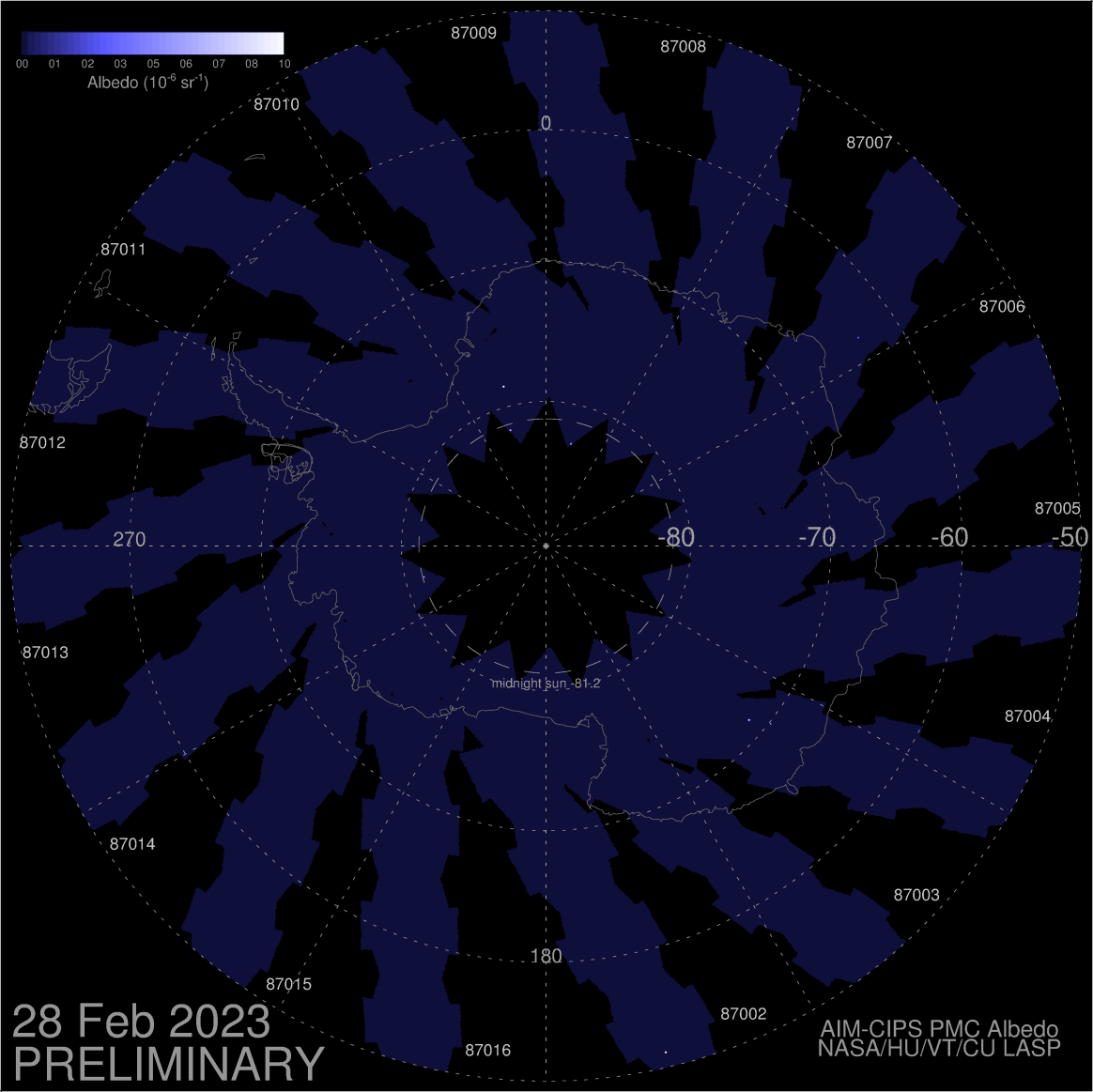
NLCs are Earth's highest clouds. They form when summertime wisps of water vapor drift up to the edge of space and crystalize around specks of meteor smoke. This is the time of year for NLCs around the South Pole. Normally the clouds are confined to Antarctica, but for some reason in 2021 they are drifting up to Argentina as well.
Realtime NLC Photo Gallery
Free: Spaceweather.com Newsletter
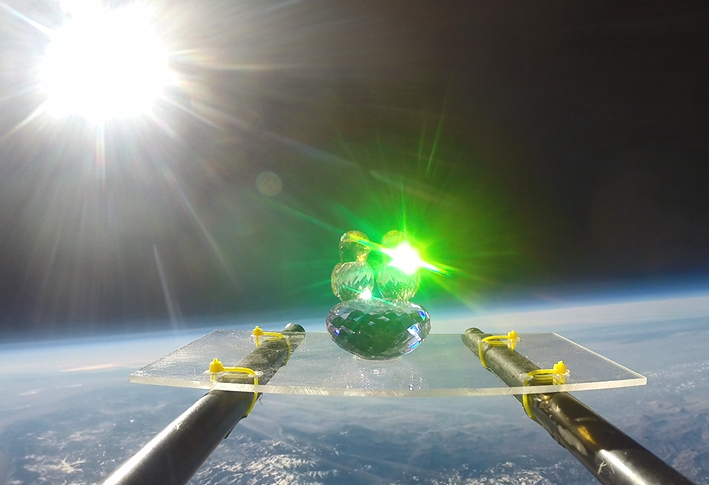
LOVE BIRDS IN THE STRATOSPHERE: Valentine's Day is coming. To get ready for the most romantic day of the year, the students of Earth to Sky Calculus launched a pair of crystal love birds to the stratosphere on Jan. 1, 2021. Here they are floating on a cosmic ray balloon 102,690 feet above the Sierra Nevada mountains of central California:
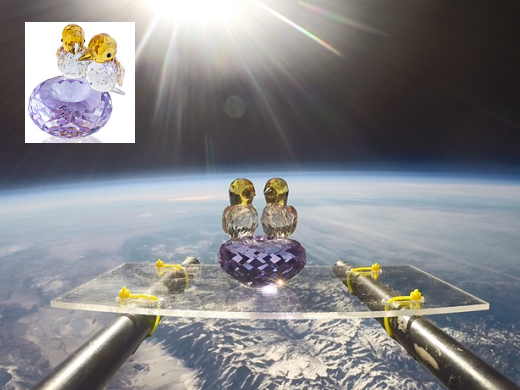
You can have them for $129.95. The students are selling love birds to fund their cosmic ray ballooning program. Made of high-quality Borosilicate Crown Crystal often used in lenses and prisms, the birds glitter colorfully in sunlight, even at the edge of space. Each purchase comes with a greeting card showing the birds in flight and telling the story of their journey to the stratosphere and back again.

Far Out Gifts: Earth to Sky Store
All sales support hands-on STEM education
Realtime Aurora Photo Gallery
Free: Spaceweather.com Newsletter