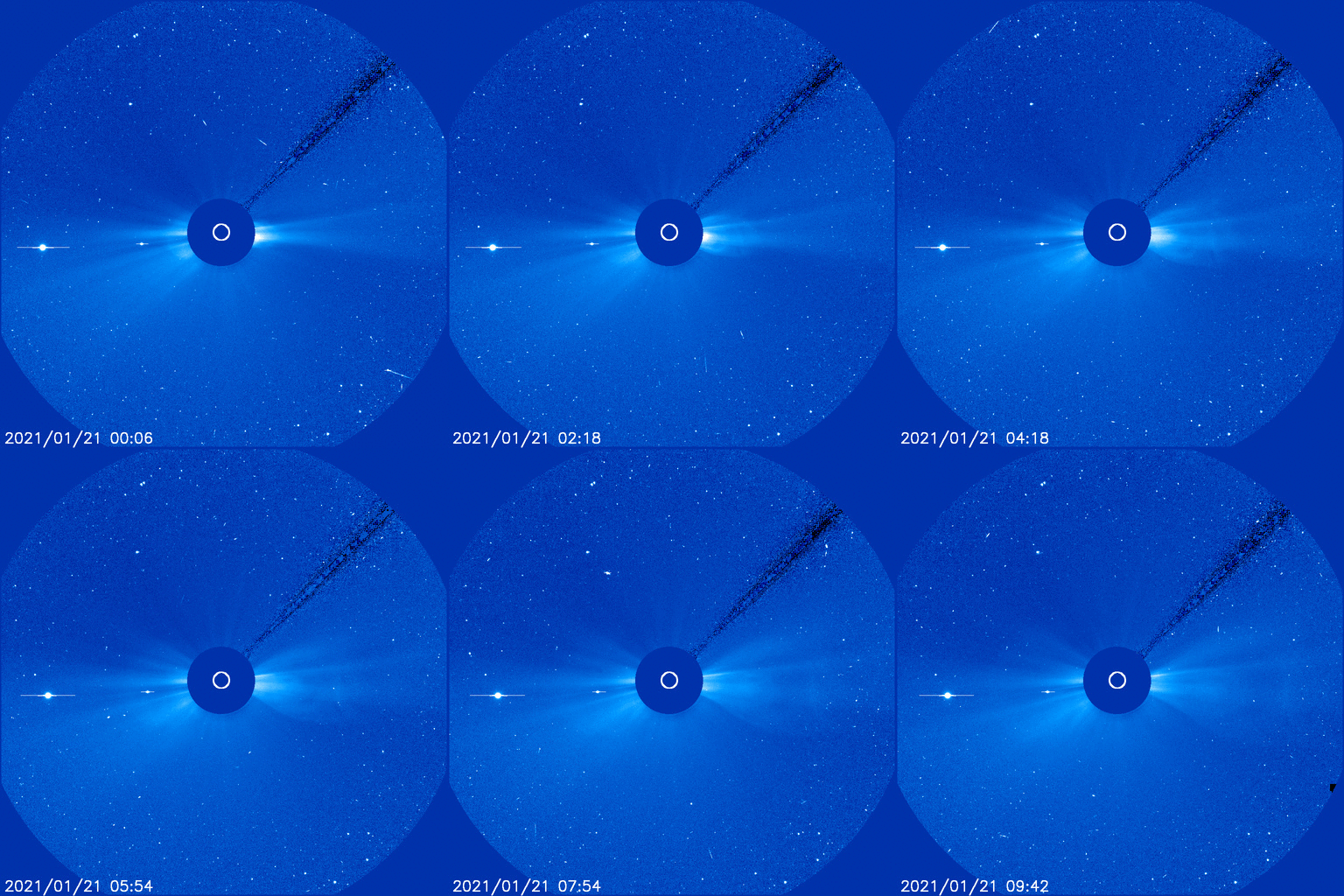
CME ACTIVITY ON THE SUN: Today the sun burped, twice. SOHO coronagraphs detected two CMEs on Jan. 21st--one to the west and one to the east. Neither of the storm clouds is heading for Earth. Aurora alerts: SMS Text.
MARS AND URANUS, THE ODD COUPLE: Last night, a red planet and a blue planet met in the constellation Aries. It was Mars and Uranus. Sebastian Voltmer photographed the odd couple from Spicheren, France:
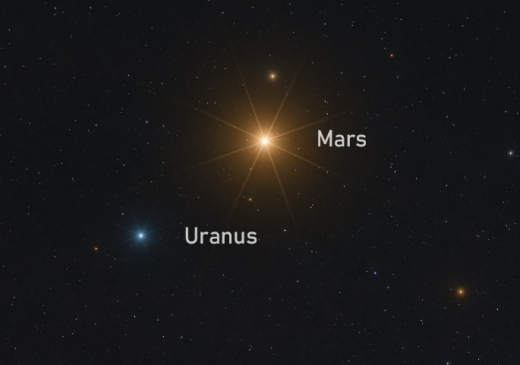
Mars is red because it is rusty. Eons ago, iron in the rocks of Mars probably combined with water to form abundant iron oxides--the same crusty material we find on nails left out in the rain. Uranus is blue because it is rich in methane. Gaseous CH4 absorbs red light, while transmitting blue--the exact opposite of its Martian cousin.
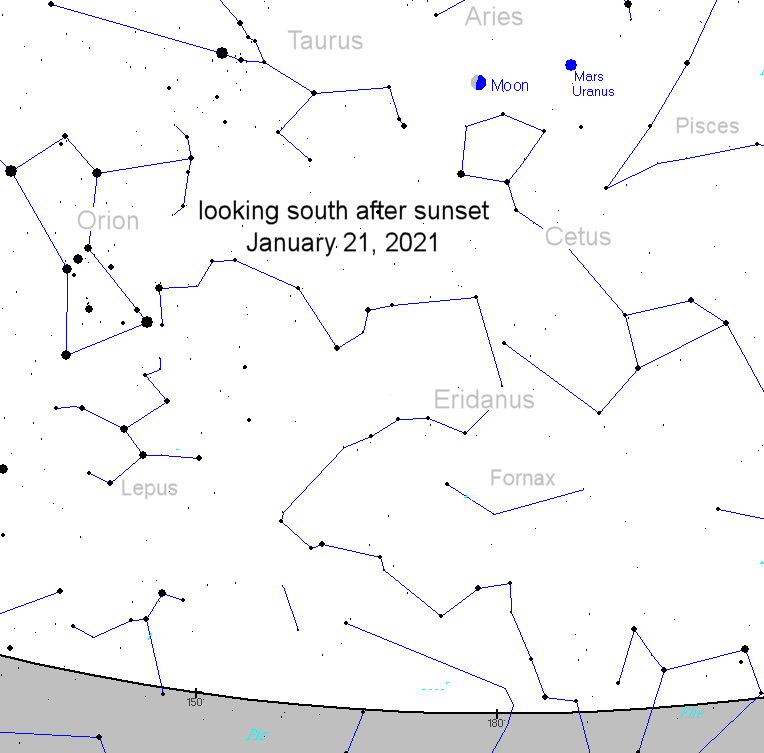
The two planets are still side-by-side tonight, showcasing their complementary colors. Look south after sunset. Mars (bright) and Uranus (dim) are just to the right of the Moon. A wide-field exposure of a few seconds with any night-sensitive digital camera will reveal the two planets about 2o apart. Sky map.
Realtime Spaceweather Photo Gallery
Free: Spaceweather.com Newsletter
'TIS THE SEASON FOR SUNDOGS: January in Sweden is cold. Really cold. "Lately, temperatures have dipped down to -25°C," reports Göran Strand from Östersund. "Due to this cold weather, the air is full of small ice crystals--and sundogs." He photographed this specimen on Jan. 17th:
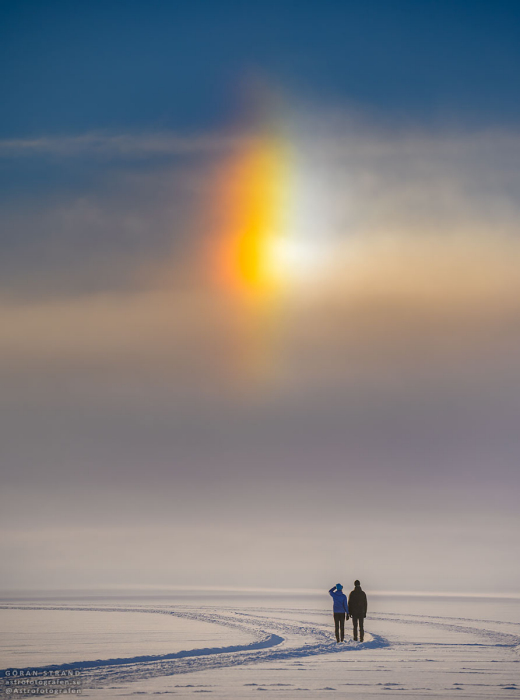
Sundogs are rainbow-colored splashes of light, which appear when the sun shines through plate-shaped ice crystals. Right now, the air in Sweden is full of such crystals. "This couple was really enjoying the view," says Strand. Pro tip: If you see one sundog, look for another on the opposite side of the sun. Sundogs almost always come in pairs.
Realtime Spaceweather Photo Gallery
Free: Spaceweather.com Newsletter
THE *BIG* SPACE BOUQUET: Just in time for Valentine's Day--the biggest batch of crystal roses ever flown to space! On Jan. 13, 2021, the students of Earth to Sky Calculus launched this 4-flower bouquet to the stratosphere. Floating on a cosmic ray balloon, it rose (no pun intended) to an altitude 109,252 feet above the Sierra Nevada of central California:
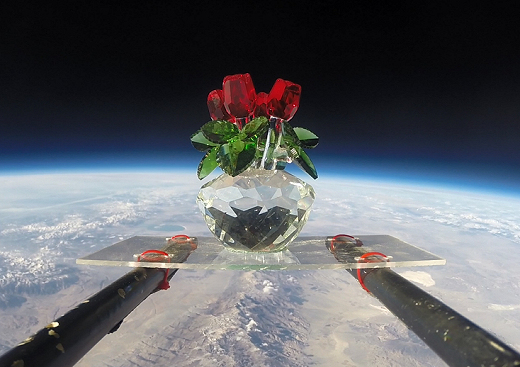
You can have them for $169.95. The students are selling space roses to fund their cosmic ray ballooning program. The flowers, stems and base are all made of Borosilicate Crown Crystal, the kind used in high-quality lenses and prisms. That's why the flowers glitter so colorfully in sunlight at the edge of space.

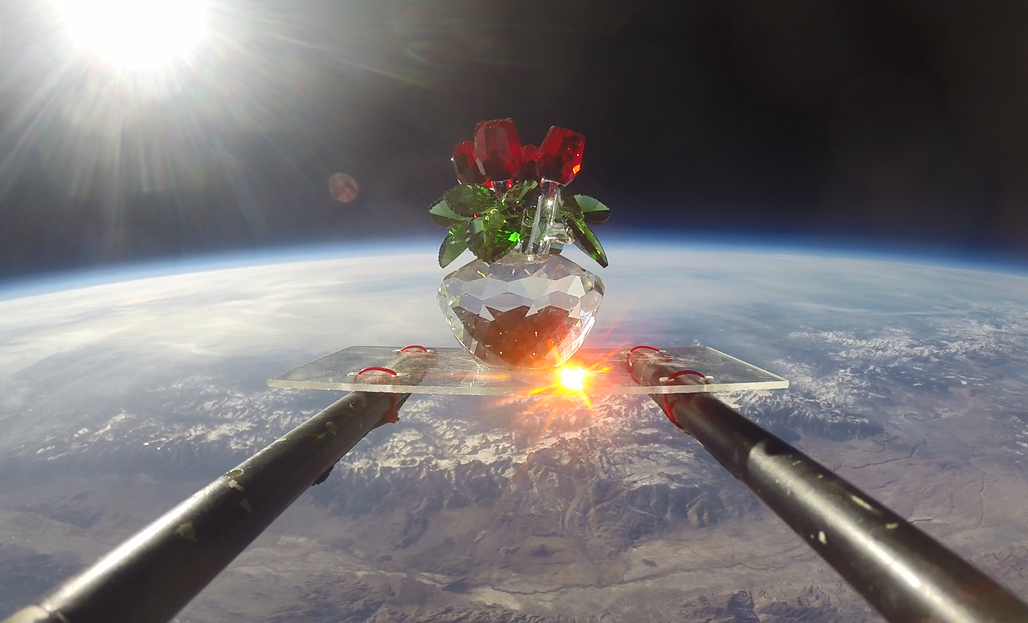
Each purchase comes with a greeting card showing the bouquet in flight and telling the story of its journey to the stratosphere and back again.
Far Out Gifts: Earth to Sky Store
All sales support hands-on STEM education
Realtime Aurora Photo Gallery
Free: Spaceweather.com Newsletter