MINOR GEOMAGNETIC STORM: Today's solar wind stream was not expected to cause a geomagnetic storm--but it did. A minor G1-class storm is in progress as the solar wind speed tops 500 km/s. Automated webcams in Abisko, Sweden, recorded these twilight auroras just as the storm was getting underway:


"White snow, green auroras, and blue sky--it doesn't get much better than that!" says Chad Blakley of Lights over Lapland, who operates the auroracams.
The solar wind is flowing from a small hole in the sun's atmosphere. Although it is a relatively minor stream, it is having an outsized effect thanks to a crack in Earth's magnetic field. Small cracks have been opening all day on Jan. 25th, allowing the solar wind to penetrate and fuel the storm. Aurora alerts: SMS Text.
Realtime Aurora Photo Gallery
Free: Spaceweather.com Newsletter
THE VERNAL EQUINOX PEARL: This pearl has touched space. On Jan. 15th, the students of Earth to Sky Calculus launched a cosmic ray balloon. The Vernal Equinox Pearl went along for the ride. Here it is, floating 111,202 feet above the snow-capped Sierra Nevada of central California:
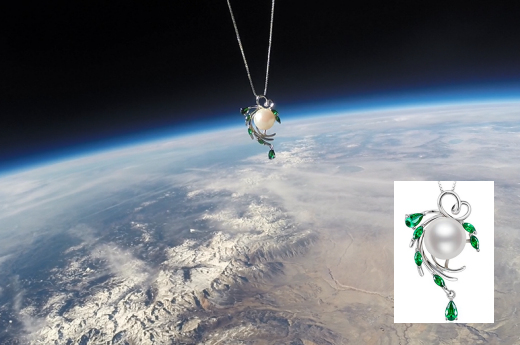
You can have it for $169.95. The students are selling space pearls to support their cosmic ray ballooning program. This 10mm cultured white pearl, surrounded by a crystalline splash of spring-green cubic zirconia, spent more than 2 hours in the stratosphere as sensors in the payload measured cosmic rays.
Each purchase comes with a greeting card showing the pearl in flight and telling the story of its journey to the stratosphere and back again.
Far Out Gifts: Earth to Sky Store
All sales support hands-on STEM education
THINGS YOU SEE WHILE CHASING COSMIC RAYS: Yesterday, a team of climbers from Spaceweather.com and Earth to Sky Calculus ascended Little Mount Inyo on the edge of Death Valley National Park. Their goal: To retrieve the payload of a cosmic ray balloon launched on Jan. 15th; the payload had parachuted back to Earth, landing near the 8500 ft peak. En route to the top, this is what they saw:
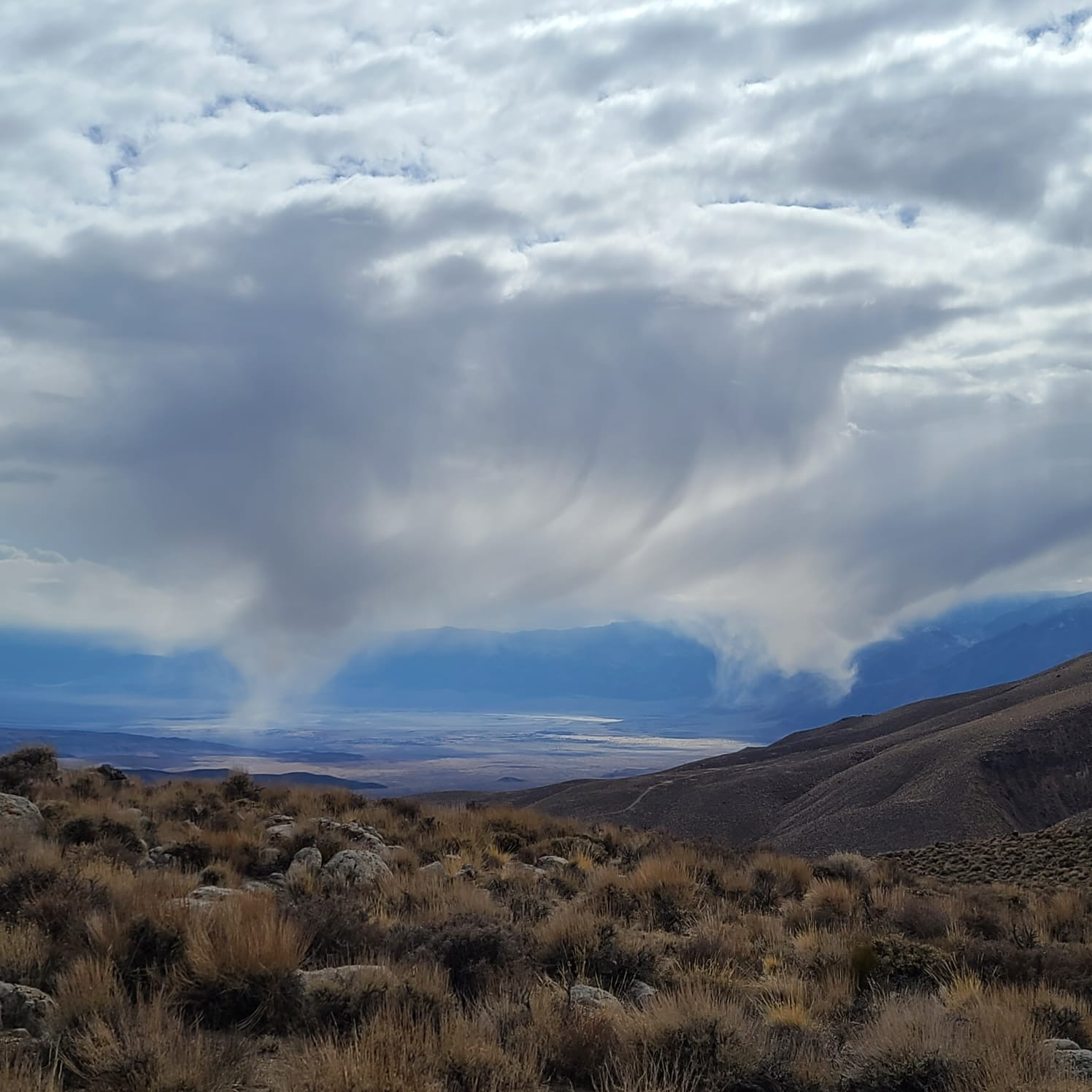
The pinched tornado-like structures are virga--that is, rain which falls from the clouds but never hits the ground. At the time of the photo, the climbers were overlooking Saline Valley, one of the driest places in the American West. Raindrops falling from the clouds overhead evaporated in dry air before they could hit the ground.
Next month marks the 6-year anniversary of our cosmic ray monitoring program. Launching balloons 3 or 4 times a month since February 2015, we have tracked atmospheric cosmic rays above California for more than half a solar cycle. We see some interesting things happening during the ongoing transition between Solar Cycle 24 and Solar Cycle 25. We'll celebrate our anniversary in February by releasing a new batch of data with findings. Stay tuned!
Realtime Spaceweather Photo Gallery
Free: Spaceweather.com Newsletter