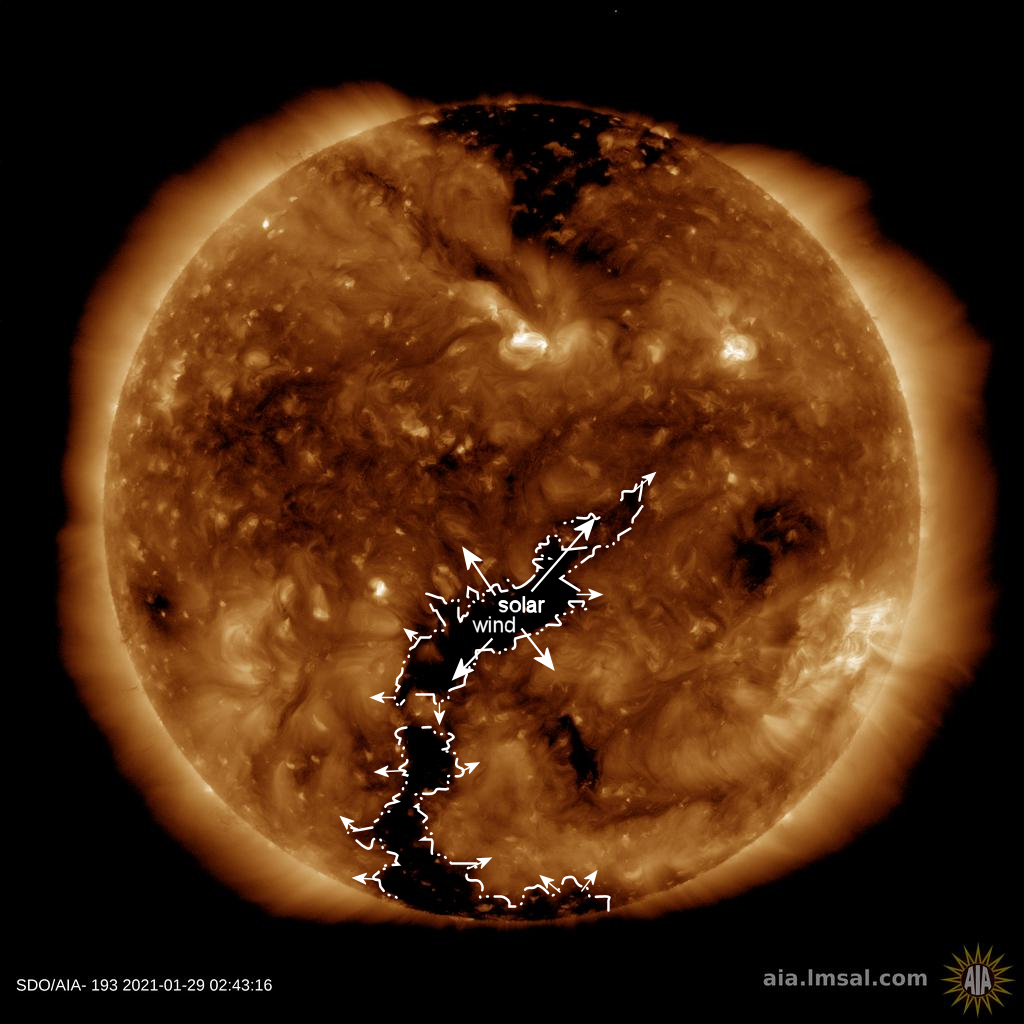
THE NEXT STREAM OF SOLAR WIND: A stream of solar wind is approaching Earth. Estimated time of arrival: Feb. 2nd. Flowing from a southern hole in the sun's atmosphere, the stream could spark bright auroras around the Arctic Circle. Aurora alerts: SMS Text.
A CONCENTRIC CRATER ON THE MOON: Once a month, the sun rises over a hardened lava sea called "Palus Epidemiarum" in the southwest quadrant of the Moon. Lunar morning reveals a strange crater. "It looks like a bulls-eye," reports amateur astronomer Howard Eskildsen of Ocala, Florida. "It's in the center of this picture I took on Jan. 25th."
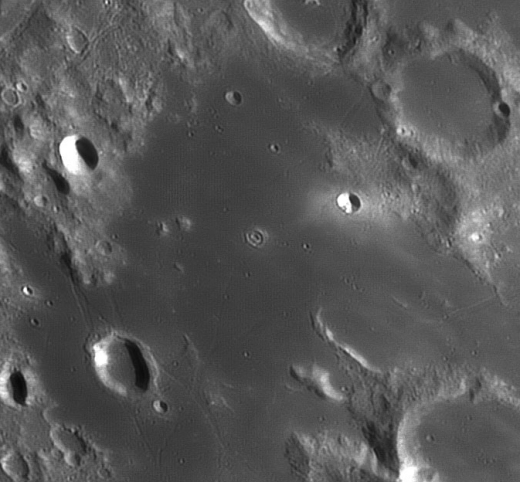
The crater's name is "Marth," and it is classified as a rare concentric crater. Marth's outer ring is 7 km in diameter; the inner ring is about half that size. It looks like the result of two rapid-fire meteor strikes, perhaps from a small double asteroid or a fragmented comet.
But that's not what it is.
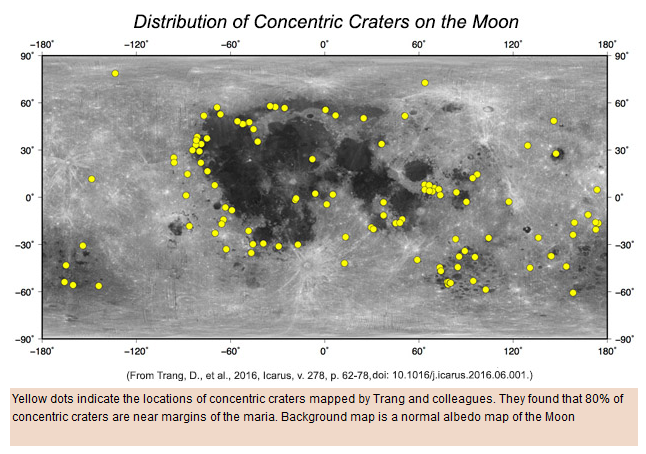
For years, researchers have struggled to understand concentric craters. There are about 50 of them on the Moon. If concentric craters were caused by double impacts, they would be randomly distributed across lunar terrain just like other craters. Instead, they tend to occur near the edges of maria (ancient lava seas). This and other clues suggest that the inner doughnut must be formed by lava seeping up through cracks in the crater floor:
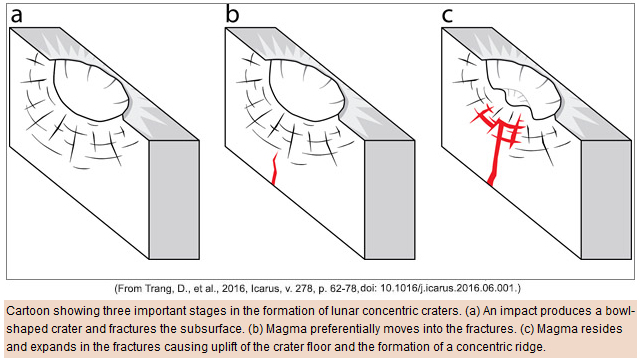
Exactly how irregular cracks spew lava in the form of a doughnut is still unknown. So consider Marth a beautiful mystery, after all.
PS. The next time the sun rises over Palus Epidemiarum is Feb. 23rd. Lunar observers, you know what to do...
Realtime Spaceweather Photo Gallery
Free: Spaceweather.com Newsletter
THE VERNAL EQUINOX PEARL: This pearl has touched space. On Jan. 15th, the students of Earth to Sky Calculus launched a cosmic ray balloon. The Vernal Equinox Pearl went along for the ride. Here it is, floating 111,202 feet above the snow-capped Sierra Nevada of central California:
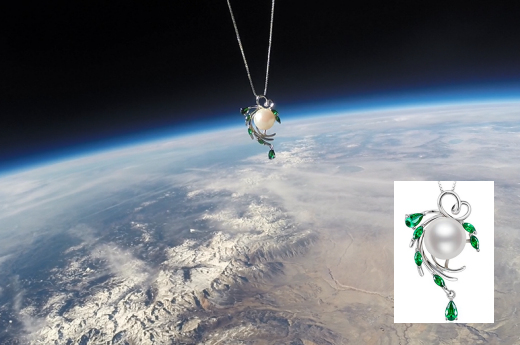
You can have it for $169.95. The students are selling space pearls to support their cosmic ray ballooning program. This 10mm cultured white pearl, surrounded by a crystalline splash of spring-green cubic zirconia, spent more than 2 hours in the stratosphere as sensors in the payload measured cosmic rays.
Each purchase comes with a greeting card showing the pearl in flight and telling the story of its journey to the stratosphere and back again.
Far Out Gifts: Earth to Sky Store
All sales support hands-on STEM education
Realtime Aurora Photo Gallery
Free: Spaceweather.com Newsletter