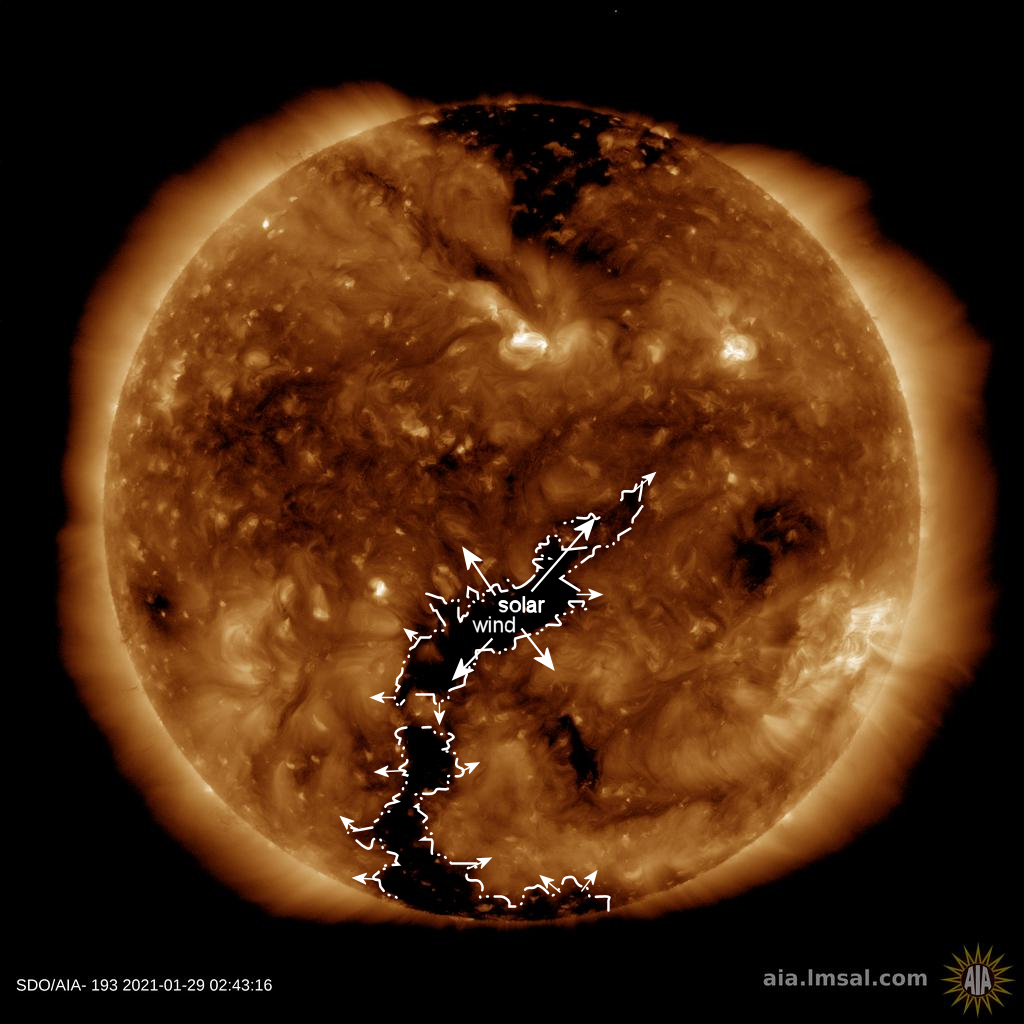
GEOMAGNETIC STORM WATCH: NOAA forecasters say that minor G1-class geomagnetic storms are possible on Feb. 1-2 when a solar wind stream hits Earth's magnetic field. The gaseous material is flowing from a southern hole in the sun's atmosphere. Solar wind speeds could jump to 600+ km/s when the stream arrives, sparking bright Arctic auroras. Aurora alerts: SMS Text.

SIRIUS IS PULSING WITH COLOR: There's something strange about Sirius. The brightest star in the sky is pulsing with color. To the naked eye, Sirius looks pale blue, almost white. But if you photograph it with a camera, using very short exposure times, Sirius reveals its true colors. Lots of them. Photographer Arne Recke of Broager, Denmark, just did the experiment, and this is what he found:
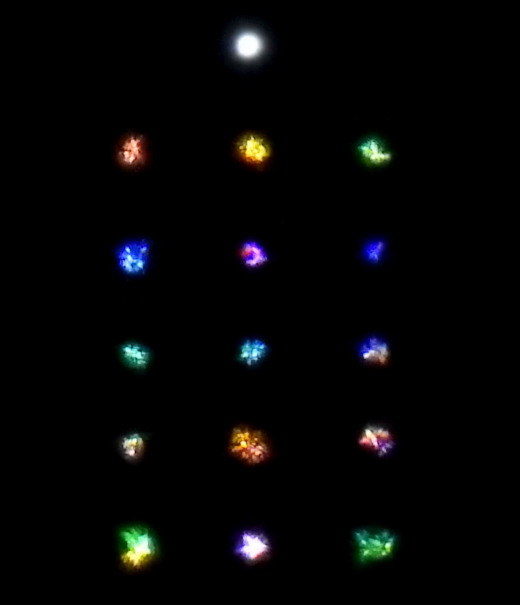
"Here are 16 pictures of Sirius," says Recke. "The uppermost picture was taken with 1/2 sec. shutter speed (ISO 6400). The other 15 pictures were taken much faster with a 1/500 sec.shutter speed (also ISO 6400). The short exposures are incredibly colorful."
Astronomers call this phenomenon "scintillation." It is caused by thermal irregularities in Earth's atmosphere. Packets of relatively warm and cool air act like prisms, spreading starlight into rainbow colors. When these packets drift in front of Sirius--voilá.
The reason Recke's first exposure looks white is because 1/2 sec. is long enough to average many fluctuating colors together. Multiple packets of air drift by during that time. The shorter snapshots, however, capture individual packets; they look like tiny prismatic supernova explosions.
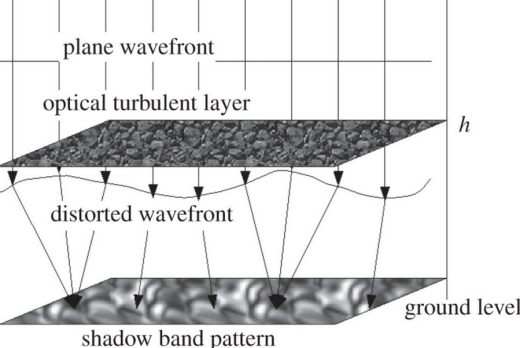
Above: This diagram from The Royal Society shows how turbulent thermal irregularities in the atmosphere crinkle and scintillate incoming starlight. [More]
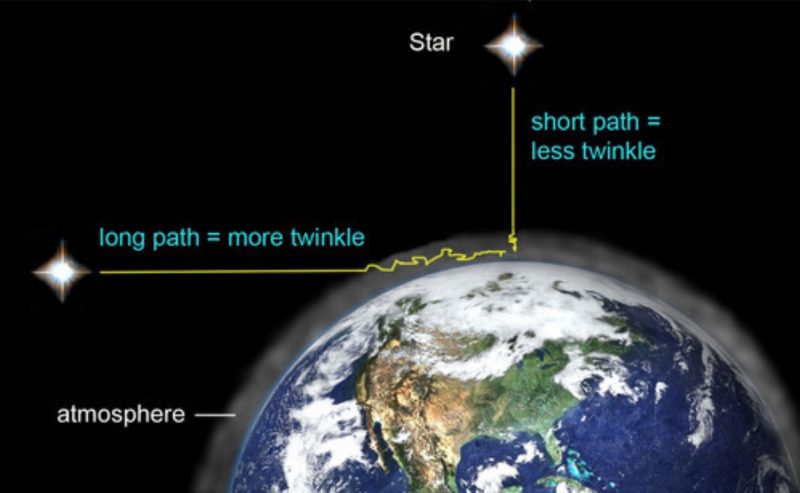
All stars scintillate, but Sirius does so most flamboyantly because of its extreme brightness. See for yourself. Step outside this evening an hour or so after sunset and look east for Sirius near the feet of Orion. The lower it is, the more it scintillates. You may be able to see the colors--no camera required.
Realtime Spaceweather Photo Gallery
Free: Spaceweather.com Newsletter
THE VERNAL EQUINOX PEARL: This pearl has touched space. On Jan. 15th, the students of Earth to Sky Calculus launched a cosmic ray balloon. The Vernal Equinox Pearl went along for the ride. Here it is, floating 111,202 feet above the snow-capped Sierra Nevada of central California:
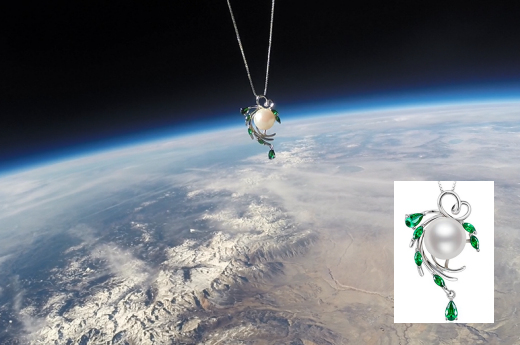
You can have it for $169.95. The students are selling space pearls to support their cosmic ray ballooning program. This 10mm cultured white pearl, surrounded by a crystalline splash of spring-green cubic zirconia, spent more than 2 hours in the stratosphere as sensors in the payload measured cosmic rays.
Each purchase comes with a greeting card showing the pearl in flight and telling the story of its journey to the stratosphere and back again.
Far Out Gifts: Earth to Sky Store
All sales support hands-on STEM education
Realtime Aurora Photo Gallery
Free: Spaceweather.com Newsletter