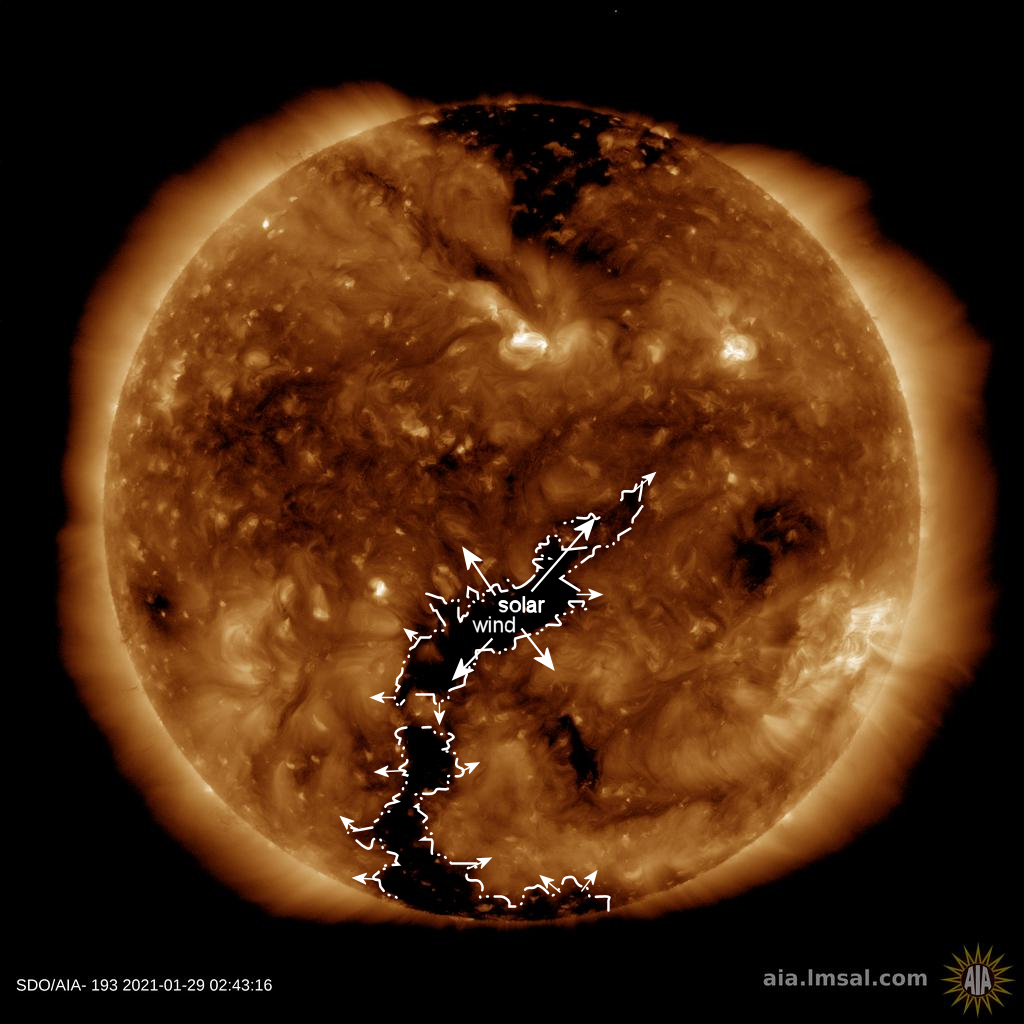
GEOMAGNETIC STORM WATCH: NOAA forecasters say that minor G1-class geomagnetic storms are possible on Feb. 1-2 when a solar wind stream hits Earth's magnetic field. The gaseous material is flowing from a southern hole in the sun's atmosphere. Solar wind speeds could jump to 600+ km/s when the stream arrives, sparking bright Arctic auroras. Aurora alerts: SMS Text.

SIRIUS AND THE PUP: Want to see a white dwarf? Just look at Sirius. The brightest star in the sky has a tiny white dwarf companion named "Sirius B." Amateur astronomer Thomas Ashcraft of New Mexico video-recorded the pair just a few nights ago.
"Sirius B is a challenging telescopic target due to glare from Sirius A," says Ashcraft, "but when conditions are right, and luck is with you, it is so neat to see Sirius B bobbing around in the turbulence."
Also known as "the Pup" (because Sirius is "the Dog Star"), Sirius B is incredibly small and dense. It packs an entire solar mass into a sphere the size of Earth. With a surface gravity of more than 100,000 g, Sirius B pulls its hydrogen atmosphere down until it is no taller than the Empire State Building; this narrow layer of gas floats above a 50 km thick semi-solid crust of carbon and oxygen.
When Sirius B was discovered in 1862, astronomers were baffled, and they remained so for decades. As Sir Arthur Eddington put it in 1927:
"We learn about the stars by receiving and interpreting the messages which their light brings to us. The message of the companion of Sirius when it was decoded ran: 'I am composed of material 3,000 times denser than anything you have ever come across; a ton of my material would be a little nugget that you could put in a matchbox.' What reply can one make to such a message? The reply which most of us made was — 'Shut up. Don't talk nonsense.'"
Only with the development of quantum physics in the early 20th century were physicists able to understand how a white dwarf could exist.
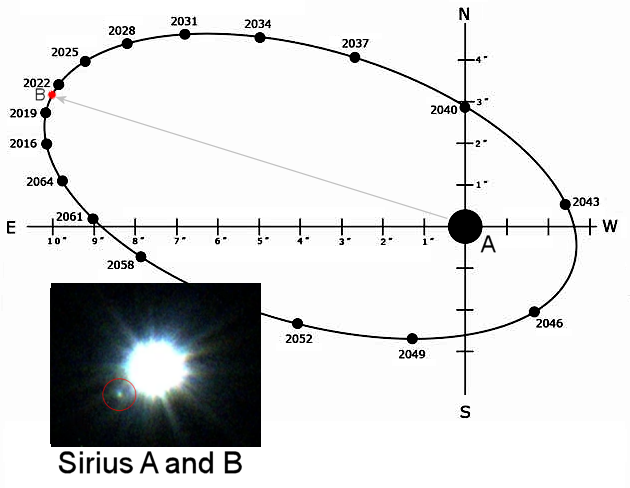
Above: Sirius B follows a 50-year elliptical orbit around Sirius.
Now is a great time to see Sirius B as it travels around its elliptical orbit near maximum separation from Sirius. With steady seeing and a clear atmosphere, it is possible to split the pair using telescopes as small as 6 inches. This bonus video from Ashcraft shows what you might see through the eyepiece.
Realtime Spaceweather Photo Gallery
Free: Spaceweather.com Newsletter
THE VERNAL EQUINOX PEARL: This pearl has touched space. On Jan. 15th, the students of Earth to Sky Calculus launched a cosmic ray balloon. The Vernal Equinox Pearl went along for the ride. Here it is, floating 111,202 feet above the snow-capped Sierra Nevada of central California:
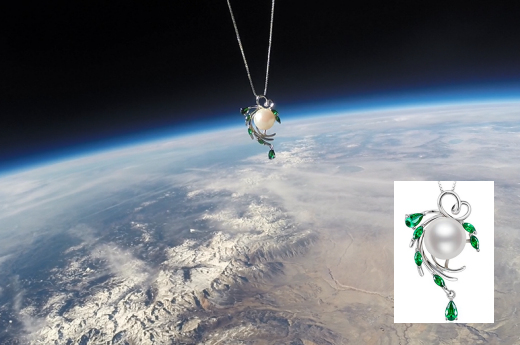
You can have it for $169.95. The students are selling space pearls to support their cosmic ray ballooning program. This 10mm cultured white pearl, surrounded by a crystalline splash of spring-green cubic zirconia, spent more than 2 hours in the stratosphere as sensors in the payload measured cosmic rays.
Each purchase comes with a greeting card showing the pearl in flight and telling the story of its journey to the stratosphere and back again.
Far Out Gifts: Earth to Sky Store
All sales support hands-on STEM education
Realtime Aurora Photo Gallery
Free: Spaceweather.com Newsletter