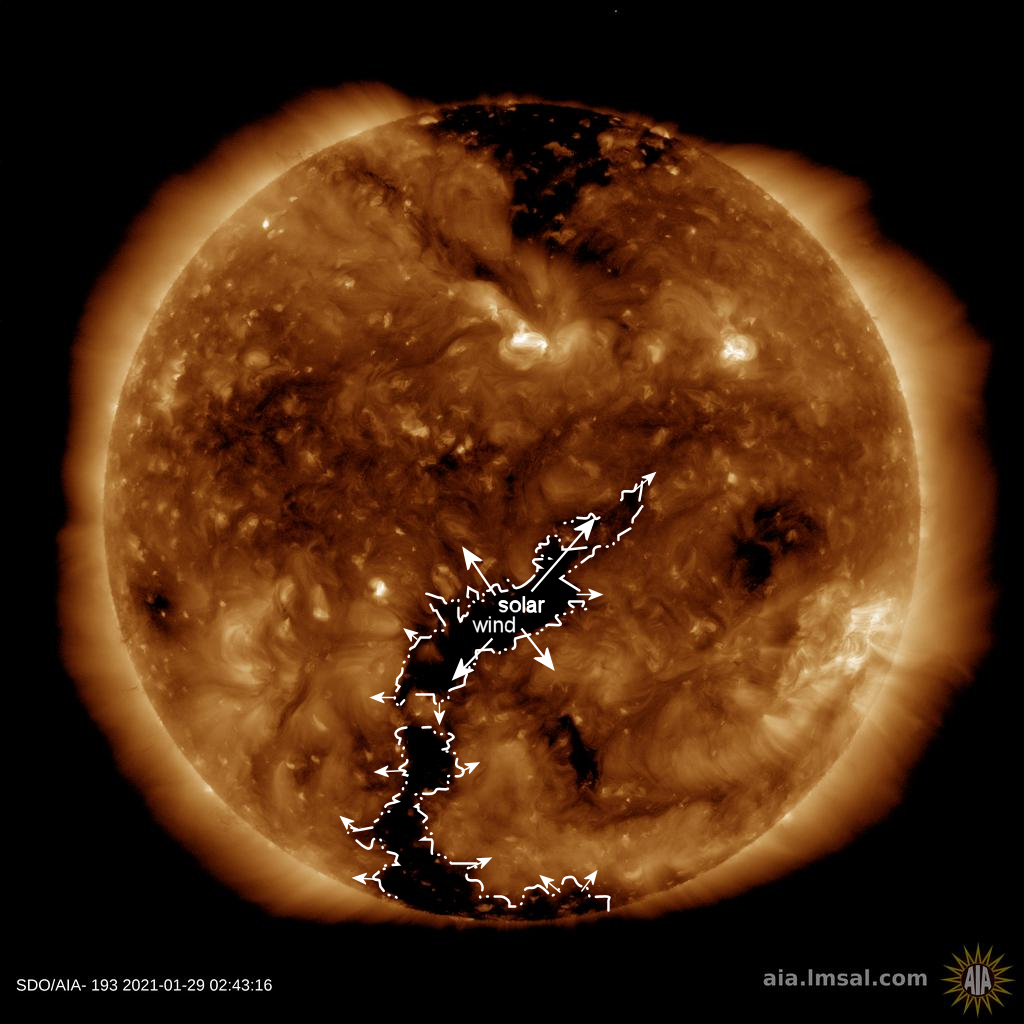
A DENSE STREAM OF SOLAR WIND: Earth is entering a dense stream of solar wind flowing from a southern hole in the sun's atmosphere. NOAA forecasters believe the stream *might* cause a minor G1-class geomagnetic storm on Feb. 2nd. Odds: 45%. Arctic sky watchers should be alert for auroras. Aurora alerts: SMS Text.

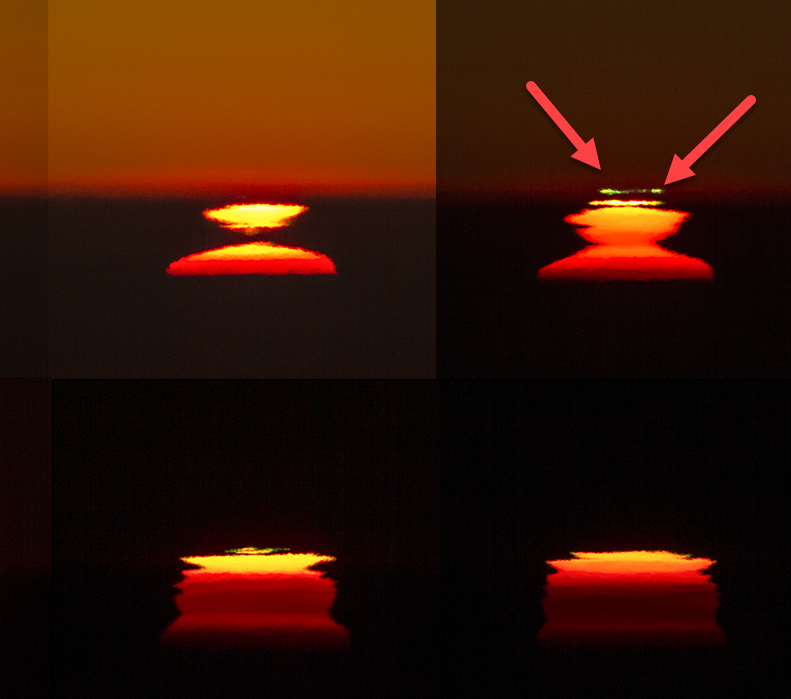
STRANGE SUNRISE: A rectangle. A mushroom. A stack of pancakes. These are just a few of the shapes the sun assumed when it rose over northern Italy on Jan. 30th. Watching from the peak of Mount Tomba, Giacomo Venturin photographed the strange sunrise:

"The changing shape of the sun was amazing," says Venturin. "I photographed the sequence using a variety of exposures ranging from 1/160 to 1/8000. Every picture revealed something new."
Venturin witnessed a complex mirage caused by temperature inversions in the atmosphere. When a layer of extra-warm air sits atop a layer of colder air, the sun can be split in two, producing a green flash. Looking down from Mount Tomba, Venturin viewed the sun through multiple such layers--cold, warm, cold, warm, cold--splitting the sun into a whole stack of shape-shifting pancakes. Rays of light trapped between some layers (in tunnels called "ducts") produced intensely-bright horizontal stripes. And, of course, there was a green flash.
Says Venturin, "what a way to start the day!"
Realtime Spaceweather Photo Gallery
Free: Spaceweather.com Newsletter
APOLLO-ERA ROCKET FLIES PAST EARTH THIS WEEK: In September 1966, NASA launched the Surveyor 2 lunar lander onboard an Atlas LV-3C Centaur-D rocket. This week, the rocket is coming back. Milan Antos of the Czech republic photographed it approaching Earth on Jan. 31st:

"I tracked it moving among the stars in the constellation Lepus," he says.
Surveyor 2's rocket booster was lost shortly after launch. If NASA analysts are correct, it spent the next 54 years circling the sun in an Earth-like orbit. On Sept. 17, 2020, astronomers at the Haleakala Observatory found it again. At first they thought it was a small asteroid, and named it "2020 SO", but Paul Chodas of NASA's Near Earth Object center at JPL realized it was more likely the rocket booster of Surveyor 2. Data collected at NASA’s Infrared Telescope Facility on Maunakea, Hawaii, confirmed his suspicions.
Late last year, Earth's gravity grabbed the lost booster, and it has been in a loose orbit around our planet ever since. Welcome back! But not for long... On Feb. 2nd, the metal cylinder will pass almost mid-way between the Earth and Moon, and our planet's gravity will alter its course once again, sending it back into a solar orbit in March 2021.
Realtime Spaceweather Photo Gallery
Free: Spaceweather.com Newsletter
THE VERNAL EQUINOX PEARL: This pearl has touched space. On Jan. 15th, the students of Earth to Sky Calculus launched a cosmic ray balloon. The Vernal Equinox Pearl went along for the ride. Here it is, floating 111,202 feet above the snow-capped Sierra Nevada of central California:
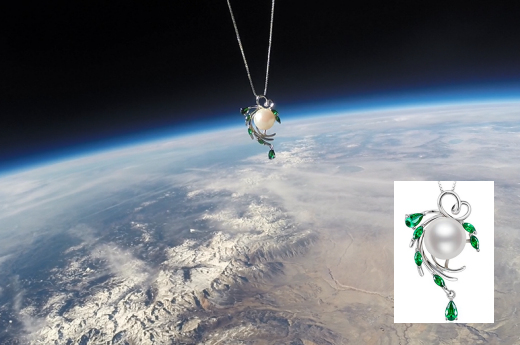
You can have it for $169.95. The students are selling space pearls to support their cosmic ray ballooning program. This 10mm cultured white pearl, surrounded by a crystalline splash of spring-green cubic zirconia, spent more than 2 hours in the stratosphere as sensors in the payload measured cosmic rays.
Each purchase comes with a greeting card showing the pearl in flight and telling the story of its journey to the stratosphere and back again.
Far Out Gifts: Earth to Sky Store
All sales support hands-on STEM education
Realtime Aurora Photo Gallery
Free: Spaceweather.com Newsletter