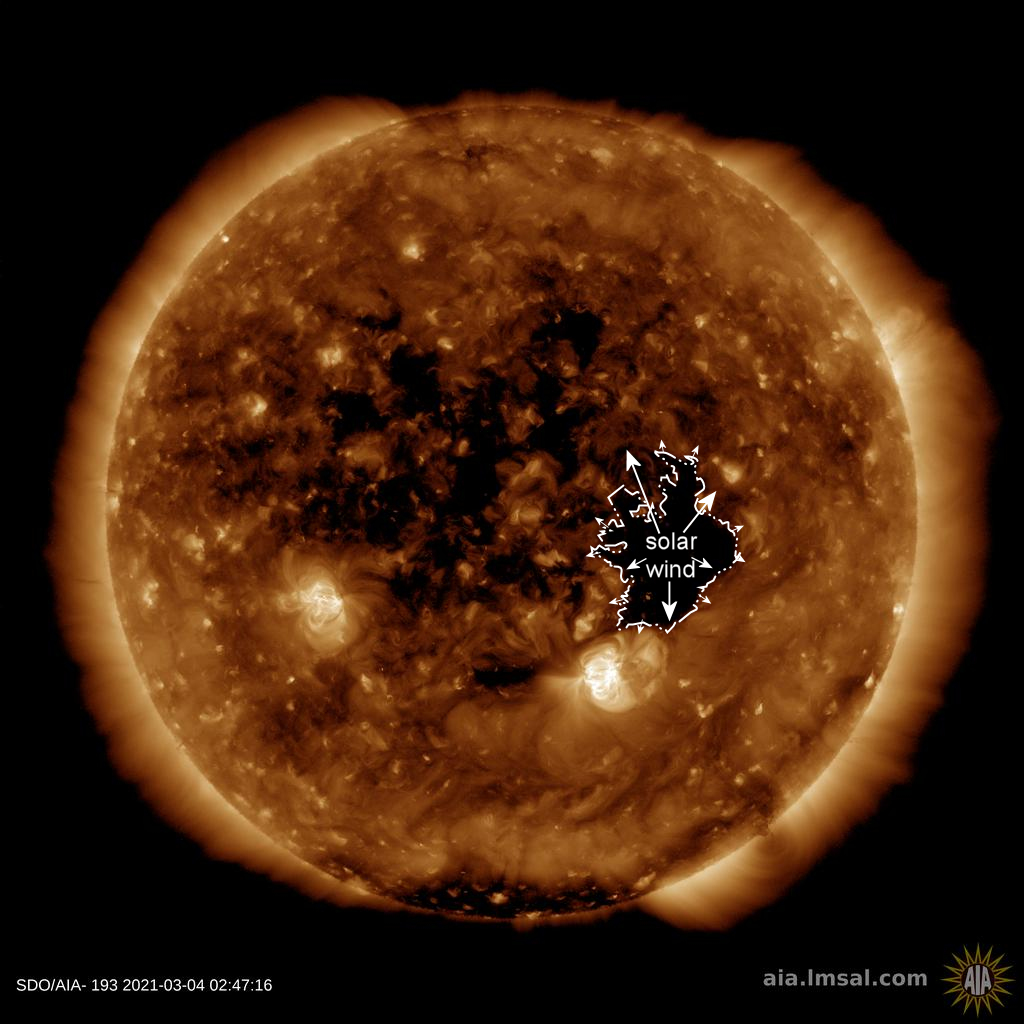
GEOMAGNETIC STORM WATCH: A solar wind stream is coming, and it could spark a G1-class geomagnetic storm when it arrives on March 5-6. The gaseous material is flowing ~550 km/s from an equatorial hole in the sun's atmosphere. If NOAA forecasts are correct, the timing of the storm could favor nighttime aurora watchers in Canada and Alaska. Aurora alerts: SMS Text.

IS A SUNSPOT BUBBLING UP? Something is happening at the sun's northeastern limb. Martin Wise recorded the action from his backyard observatory in Trenton, Florida:
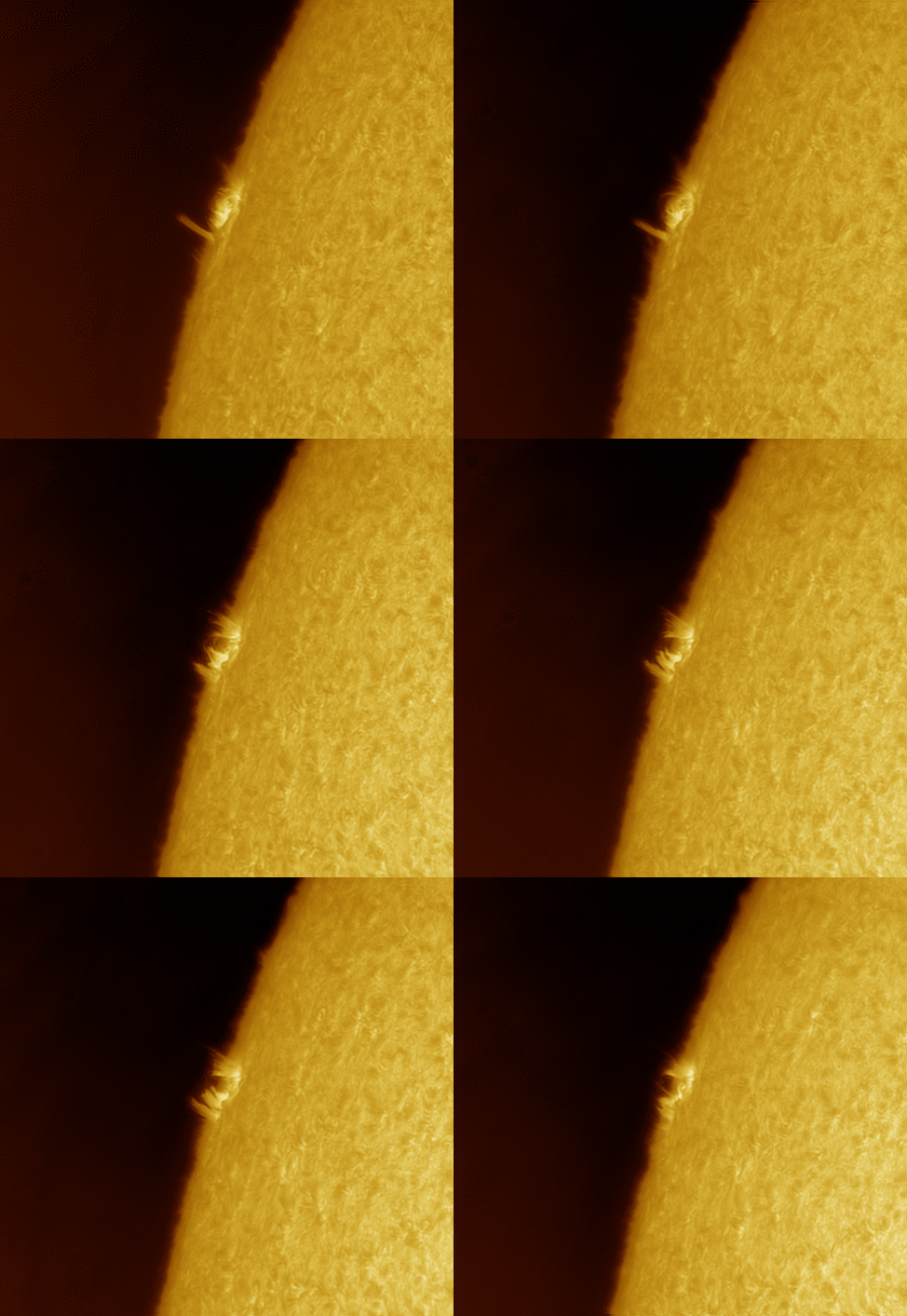
"On March 5th, I watched a small active region rounding the limb that was showing minor flare activity and eruptive surge prominences!" says Wise. "It was very dynamic."
This could be a sign that a sunspot is about to breach the surface of the sun. Bouyant knots of magnetism generated by the sun's inner magnetic dynamo often create these kinds of disturbances as they float to the top. Amateur astronomers with safe solar telescopes are encouraged to monitor developments.
Realtime Space Weather Photo Gallery
Free: Spaceweather.com Newsletter
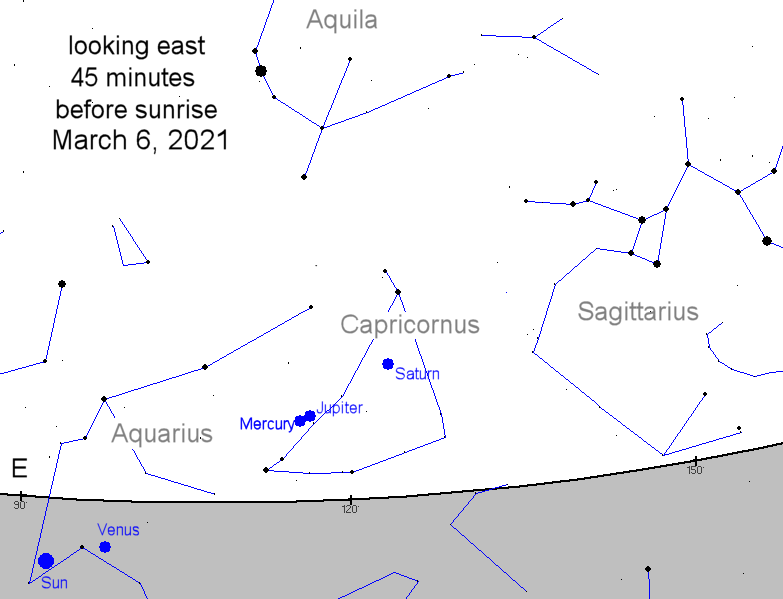
JUPITER AND MERCURY MEET AT DAWN: Set your alarm for sunrise. Or, better yet, an hour before. Jupiter and Mercury are in conjunction in the pre-dawn sky. Alan Dyer photographed the planets rising yesterday over Gleichen, Alberta:
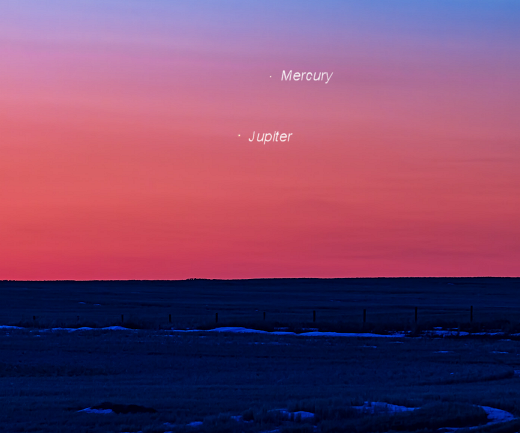
"In the bright twilight. Mercury was not obvious even in binoculars, but the camera picked up both planets well," says Dyer. "Jupiter was magnitude -2 while Mercury was about magnitude 0.2."
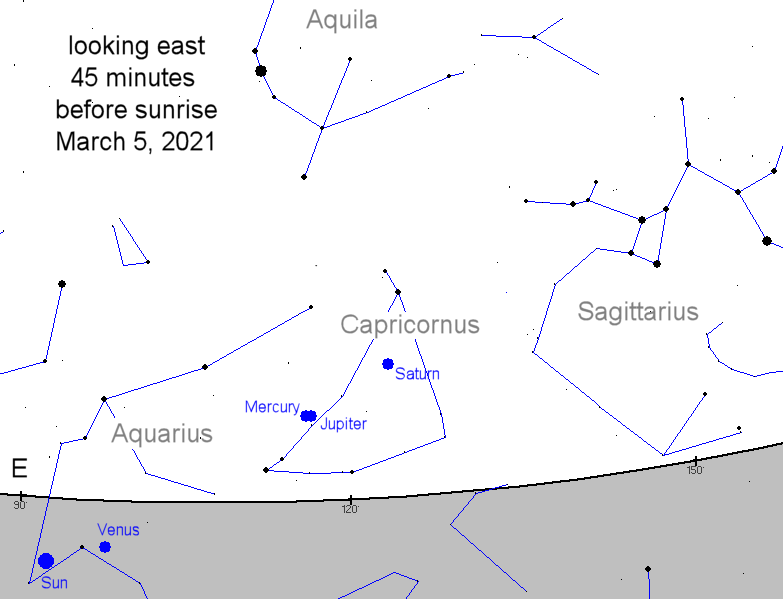
At closest approach on March 5th, Jupiter and Mercury will be ~19 arcminutes apart--less than the width of a full Moon. They'll both fit in the field of view of binoculars. Try to catch them a bit earlier than Dyer did, while the sky is not so bright. On the other hand, a tight conjunction of planets framed by the rosy glow of dawn is truly out of this world. Sky maps: March 5, 6
Realtime Space Weather Photo Gallery
Free: Spaceweather.com Newsletter
THE STRATOSPHERE SUNFLOWER: This sunflower has touched space. The crystal blossom flew to the stratosphere on Feb. 22nd onboard an Earth to Sky Calculus cosmic ray balloon, floating 112,451 feet above the Sierra Nevada mountains of central California:
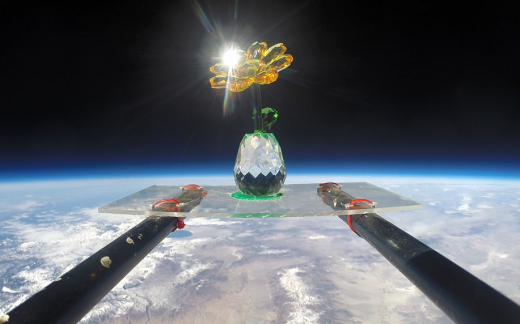
You can have it for $139.95. The students are selling Stratosphere Sunflowers to support their cosmic ray ballooning program. They make great Mother's Day, anniversary, and birthday gifts. Each one comes with a greeting card showing the flower in flight and telling the story of its journey to the edge of space.
Far Out Gifts: Earth to Sky Store
All sales support hands-on STEM education
Realtime Aurora Photo Gallery
Free: Spaceweather.com Newsletter