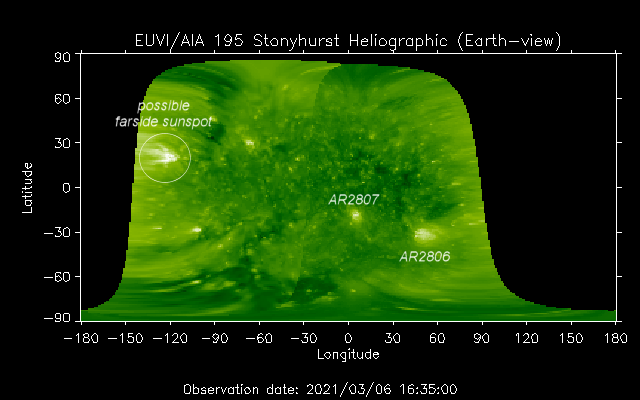
POSSIBLE FARSIDE SUNSPOT: The Earth-facing side of the sun is almost blank, but the sunspot count might soon increase. NASA's STEREO-A spacecraft is monitoring an active region on the farside of the sun. It might be a sunspot. We'll soon find out as the region rotates into view over the sun's NE limb a few days from now. Solar flare alerts: SMS Text.
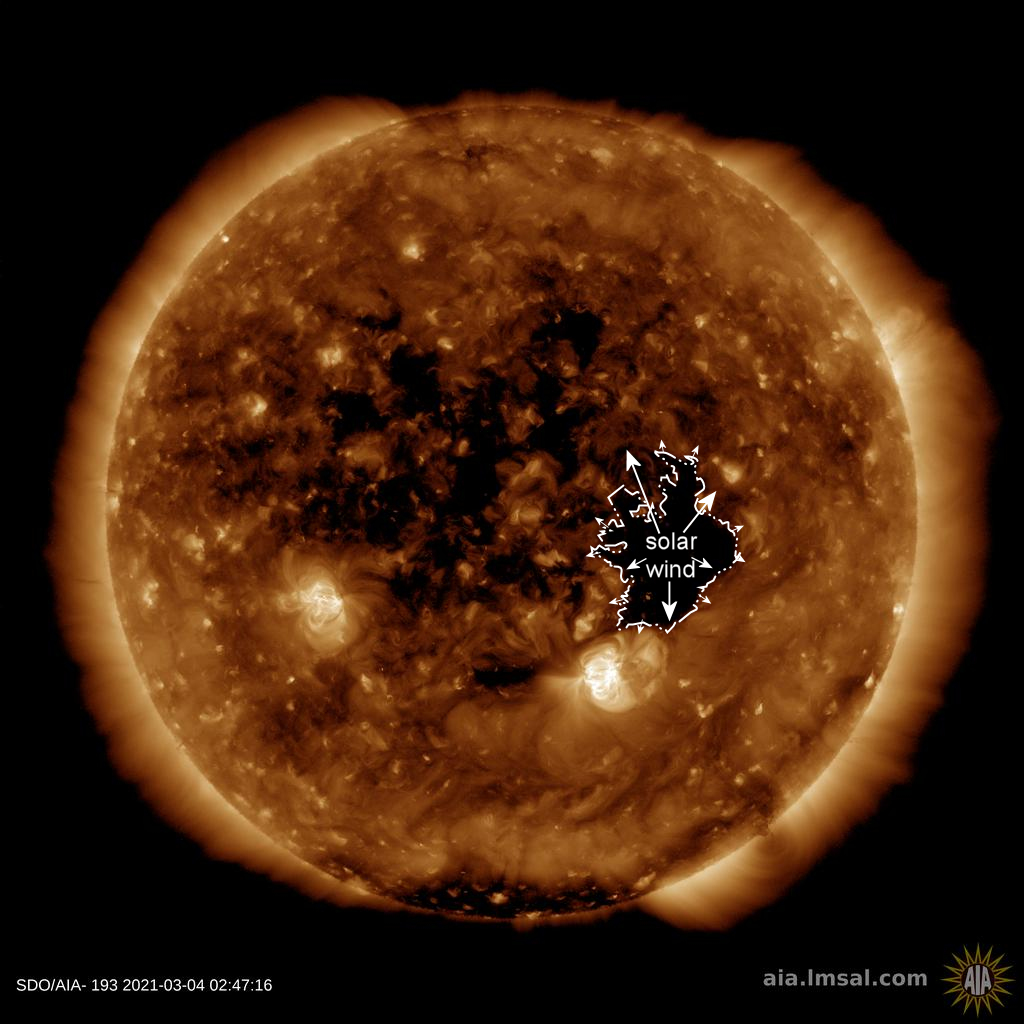
THE SOLAR WIND HAS ARRIVED: As expected, Earth has entered a stream of solar wind flowing from an equatorial hole in the sun's atmosphere. First contact during the early hours of March 6th sparked auroras over Northern Minnesota:
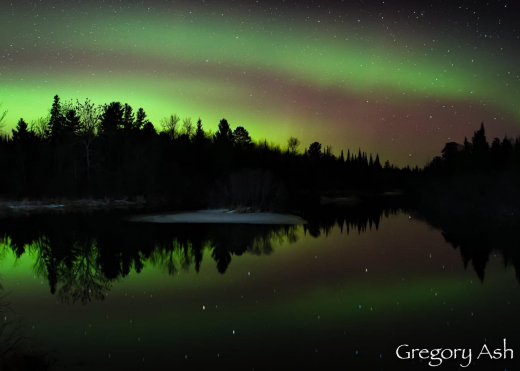
"I was beyond stoked to find open water in northern Minnesota with this snowy island and the incredible reflections," says photographer Greg Ash.
NOAA forecasters initially thought this solar wind stream might produce a G1-class geomagnetic storm. However, now that the stream is here, we can see that it does not have the kind of internal magnetic field necessary to produce a full-fledged storm. Instead, lower levels of geomagnetic unrest are likely as Earth passes through the stream this weekend. Aurora alerts: SMS Text.

Realtime Aurora Photo Gallery
Free: Spaceweather.com Newsletter
MOONHENGE OVER MANHATTAN: You've heard of Stonehenge. Now let us introduce you to Moonhenge. Mike Carroll photographed the phenomenon from Manhatten on March 5th:
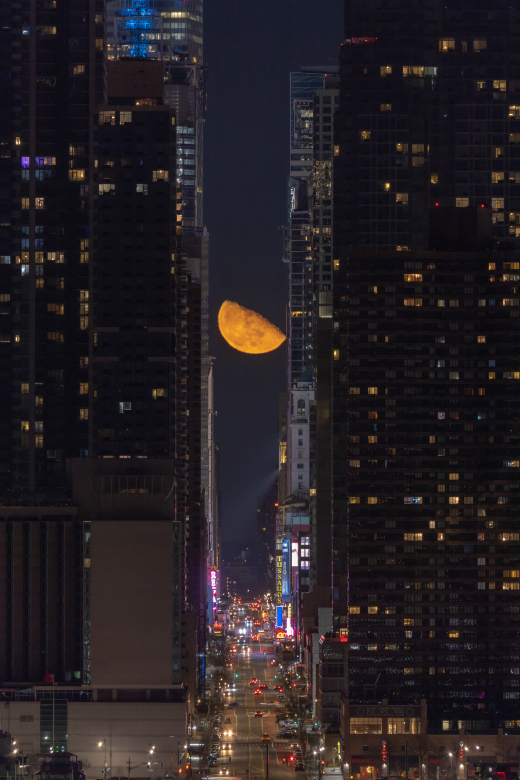
"I took the picture from 42nd Street in New York City," says Carroll. "The half Moon was perfectly bracketed by skyscrapers."
Stonehenge is a prehistoric monument located in England, constructed so that the rising sun, seen from the center of the monument at the time of the summer solstice, aligns with the outer "Heel Stone."
High-rise buildings lining the east-west streets of Manhattan form a modern Stonehenge. Neil deGrasse Tyson has coined the term "Manhattanhenge" to describe annual sunrises and sunsets, which attract thousands of tourists to spots like 42nd Street. Now the Moon has joined the show, too.
Realtime Space Weather Photo Gallery
Free: Spaceweather.com Newsletter
THE STRATOSPHERE SUNFLOWER: This sunflower has touched space. The crystal blossom flew to the stratosphere on Feb. 22nd onboard an Earth to Sky Calculus cosmic ray balloon, floating 112,451 feet above the Sierra Nevada mountains of central California:
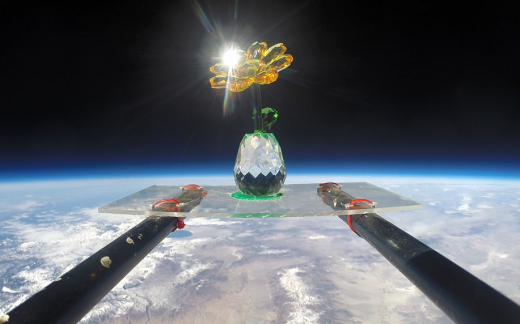
You can have it for $139.95. The students are selling Stratosphere Sunflowers to support their cosmic ray ballooning program. They make great Mother's Day, anniversary, and birthday gifts. Each one comes with a greeting card showing the flower in flight and telling the story of its journey to the edge of space.
Far Out Gifts: Earth to Sky Store
All sales support hands-on STEM education
Realtime Aurora Photo Gallery
Free: Spaceweather.com Newsletter