SOLAR WIND UPDATE: Earth is inside a stream of solar wind blowing ~500 km/s. Because this stream is only weakly magnetized, it is doing little to cause geomagnetic unrest, although some auroras have been observed. A more potent stream is expected to arrive in about 5 days. Aurora alerts: SMS Text.
ASTEROID 99942 APOPHIS: The next time you see this speck of light, you'll really see it. On April 13, 2029, asteroid 99942 Apophis will fly so close to Earth, it will be visible to the naked eye. Consider this a preview:
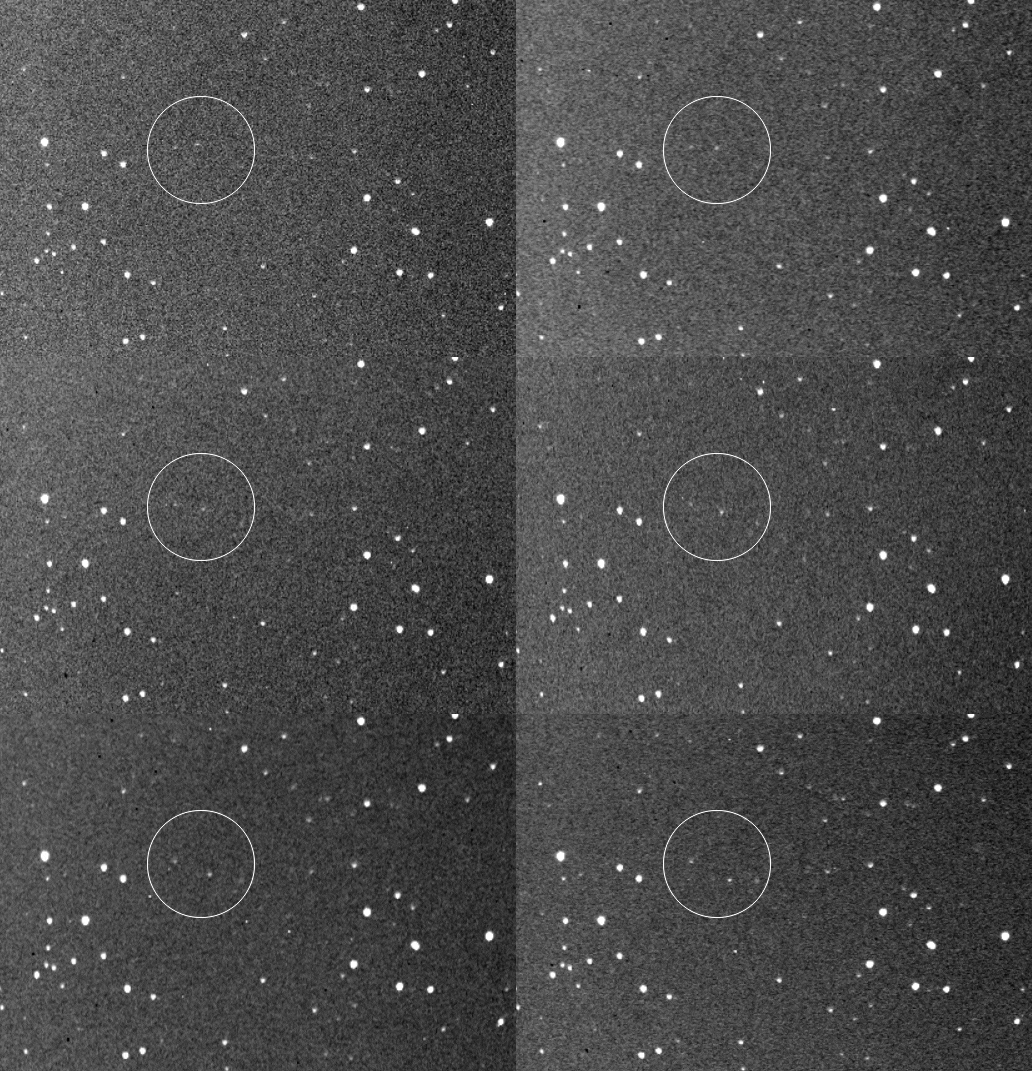
This morning, March 7th, Alberto Quijano Vodniza of Pasto, Colombia, video-recorded the asteroid zipping through the stars of Hydra. "I used a 14-inch Celestron telescope to capture these images, which show the asteroid's motion in about 10 minutes," he explains.
Apophis is currently making a "pre-flyby" of Earth. It is now 0.11 AU (16 million km) away--the closest it will be before the big event in 2029. Around the world, amateur astronomers have been photographing the 370-meter space rock, while NASA radars have been pinging it, gathering data on its shape and composition to improve predictions of what might happen 8 years hence.
What might happen is pretty interesting.
Apophis will come so close to Earth in 2029 that Earth's gravity might actually stretch the asteroid, deforming it and causing small avalanches. Radar observations during the hours of closest approach will be able to image the asteroid's surface with few-meter resolution, potentially revealing the changes. Shining like a 3rd magnitude star, Apophis will be plainly visible to the naked eye and an easy albeit fast-moving target for small telescopes.
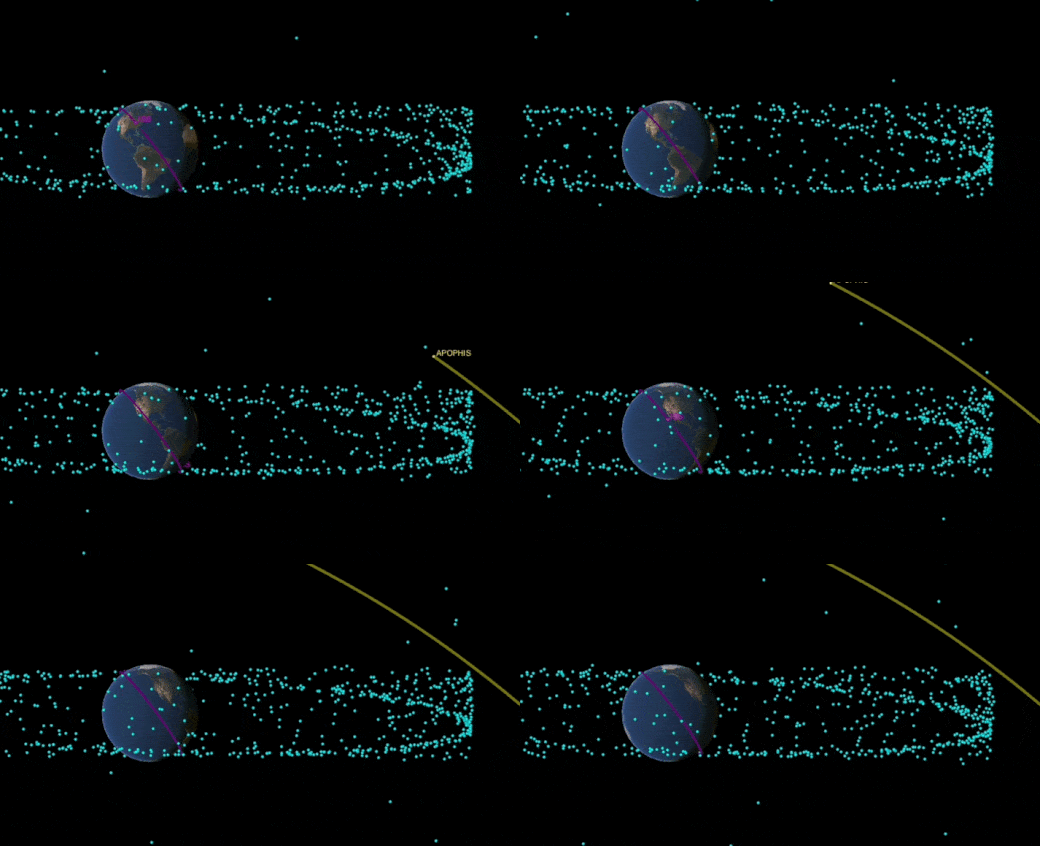
Above: Apophis skimming the geosynchronous satellite belt in 2029. Credit: NASA
At closest approach in April 2029 Apophis will dive through our planet's belt of geosynchronous satellites. That's close, but Apophis will not hit Earth. Back in 2004 when Apophis was first discovered, astronomers thought there might be a collision in 2029. Improved observations of Apophis's orbit have since ruled out a strike. We're safe. So relax and, when the time comes, enjoy the show.
More images of Apophis: from Milan Antos of Jablonec nad Nisou, Czech Republic; from William Wiethoff of Port Wing, Wisconsin; from Robert Forrest of Market Harborough, UK

Realtime Space Weather Photo Gallery
Free: Spaceweather.com Newsletter
RE-INCARNATED SUNSPOT: Two days ago, decaying sunspot AR2806 disappeared. Today... it's back. NASA's Solar Dynamics Observatory recorded the sunspot's re-incarnation on March 7th:
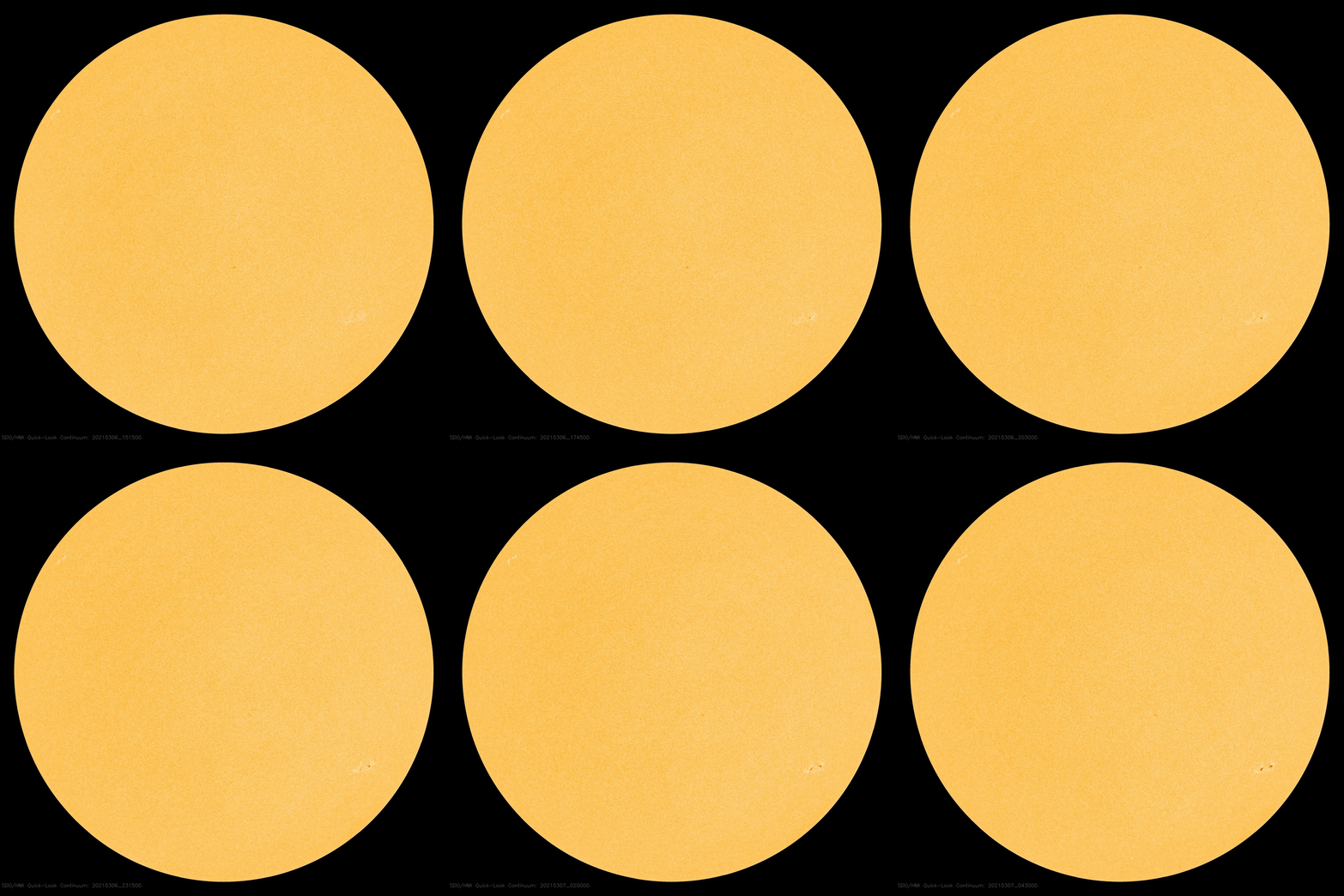
The growing sunspot is 10 times bigger than before, and is crackling with minor B-class solar flares. Bigger explosions are possible if the sunspot's growth continues apace. Stay tuned! Instant solar flare alerts: SMS Text.
Realtime Space Weather Photo Gallery
Free: Spaceweather.com Newsletter
YOUR MOM WILL LOVE THIS MOTHER'S DAY GIFT: This sunflower has touched space. The crystal blossom flew to the stratosphere on Feb. 22nd onboard an Earth to Sky Calculus cosmic ray balloon, floating 112,451 feet above the Sierra Nevada mountains of central California:
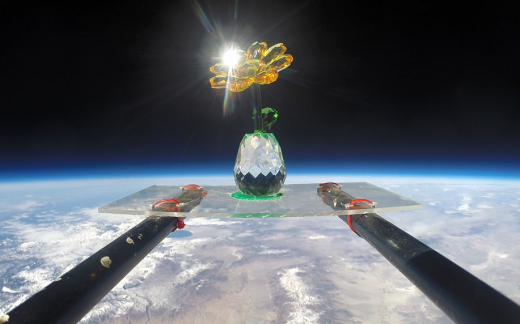
You can have it for $139.95. The students are selling Stratosphere Sunflowers to support their cosmic ray ballooning program. They make great Mother's Day, anniversary, and birthday gifts. Each one comes with a greeting card showing the flower in flight and telling the story of its journey to the edge of space.
Far Out Gifts: Earth to Sky Store
All sales support hands-on STEM education
Realtime Aurora Photo Gallery
Free: Spaceweather.com Newsletter