THE SOLAR WIND CONTINUES TO BLOW: For the 3rd day in a row, Earth is inside a stream of solar wind blowing ~500 km/s. Some beautiful auroras have been seen around the Arctic Circle. The wind is expected to ebb later today with another stream due to arrive on March 12th or 13th. Aurora alerts: SMS Text
ASTEROID APOPHIS FLYBY: Mark your calendar: April 13, 2029. On that Friday the 13th eight years from now, asteroid 99942 Apophis will fly past Earth so close you can see it with your naked eye. No, it won't hit, but you can be excused a frisson of dread watching it pass by.
This month Apophis is making a "pre-flyby" of Earth about 16 million km away, the closest it will be before the big event in 2029. At closest approach on March 5th, Czech amateur astronomer Milan Antos photographed the asteroid in the constellation Hydra:
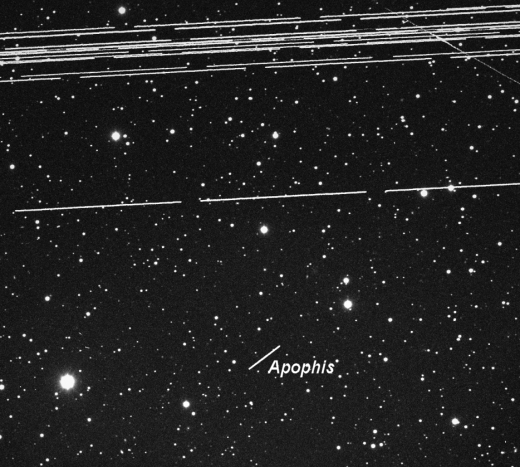
"The many streaks are geosynchronous satellites, which swarmed by just as I was photographing the asteroid," he explains.
Asteroid Apophis is about 370 meters wide. That's big enough to punch through Earth's atmosphere, devastating a region the size of, say, Texas, if it hit land, or causing widespread tsunamis if it hit ocean.
Fortunately, Apophis will not hit Earth in 2029. Back in 2004 when the asteroid was first discovered, astronomers thought there might be a collision. Improved observations of Apophis's orbit have since ruled out a strike. The asteroid will skim Earth's belt of geosyncronous satellites, but come no closer than 31,900 km to Earth itself. Observations in the past year have reduced the uncertainty of the flyby distance to ±20 km.
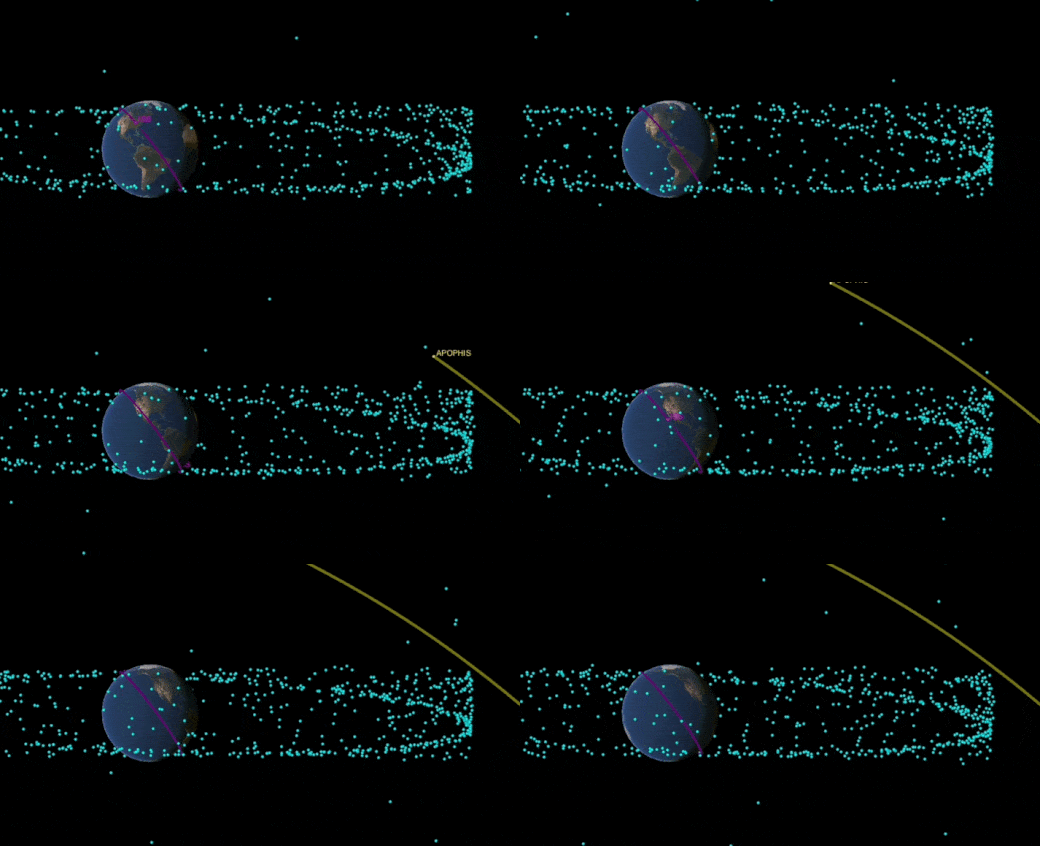
Above: Apophis skimming the geosynchronous satellite belt in 2029. Credit: NASA
What might happen anyway is pretty interesting. At such close range, Earth's gravity could stretch the asteroid, change the way it spins, and trigger small avalanches. Radar observations during the hours of closest approach will be able to image the asteroid's surface with few-meter resolution, potentially revealing the changes.
Shining like a 3rd magnitude star, Apophis will be plainly visible to the naked eye from rural areas and an easy (albeit fast-moving) target for small telescopes. No one in recorded history has ever seen an asteroid in space so bright.
NASA, China, the Planetary Society and others are planning or contemplating missions to Apophis. The more we know about it the better. The next two flybys in 2029 and 2036 are safe, but analysts still haven't completely ruled out a low-probability impact in 2068.
More images of Apophis: from Milan Antos of Jablonec nad Nisou, Czech Republic; from William Wiethoff of Port Wing, Wisconsin; from Robert Forrest of Market Harborough, UK; from Efrain Morales Rivera of Aguadilla, Puerto Rico; from Alberto Quijano Vodniza of Pasto, Colombia.

Realtime Space Weather Photo Gallery
Free: Spaceweather.com Newsletter
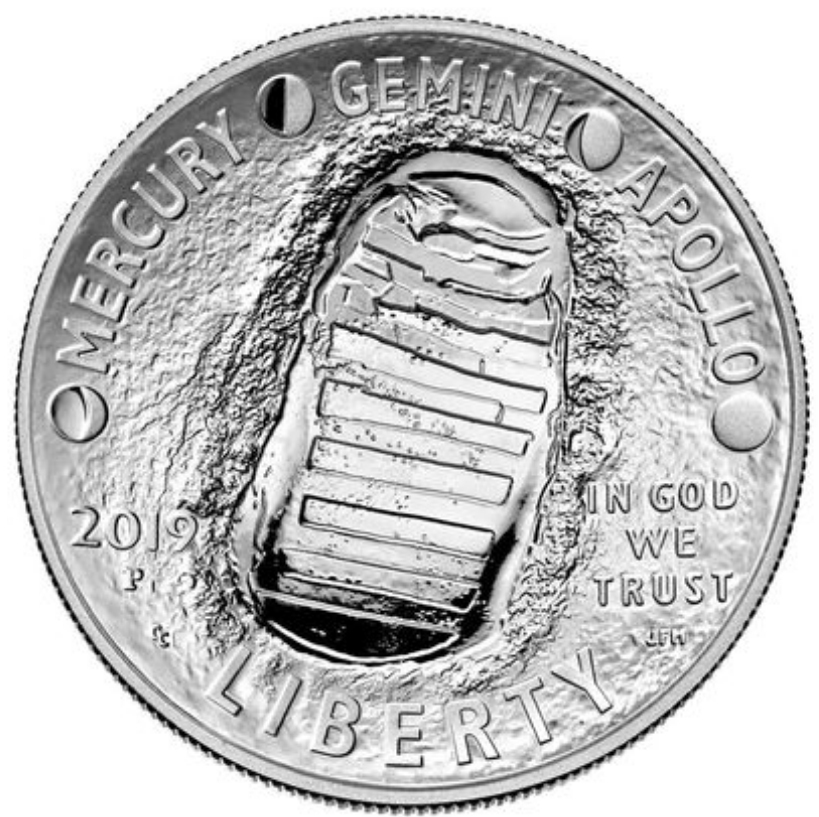
APOLLO 11 PROOF SILVER DOLLAR (COLLECTOR'S ITEM): The US Mint has created a special silver dollar to celebrate the first Moon landing. However, you can no longer buy Apollo 11 coins from the Mint. Where can you get one? From the edge of space:
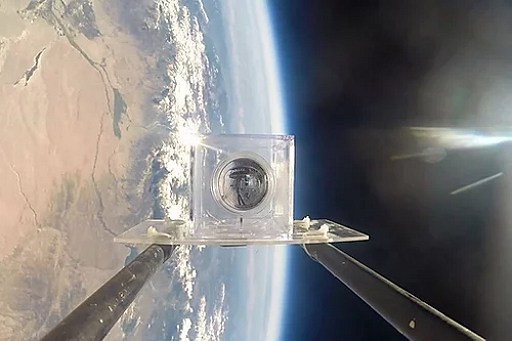
This rare collectable coin flew to the stratosphere on July 20, 2019, the 50th anniversary of the Apollo 11 Moon landing. It hitched a ride onboard an Earth to Sky Calculus cosmic ray balloon. The students are selling the coin to fund their research: Buy it now.
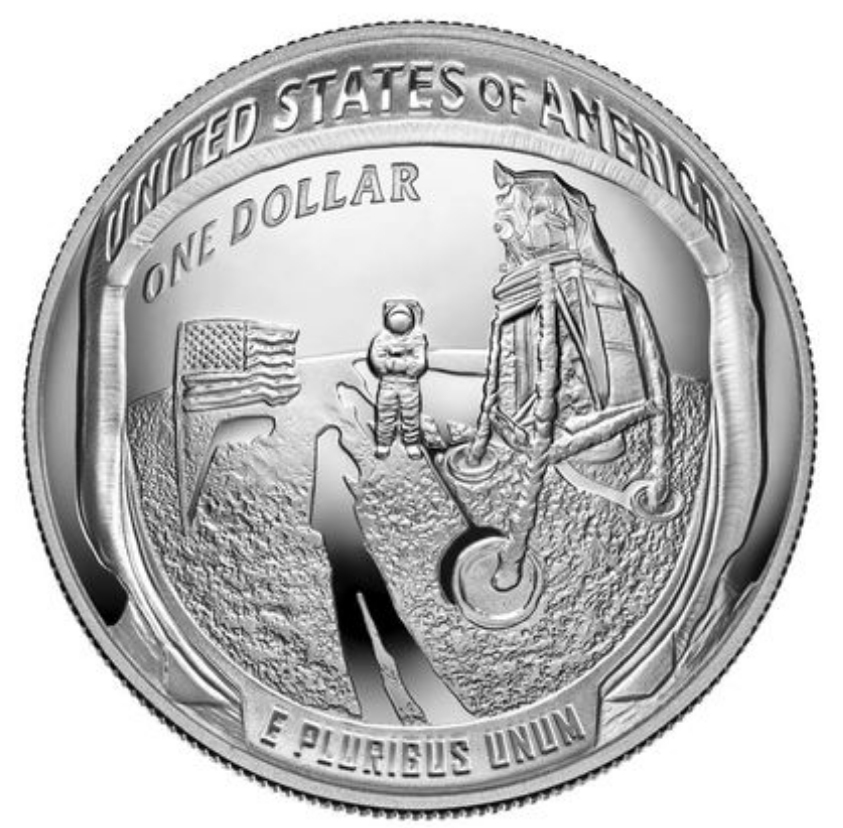
The silver dollar is curved and reproduces the helmet of astronaut Buzz Aldrin. Reflected in Buzz's visor are Neil Armstrong, the United States flag, and the lunar lander. The opposite side of the coin shows Neil's iconic footprint on the Moon. Included is a greeting card showing the coin in flight and a certificate of authenticity.
Far Out Gifts: Earth to Sky Store
All sales support hands-on STEM education
Realtime Aurora Photo Gallery
Free: Spaceweather.com Newsletter