CO-ROTATING INTERACTION REGION: NOAA forecasters say that a CIR (co-rotating interaction region) could hit Earth's magnetic field on March 13th. CIRs are transition zones between slow- and fast-moving solar wind streams. Solar wind plasma piles up in these regions, producing shock-like structures that sometimes mimick CMEs and spark bright Arctic auroras. Aurora alerts: SMS Text
RARE RED AURORAS: It's not easy for Earth's atmosphere to make red auroras. Even longtime Arctic photographers and tour guides rarely see them. Yet, on March 10th, there they were:
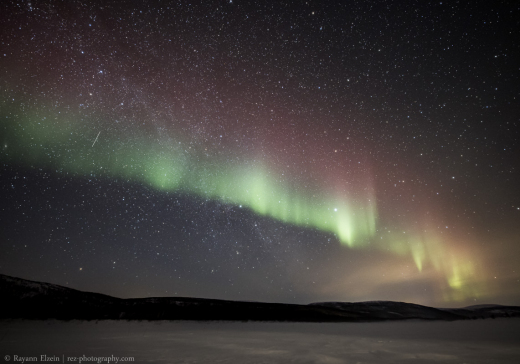
Rayann Elzein sends this picture from Utsjoki in the Finnish Lapland. "The red auroras looked pale white to my unaided eye, but a quick exposure with my camera revealed their true color."
What's so tricky about red? The action, if you can call it that, takes place more than 150 km above Earth's surface. At that high altitude, oxygen atoms excited by solar wind slowly spit out red photons. Emphasis on slowly. The radiative lifetime of the transition is 110 seconds--an eternity at the quantum scale. The atoms must remain undisturbed that long to produce their red light.
Perhaps that's why red auroras often appear when conditions are quiet. "The solar wind speed last night was quite low and there was no expectation of a geomagnetic storm," says Elzein. Tonight is expected to be quiet as well. Red auroras, anyone?
Realtime Aurora Photo Gallery
Free: Spaceweather.com Newsletter
GEOSYNCHRONOUS SATELLITE GLINTS: Now you see it, now you don't. A flash of light briefly appears in the night sky, then disappears before you can make out what it is. No, it's not your imagination. It's a geosynchronous satellite. Matt Penn captured dozens of them glinting in the night sky over Tucson, AZ, on March 6th:
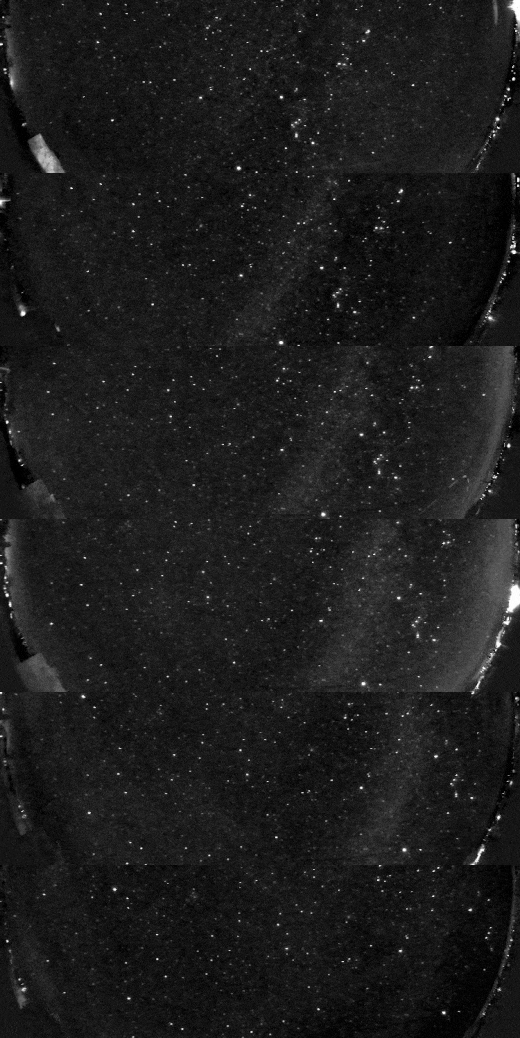
Note: The first thing in this video that catches your eye may be bright airplanes near the horizon. Look at the full-sized video; the glints are here.
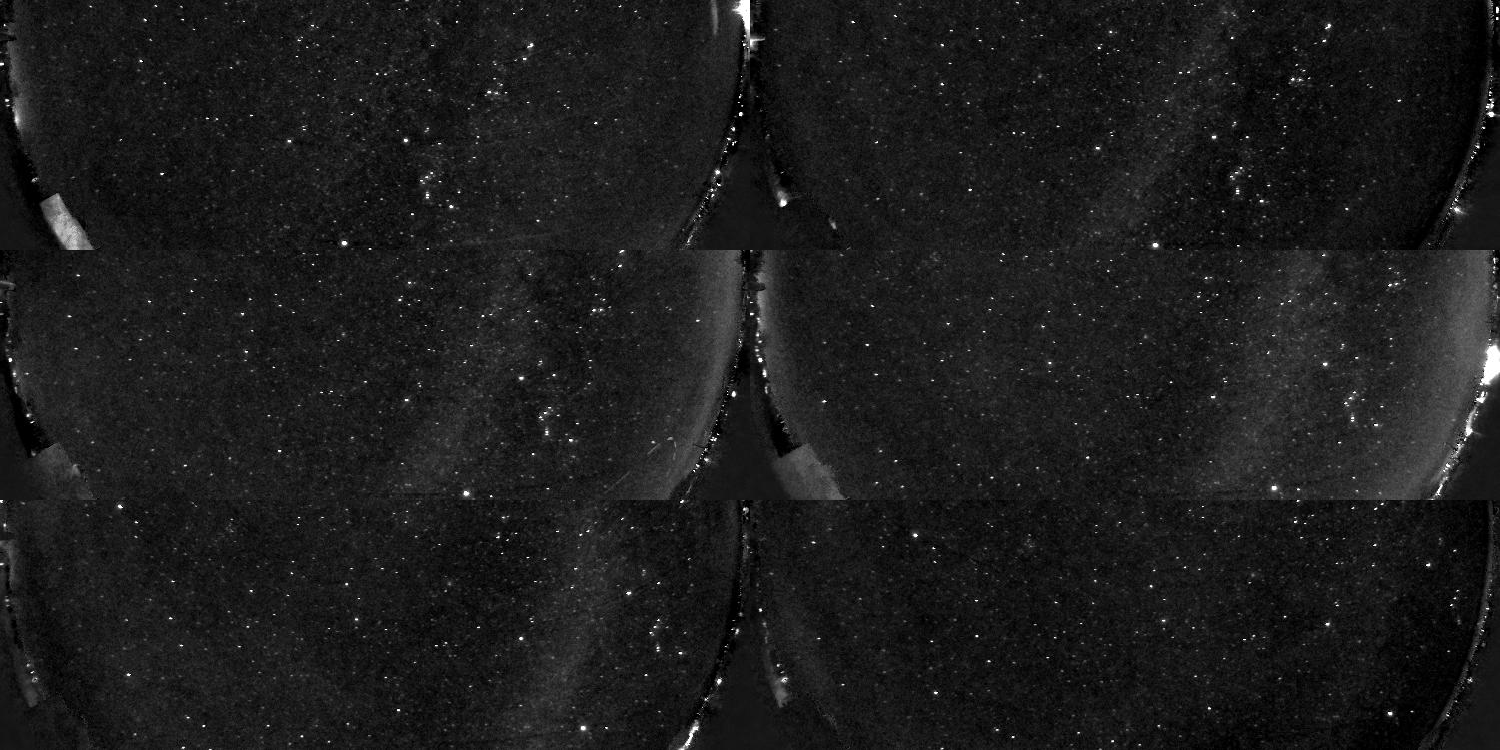
"This is the season for geosynchronous satellite glints," says Penn. "They tend to occur around the equinoxes [when the sun is favorably aligned with the Clarke Belt]."
"Anyone with an all-sky cam can see them," he continues. "Some are as bright as 2nd magnitude. My setup is a Raspberry Pi High Quality Cam, 1.5mm fl lens, a Pi Zero W, tripod and USB battery. Total cost = $160US. A network of these around the globe, observing near the equinoxes, could catalog and monitor all the geosyncs."
Realtime Space Weather Photo Gallery
Free: Spaceweather.com Newsletter
THE VERNAL EQUINOX PEARL: Are you looking for a far-out gift? Consider the Vernal Equinox Pearl, launched to the edge of space onboard an Earth to Sky Calculus cosmic ray balloon. Here it is, floating 111,202 feet above the snow-capped Sierra Nevada of central California:
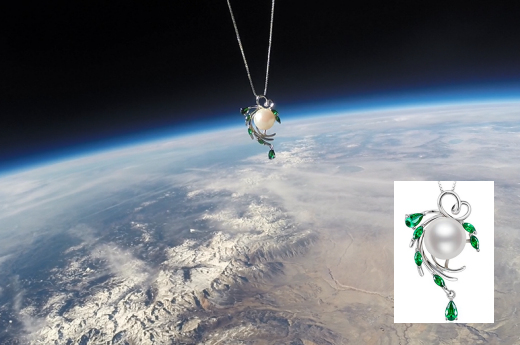
You can have it for $179.95. The students are selling space pearls to support their cosmic ray ballooning program. This 10mm cultured white pearl, surrounded by a crystalline splash of spring-green cubic zirconia, spent more than 2 hours in the stratosphere as sensors in the payload measured cosmic rays.
Each purchase comes with a greeting card showing the pearl in flight and telling the story of its journey to the stratosphere and back again.
Far Out Gifts: Earth to Sky Store
All sales support hands-on STEM education
Realtime Aurora Photo Gallery
Free: Spaceweather.com Newsletter