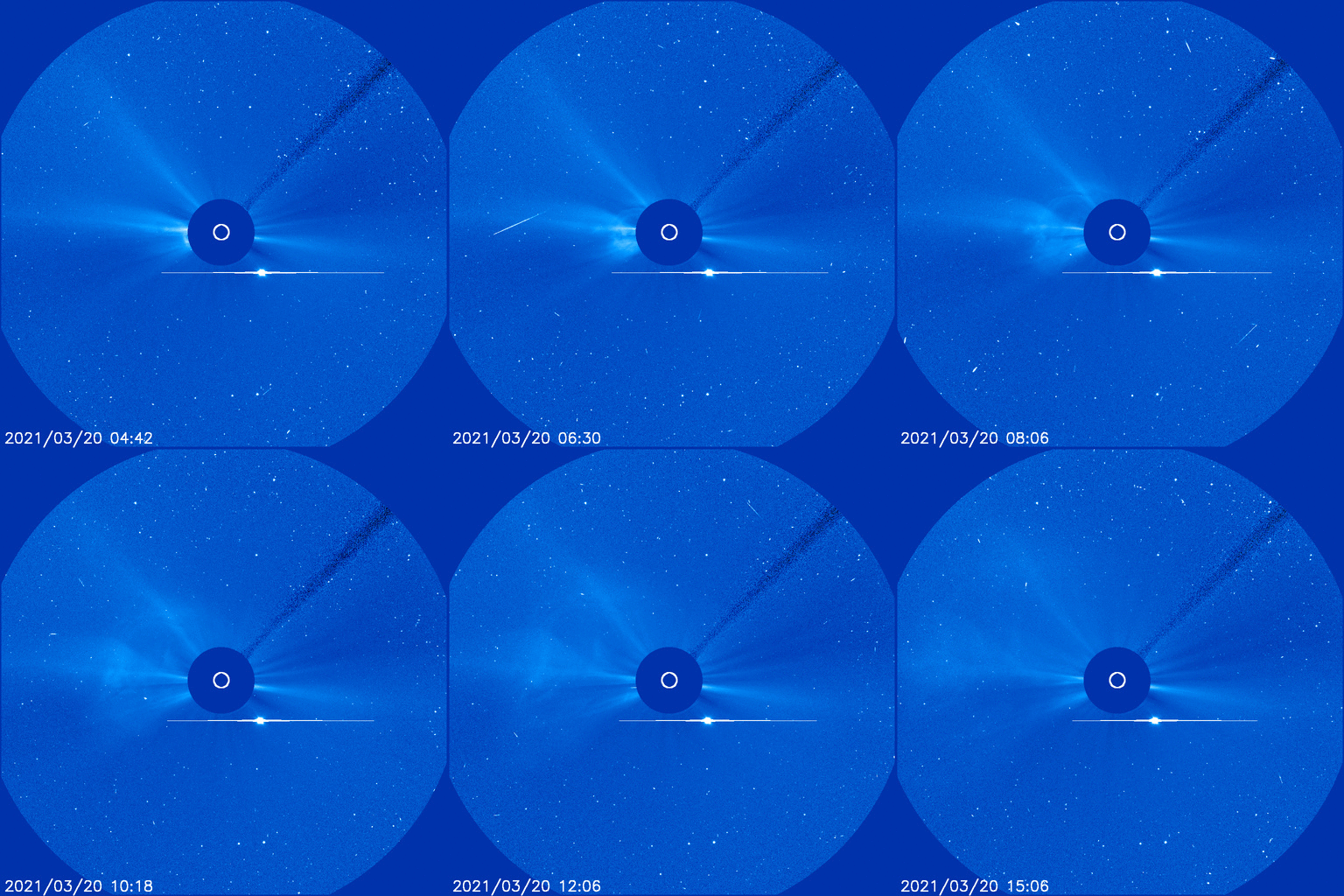
A CME IS COMING: Yesterday, the sun launched a coronal mass ejection (CME) into space: movie. It wasn't aimed directly at Earth. Nevertheless, we might feel its effect on March 23rd when the storm cloud is expected to deliver a glancing blow to Earth's magnetic field. Aurora alerts: SMS Text
AURORAS IN THE USA: A solar wind stream hit Earth's magnetic field on March 20th, igniting a brief but strong G2-class geomagnetic storm. Bright auroras illuminated skies over Canada, then spilled across the border into the USA. "There was an explosion of color," reports Greg Ash, who took this picture outside Duluth, Minnesota:

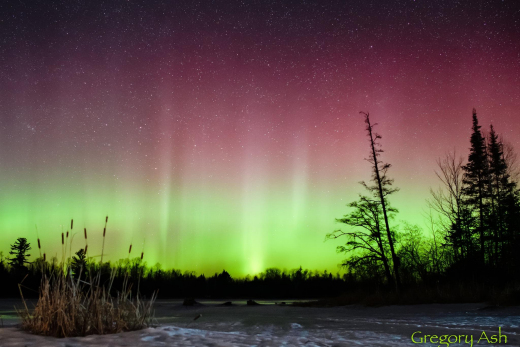
"At the peak of the display, I was serenaded by coyotes howling in the distance," says Ash. "It was thrilling beyond words."
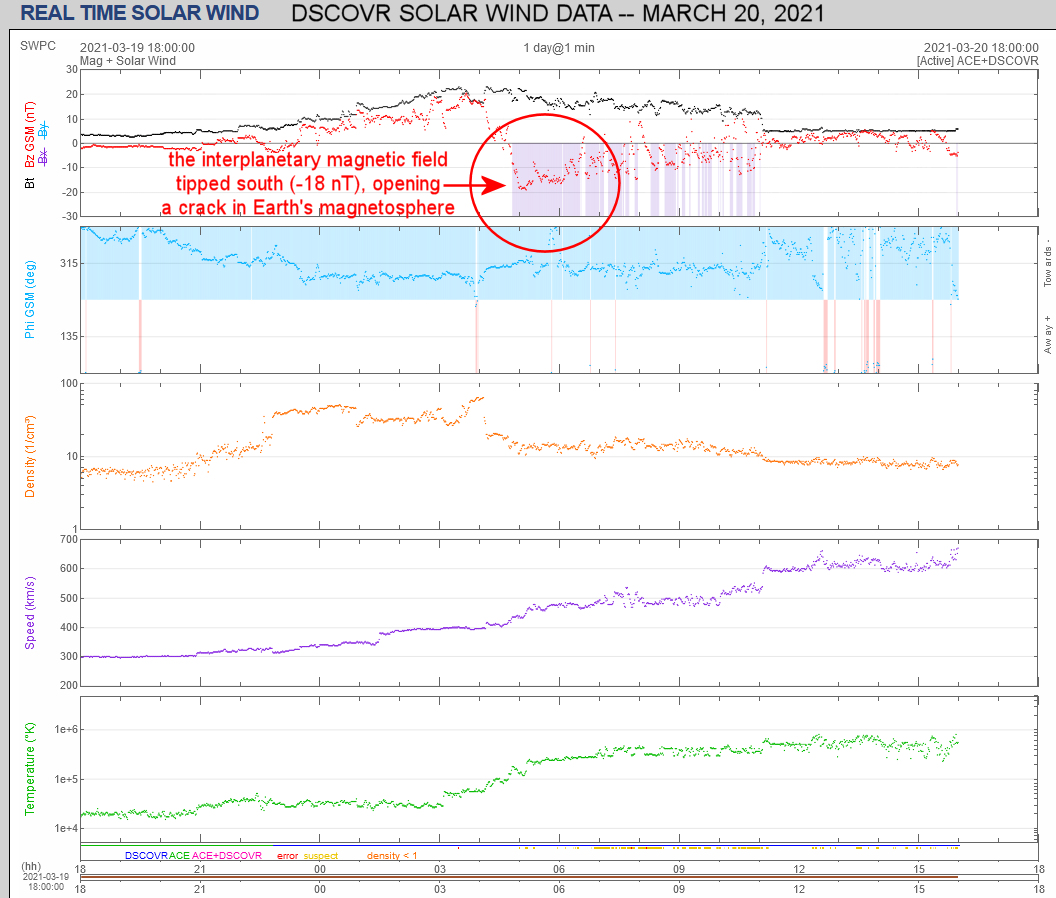
It's no coincidence that this happened on the first day of northern spring. Auroras love equinoxes. Around the beginning of spring and fall, cracks open in Earth's magnetic field--a phenomenon called "the Russell-McPherron effect." Solar wind pours in to fuel geomagnetic storms. An unusually large crack opened on March 20th, supercharging the display.
Realtime Aurora Photo Gallery
Free: Spaceweather.com Newsletter
MEANWHILE IN THE SOUTHERN HEMISPHERE: This weekend, Ian Griffin of the Otago Museum in Dunedin, New Zealand, organized two charter flights to observe auroras over the Southern Ocean. Talk about perfect timing. The G2-class storm occured during the first flight, and this is what they saw:
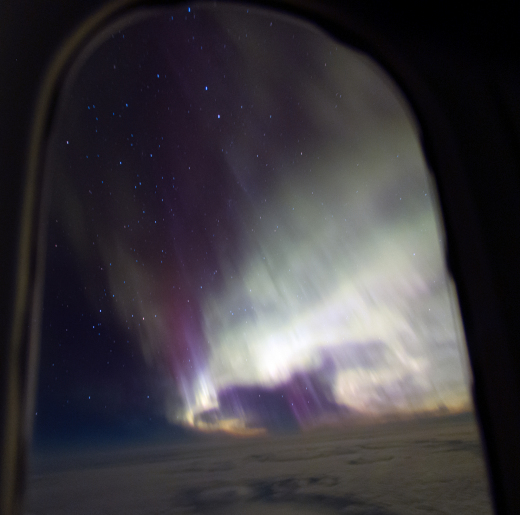
"New Zealand's COVID-free status (none in the community) means that 275 people were able to board an Air New Zealand Dreamliner and fly toward the aurora," says Griffin. "Thanks to the Russell-McPherron effect, and the Southern Hemisphere autumnal equinox occurring during the flight, we saw astounding auroras for more than 6 hours of the 10 hour flight."
Realtime Aurora Photo Gallery
Free: Spaceweather.com Newsletter
STERLING SILVER HUMMINGBIRD: This hummingbird has touched space. The sterling silver pendant hitched a ride to the stratosphere on Jan. 15, 2021, when the students of Earth to Sky Calculus launched a cosmic ray balloon. Here it is, floating 111,202 feet above the snow-capped Sierra Nevada of central California:
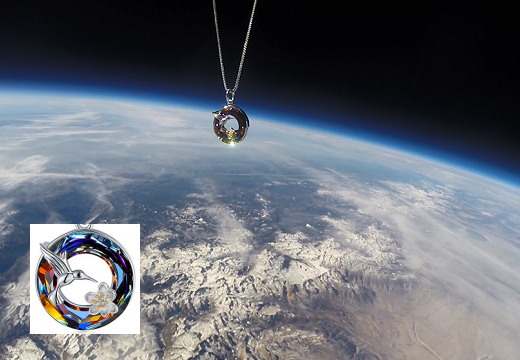
You can have it for $133.95. The students are selling hummingbird pendants to support their cosmic ray ballooning program. Each one comes with a greeting card showing the hummingbird in flight and telling the story of its journey to the edge of space. It makes an out-of-this-world birthday, anniversary, or Mother's Day gift!
Far Out Gifts: Earth to Sky Store
All sales support hands-on STEM education
Realtime Space Weather Photo Gallery
Free: Spaceweather.com Newsletter