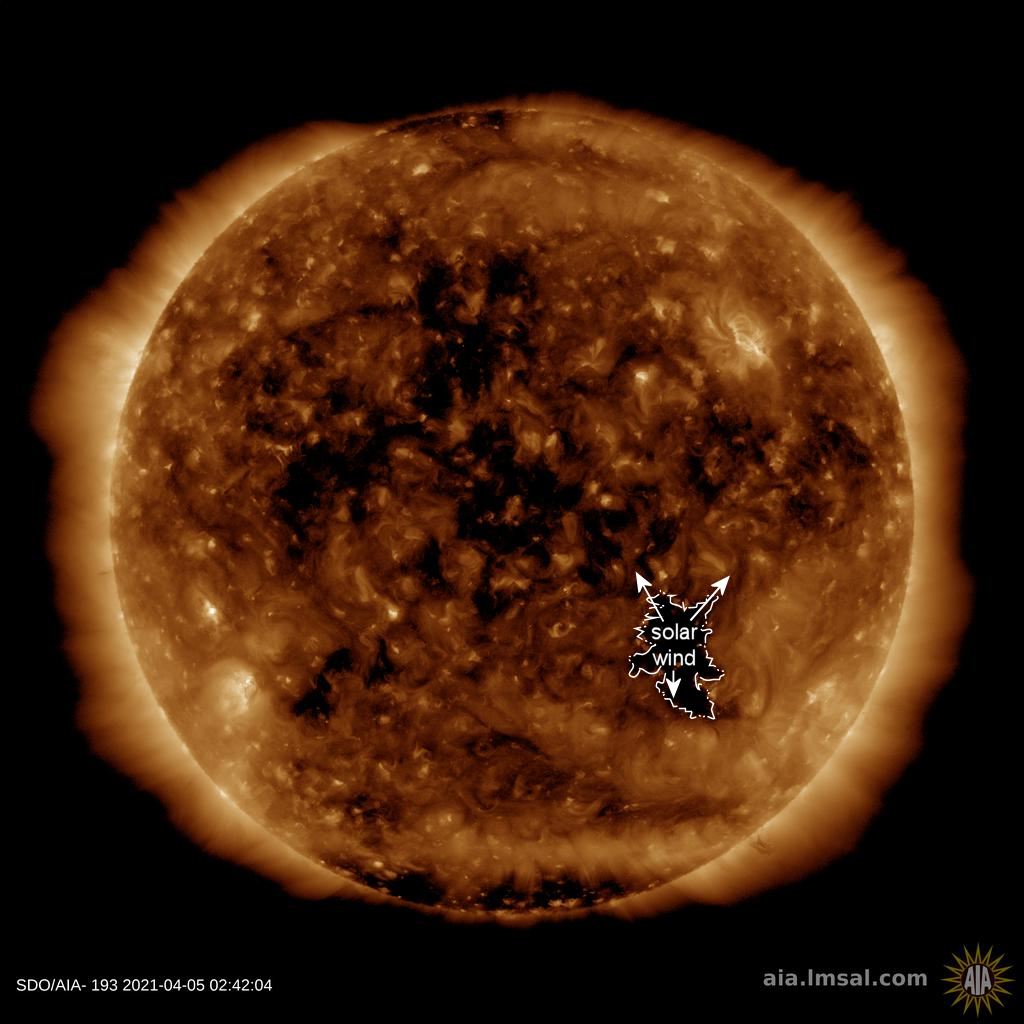
SOLAR WIND SPARKS PURPLE AURORAS: As predicted, Earth is entering a stream of solar wind flowing from a southern hole in the sun's atmosphere. First contact during the early hours of April 7th produced "fabulous purple pillars" over Alberta, Canada. Harlan Thomas photographed the display northwest of Calgary:
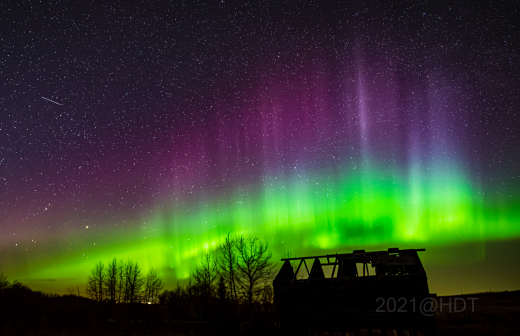
"They moved like a huge wave in the ocean literally spanning the horizon in less than 30 seconds," says Thomas. "I have never seen purple pillars before and they could be seen with the naked eye."
Purple auroras are a sign of nitrogen. Sometimes ionized nitrogen molecules (N2+) in the upper atmosphere get excited by incoming solar wind particles, releasing a telltale purple glow. Thomas was in the right place at the right time to witness the purple wave. "It was a jaw dropping experience," he says. Aurora alerts: SMS Text.
Realtime Aurora Photo Gallery
Free: Spaceweather.com Newsletter
SPRITE SEASON BEGINS: Spring is the season for sprites, and Paul Smith just photographed a magnificent display over Kansas. "These were my first big sprites of the season," says Smith, who took this picture on April 6th:
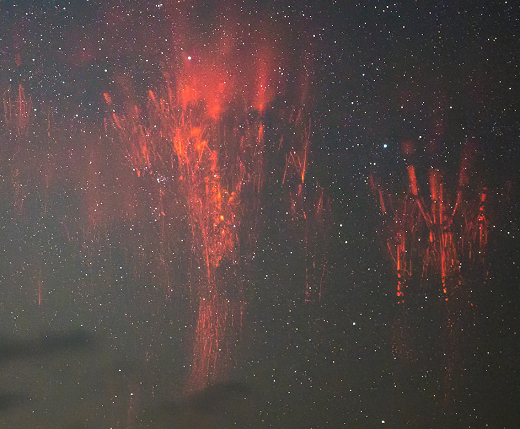
"They were so bright, I saw a couple of them with my unaided eyes," he adds.
Sprites are a weird form of lightning that leap up from powerful thunderstorms. These are "jellyfish sprites", named for their resemblance to sea creatures. Their red tentacles stretch about 90 km high, almost touching the edge of space.
At this time of year, severe storms set the stage for sprite formation. Mesoscale convective systems sweep across the Great Plains, cracking with intense electric fields that drive electrons up and into sprites. La Niña conditions in the Pacific Ocean may amplify this process.
Although the sprites were in Kansas, Smith saw them from Oklahoma. This weather satellite image shows the observing geometry.
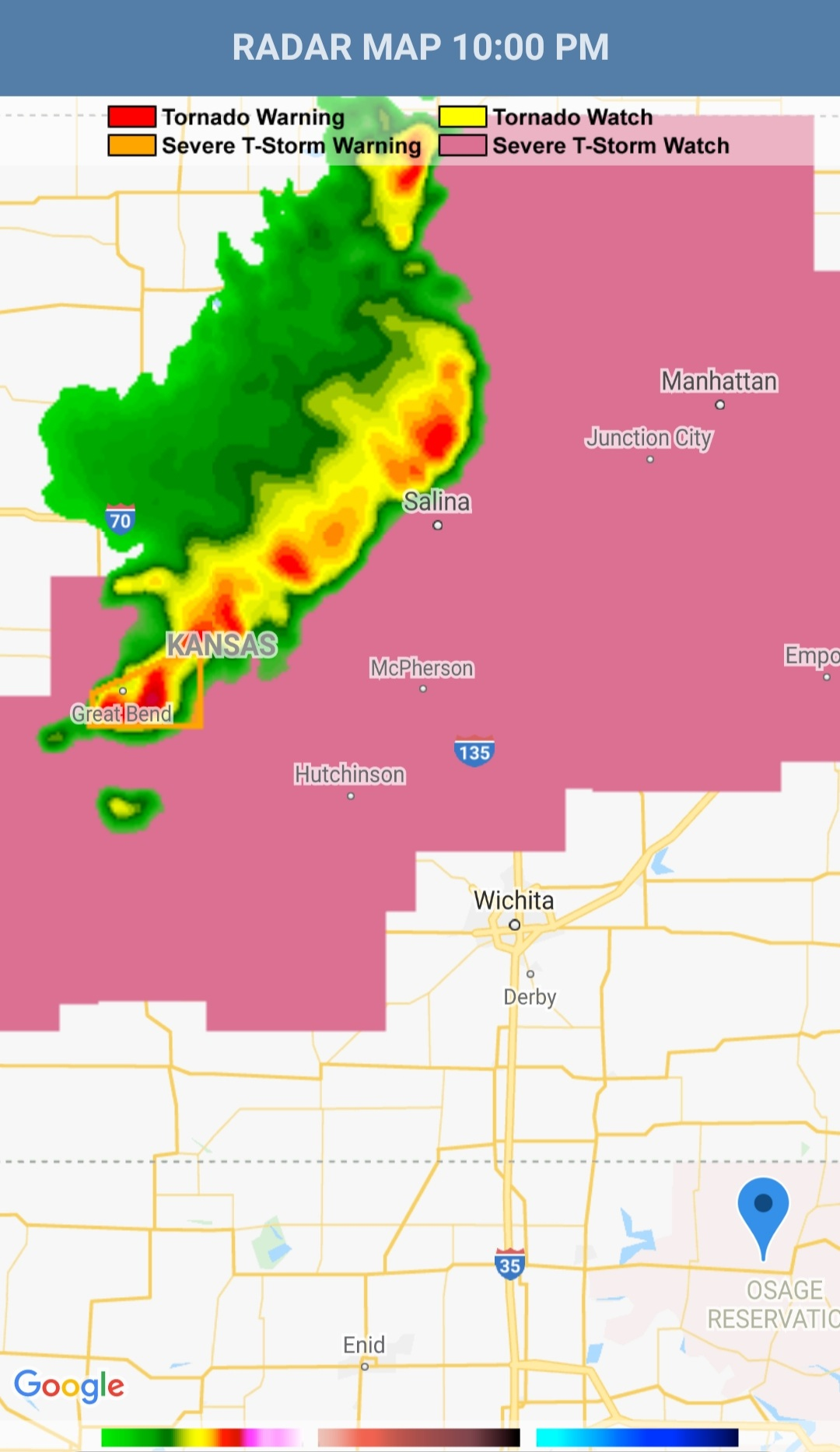

"I was about 200 miles away from the thunderstorm," says Smith. Turns out, that's about the right distance. You have to be far away to see sprites over the top of the thunderclouds.
Although sprites have been reported by pilots and storm chasers for more than a century, many scientists were skeptical. Can you blame them? "Doctor, I just saw a giant red jellyfish in the sky!" A turning point came in 1989 when sprites were photographed by researchers at the University of Minnesota and cameras onboard the space shuttle. Now sprites are in the mainstream. Indeed, there is a lot to see on the tops of thunderclouds. Get ready!
Realtime Sprite Photo Gallery
Free: Spaceweather.com Newsletter
STERLING SILVER SUNFLOWER PENDANT: Looking for a far out gift? Consider the blue sunflower. On April 1, 2021, the students of Earth to Sky Calculus launched a cosmic ray research balloon to the stratosphere. This unique pendant went along for the ride:
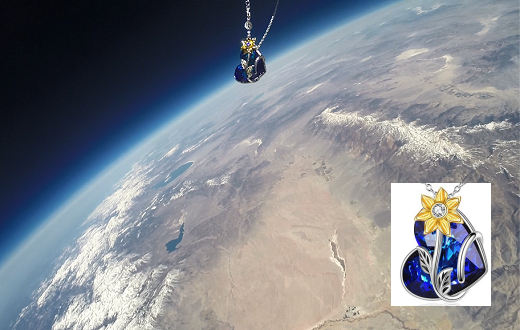
You can have it for $138.95. The students are selling space pendants to fund their cosmic ray ballooning program. The stem of this hypoallergenic sterling silver sunflower wraps around a blue heart-shaped Swarovski crystal--all suspended from a matching 18-inch chain. Each pendant comes with a greeting card showing the item in flight and telling the story of its journey to the edge of space and back again.
Far Out Gifts: Earth to Sky Store
All sales support hands-on STEM education
Realtime Space Weather Photo Gallery
Free: Spaceweather.com Newsletter