THE LYRID METEOR SHOWER: Earth is approaching a stream of debris from Comet Thatcher (C/1861 G1), source of the annual Lyrid meteor shower. If forecasters are correct, the shower will peak on the night of April 21-22. Usually sky watchers count 15+ Lyrids per hour; this year, however, bright moonlight will sharply reduce visibility. Despite the glare, it is still possible to see a Lyrid.
M-CLASS SOLAR FLARE: Sunspot AR2816 erupted during the late hours of April 19th (2342 UT), producing a strong M1-class solar flare. NASA's Solar Dynamics Observatory recorded the extreme ultraviolet flash:
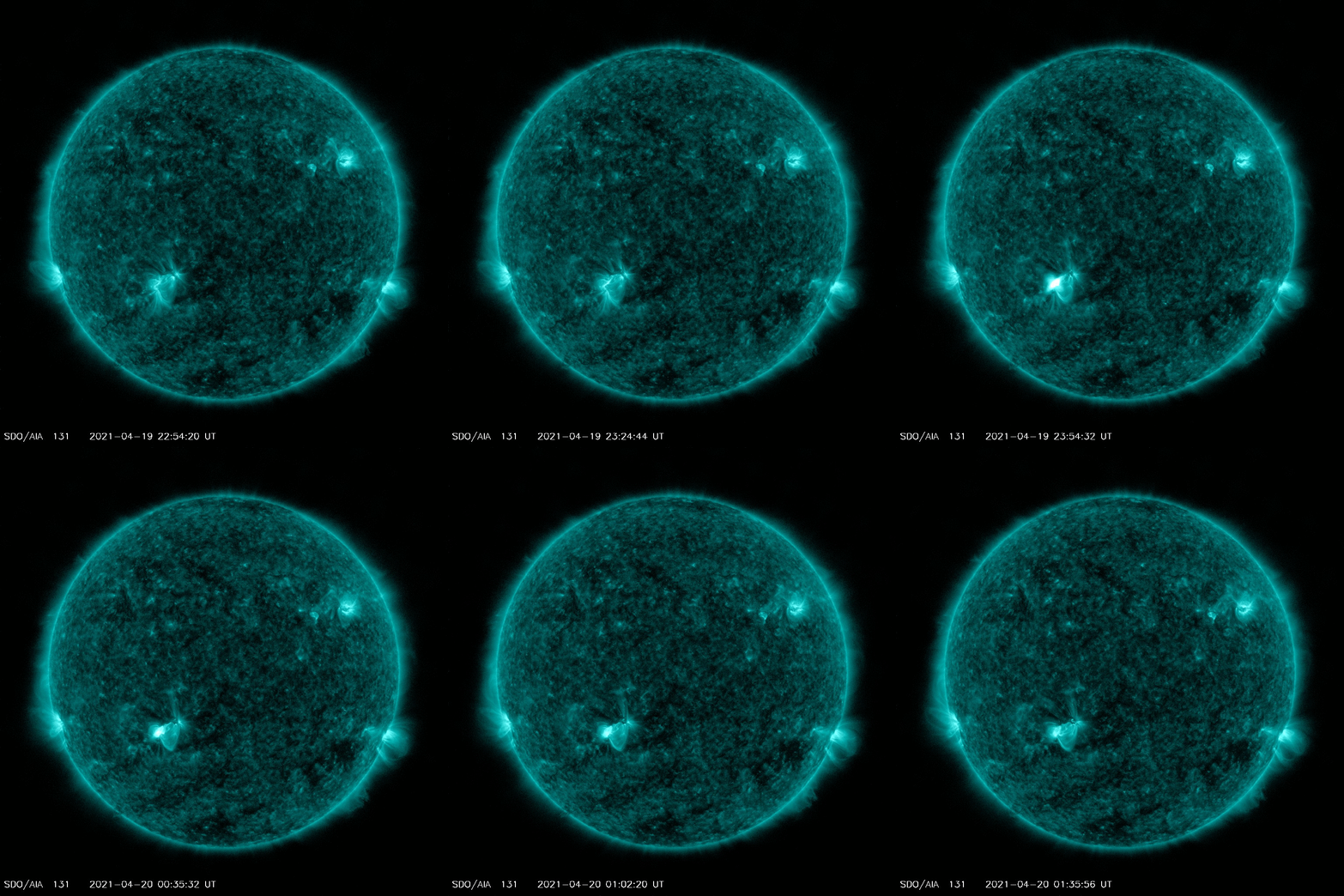
This is one of the strongest flares of young Solar Cycle 25. A pulse of X-rays and ultraviolet radiation from the flare ionized the top of Earth's atmosphere, causing a shortwave radio blackout over the Pacific Ocean: blackout map. Mariners and ham radio operators in the area might have noticed unusual propagation at frequencies below ~20 MHz.
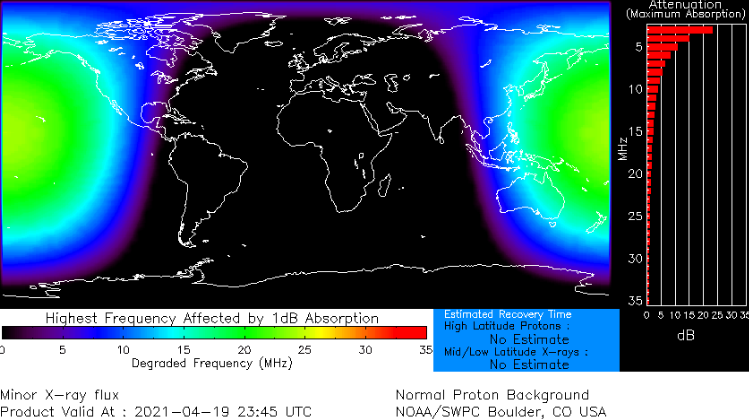
Interestingly, during the radio blackout the sun generated its own burst of radio noise. Shock waves from the solar flare rippled through the sun's atmosphere, creating plasma instabilities and natural radio emissions; NOAA reports the detection of Type II and Type IV bursts. These radio bursts may have penetrated the blackout, causing roars of static in the loudspeakers of shortwave radios at the same time that normal terrestrial signals were suppressed. Research shows that solar radio bursts can interfere with the navigation of whales.
The explosion also hurled a coronal mass ejection (CME) into space. In this SOHO coronagraph movie, watch Mercury emerge from behind the occulting disk at about the same time as the CME:
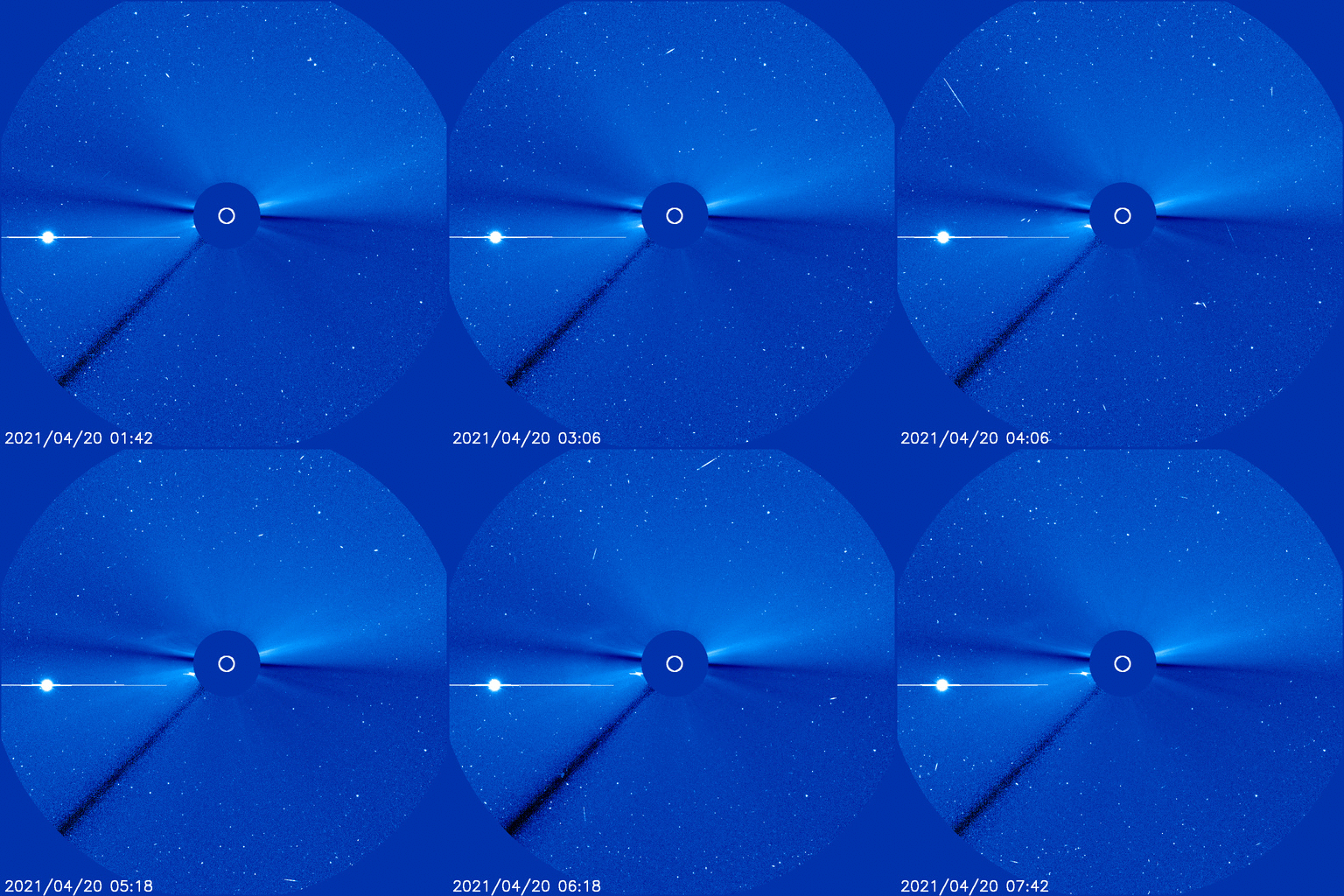
Although sunspot AR2816 was facing Earth at the time of the explosion, the CME is not heading in our direction. It was propelled east of the sun-Earth line. A glancing blow might be possible on April 22-23; NOAA analysts are evaluating that possibility now. Stay tuned for updates. Aurora alerts: SMS Text.
Realtime Space Weather Photo Gallery
Free: Spaceweather.com Newsletter
MOTHER'S DAY IS MAY 9TH: Are you looking for an out-of-this world Mother's Day gift? Consider this: Every time the students of Earth to Sky Calculus launch a cosmic ray balloon, they include something extra in the payload--something Mom will love:

Every item in the Earth to Sky Store has flown to the edge of space and comes with a greeting card showing the item in flight. The interior of the card tells the story of the gift's journey from launch to landing. Mom-satisfaction guaranteed!
Mother's Day Special: Use coupon code "SPACEMOM" at checkout for a 10% discount. Offer valid from now until Mother's Day (May 9, 2021) .
Far Out Gifts: Earth to Sky Store
All sales support hands-on STEM education
Realtime Aurora Photo Gallery
Free: Spaceweather.com Newsletter